
Severe Drought Leads to Worst-Ever Water
Supply Outlook
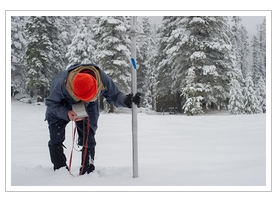 To protect Californians’ health and safety from more
severe water shortages
in the months ahead, the California Department of
Water Resources (DWR)
today took actions to conserve the state’s precious
resources. As a result
, everyone – farmers, fish, and people in our cities and towns –
will get less water. DWR’s actions are in direct response to Governor
Edmund G. Brown Jr.’s drought State of Emergency. In the declaration, the
Governor directed
DWR and the State Water Resources Control Board (SWRCB) to act to modify
requirements
that hinder conservation of currently stored water and allow flexibility within
the state’ s
water system to maintain operations and meet environmental needs.
“The harsh weather leaves us little choice,” said DWR Director Mark Cowin.
“If we are to have any
hope of coping with continued dry weather and balancing multiple needs, we
must act now to preserve
what water remains in our reservoirs.”
Except for a small amount of carryover water from 2013, customers of the
State Water Project
(SWP) will get no deliveries in 2014 if current dry conditions persist and
deliveries to agricultural
districts with long-standing water rights in the Sacramento Valley may be cut
50 percent – the
maximum permitted by contract – depending upon future snow survey results.
It is important to note
that almost all areas served by the SWP have other sources of water, such as
groundwater, local reservoirs,
and other supplies.
“It is our duty to give State Water Project customers a realistic understanding
of how much water
they will receive from the Project,” said Director Cowin. “Simply put, there’s not
enough water in the
system right now for customers to expect any water this season from the project.”
DWR also has asked the SWRCB to adjust water permit terms that control State
Water Project and
federal Central Valley Project operations in order to preserve dwindling supplies
in upstream
reservoirs for farms, fisheries, and cities and towns as the drought continues.
While additional winter storms may provide a limited boost to reservoir storage
and water deliveries
, it would need to rain and snow heavily every other day from now until May to get
us back to average
annual rain and snowfall. Even then, California still would be in a drought, because
normally wet
December and January have been critically dry – and follow a record dry 2013 and
a dry 2012.