
-September 18,2021-
Solar updates
No power from slave labor after all
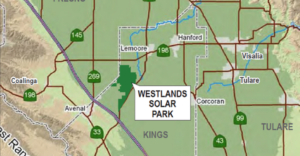
A critic of three Westlands Solar Park projects in Kings County ended up withdrawing an appeal from the BOS recently that had claimed Westlands would not certify they would not use solar panels from China that used slave labor. It turns out that the developer of the solar projects – CIM group – says they are indeed, in compliance.
“With regard to solar panels, supply chain traceability protocol is now part of the law. Any product coming into the U.S. regardless of where it’s coming from, has to demonstrate with supply chain documentation and certification that the product is not coming from any of the jurisdictions associated with forced labor” says a note to this reporter. Looks like there will be no lawsuit over this after all.
Farms supply solar to self driving car start-up
Tulare & Reedley farms are supplying solar power to a Bay Area self-driving car company. Cruise self-driving cars is developing a ride-hailing service in San Francisco, where its cars are being tested on the city’s streets — both with and without drivers. When the company’s cars are charged in San Francisco, they get the same electricity from the same grid as everyone else. But Cruise is paying undisclosed sums to local farmers Sundale Vineyards near Tulare and Moonlight Co near Reedley in exchange for renewable energy credits that correspond to the same amount of power Cruise uses from the grid.
Battery power making a difference
More Kings County solar farms are adding battery storage to their existing and new solar projects joining others statewide supplying renewable power when the sun does not shine.
Last year, the state energy regulator – CAISO had around 550 MW of storage on its system; today, that number has grown to a little over 1,500 MW, and is expected to top 3,000 MW by the end of the year according to the California Energy Commission.
Opposition scuttles state canal bill
Opposition from the Sierra Club and others to a bill carried by state Senator Melissa Hurtado (D–Sanger) forced the postponement of Senate Bill 559 – The State Water Resiliency Act of 2021 – after the Assembly gutted its funding and amended it to include additional hurdles.
The bill would have provided $785 million to repair canals, roads and bridges damaged by subsidence including at least $100 million for the Friant Kern. The funds would have gone towards repairing sections of the Friant-Kern, the Delta-Mendota Canal, the San Luis Canal and the California Aqueduct, all important water conveyances to Central valley ag interests and a number of communities.
The canals have already secured some federal funding for their subsidence repair. In addition the Friant Kern Canal has secured $125 million from the Eastern Tule GSA farmers to help repair a 30 like stretch near Porterville where the land has sunk about 12 feet. Despite the shelving of the state monies, work on the canal repair is scheduled to begin this December using federal and local monies.
Opposing any state public funding for the waterways, Sierra Club has argued that “those entities who receive water from these canals should share the cost of repair; not state taxpayers.” They say “this bill would authorize the use of state funds in the restoration of a federal canal project, subsidizing profits of a single industry and violating the beneficiary pays principle that requires those who benefit from a project pay for the maintenance and operation of the project.”
But as mentioned,in the case of the Friant Kern, one farmer group has agreed to pay $125 million and another group $50 million in capital funding along with their maintenance payments to the Bureau of Reclamation.
Besides that argument Hurtado responds he public has a role in that climate change has amped up the western drought . “Repairing critical water infrastructure is part of the solution to adapting to climate change” she says.
A dry canal will lead to collapse of the Valley economy to make matters worse and everyone has a stake in not letting that happen. It is not just farmers but farmworkers and their families who depend on that water.
“Water supply reliability is central to the production of food in California, and vital to the rural communities and statewide economy that is supported by the agriculture industry,” argues California Citrus Mutual President and CEO Casey Creamer.
Attachments area