
 With an eye to increasing renewable power generation at Cal Poly, the school’s facility department is preparing a wind study for Poly Canyon to test the wind resources overlooking the big SLO campus.
The campus of course, is more like a city with 5 million square feet of buildings to power up and a daytime population of 20,000 souls.
Facilities staffer Dennis Elliot,assistant director of energy, utilities and sustainability for Cal Poly says his current work program is to move forward on wind tests at Poly Canyon near the 1400 ft elevation to see of the idea of wind power makes sense here.
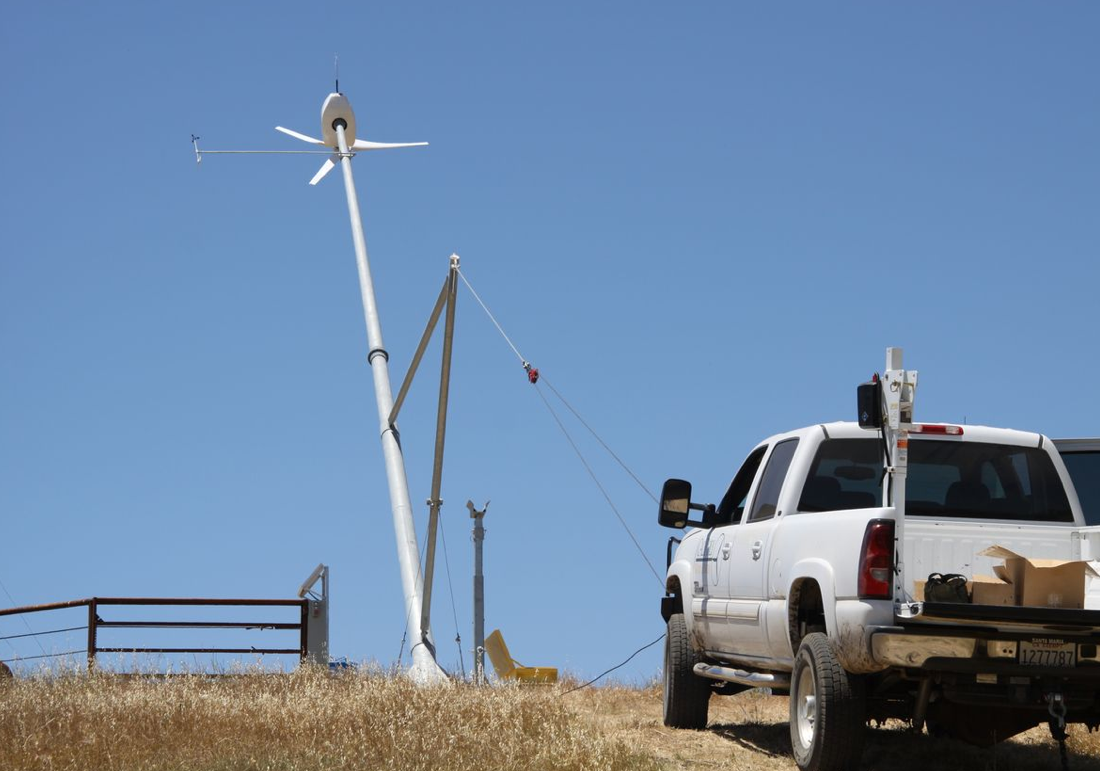
Cal POLY engineering students test a new turbine at Escuella Ranch near Cal Poly
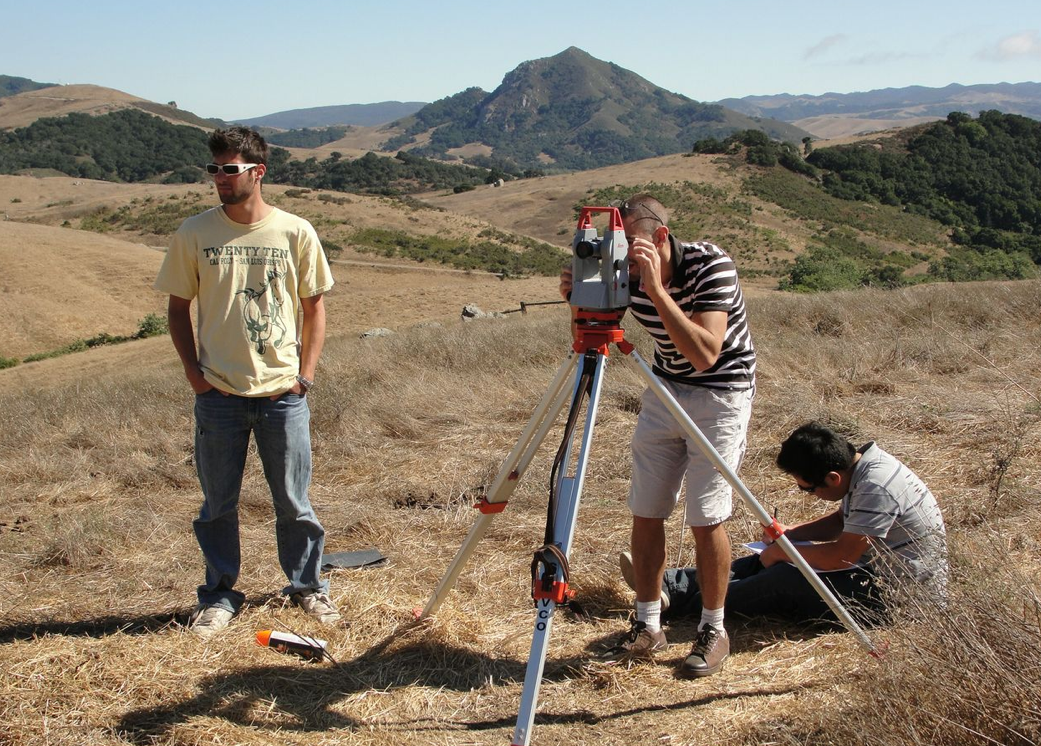
That’s good news to Cal Poly professor Dr Patrick Lemieux who for several years has been working with his engineering class to erect student engineered wind turbines at Escuela Ranch near the campus and is a believer that the idea of a campus wind farm may work. Lemieux’s wind research center helps prepare students for jobs in the field
Their latest model is a 70 ft tilt-down version of a wind turbine that is easier to maintain,generates about 3kw that has been modified several times to do energy calculations. After 3 years of studies on whether the area could support a potential wind farm – the results were promising and outlined in this student thesis.
“Wind resource assessment at California Polytechnic State University shows there is potential for wind power generation on Cal Poly land. A computational fluid dynamics model based on wind data collected from a campus maintained meteorological tower on Escuela Ranch approximately 5 miles northwest of campus suggests there are areas of Cal Poly land with an IEC Class III wind resource at a height of 80 meters above ground.”
“In addition during the daytime when the campus uses the most energy there are large portions of land with annual average daytime wind speeds above 6.9m/s. These areas have been identified by analyzing the wind speed and directional data collected at the meteorological tower and using it to create the boundary conditions and turbulence parameters for the computer model.”
“Before constructing a wind farm for power generation, additional meteorological towers should be constructed in Poly Canyon to further confirm the wind resource prediction.”
So that’s where we are.
Lemieux says the wind resources that are available track Cal Poly’s power needs with the wind blowing the most from 6 AM to 6PM and typically blowing stronger during the school year months of October through April.
Lemieux says that any Poly Canyon study would be followed by meteorological towers being placed at scattered locations above the campus and left for a year of data collection.
His guess is that perhaps 10 wind turbines,200ft tall could produce 3MW (300kw each) or about half the average power needed at the campus – around 6MW. Elliot says that actual demand varies between 3 to 10MW.
A 200ft tall turbine while large pales in size to 300 meter units that are a standard at big wind farms like Tehachapi with Lemieux hoping their more modest scale will be accepted considering the SLO foothills already sport similar size tower lines.
With a small 300kw solar unit in place for several years on an engineering building Elliot says they continue to plan for a 1MW solar unit to be constructed by a third party under a power purchase agreement with PG&E as the CSU campuses statewide follow mandates to add more renewables.