
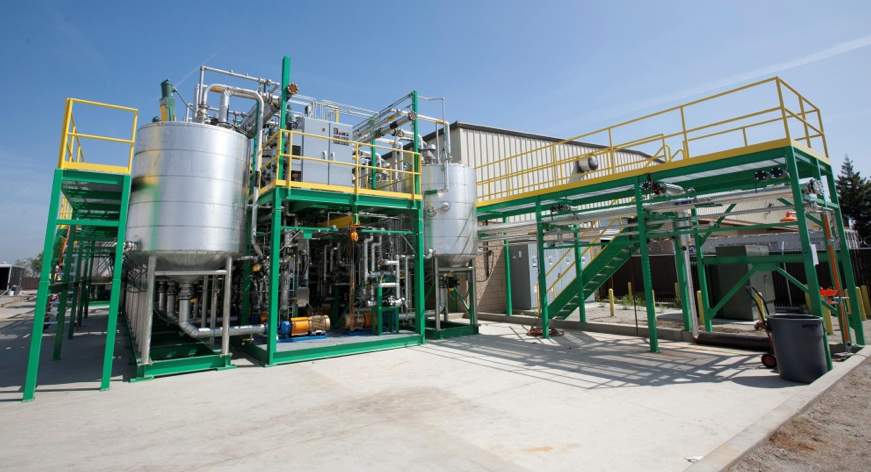
Visalia-based Edeniq has inked two deals this month that will utilize company technology to increase production of biofuel and other refined products at two California ethanol plants helping to make them more profitable. Both deals have been previewed by Sierra2theSea in past articles.
In Stockton, Pacific Ethanol announced it will use Edeniq technology to extract corn oil by the second quarter of 2013 improving the margins of their operation. “Our Stockton plant is the second of our facilities to implement corn oil separation technology, and we expect to soon award contracts for our two other Pacific Ethanol plants.”said CEO Neil Koehler. Corn oil is used for cooking and it is also a feedstock used for biodiesel. The Calgren ethanol plant in Tulare County extracts corn oil in their operation.
Also this week, Aemetis, Inc., an advanced fuels and renewable chemicals company, has entered into an agreement to install Edeniq technology at the Aemetis Advanced Fuels Keyes plant in California. Aemetis will install Edeniq’s proprietary Cellunators(TM) to boost ethanol yields and will conduct large-scale commercial testing of Edeniq’s cellulosic ethanol Pathway(TM) platform.
Edeniq’s Cellunator(TM) technology produces sugars by milling corn and other plant materials into “right-sized” particles of feedstock that can be more easily converted. Edeniq is installing Cellunators(TM) at Aemetis’ Keyes, California facility, which currently produces 60 million gallons of ethanol annually. Aemetis is also one of three ethanol producers working with Edeniq on the company’s Pathway platform, a patented process that integrates enzymes with the Cellunator(TM) technology to produce cellulosic ethanol using the existing plant infrastructure. Aemetis is testing the commercial feasibility of the Pathway(TM) platform on site at their plant.
“The relationship with Edeniq will allow us to further expand our production of advanced biofuels,” said Eric McAfee, Chairman and CEO of Cupertino, California based Aemetis, Inc. “The addition of Edeniq’s technology is expected to immediately improve our ethanol yield, and allow us to produce cellulosic ethanol at commercial scale by upgrading the existing corn ethanol production facility. Edeniq’s technology will help us lead the transition to next generation, lower carbon, lower cost biofuels derived from a variety of renewable feedstocks such as grasses, agricultural residues, and purpose-grown energy crops.”
Edeniq owns and operates a demonstration-scale production facility in Visalia, California, which is currently converting a range of cellulosic feedstock into low-cost cellulosic sugars and cellulosic ethanol. In June, Edeniq received a $3.9 million grant from the California Energy Commission (CEC) as part of California’s Alternative and Renewable Fuel and Vehicle Technology Program.