
Fewer field and forage crops on tap
-May 7,2022-
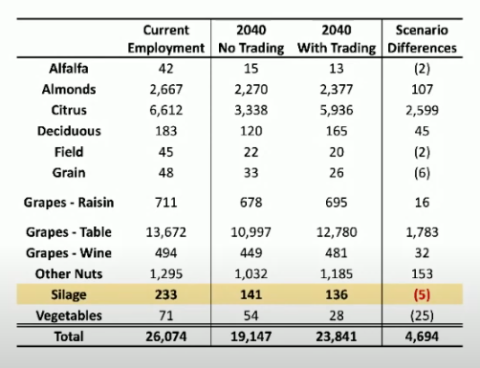 A Cal Poly study “Addressing Water Scarcity” authored by Professor Michael McCullough on the effect of the Sustainable Groundwater Management Act (SGMA) in the Tule Sub Basin in the Central Valley shows the long term effect of the ongoing drought and restrictions on groundwater. It says by 2040, SGMA will likely result in fewer field crops like silage being grown but as to acreage reduction of more valuable permanent crops like grapes and citrus – not so much. The study was discussed this past week on a You-Tube podcast sponsored by Milk Producers Council and still available on their website.
The study assumed a drastic decrease in groundwater pumping in the basin between now and 2040 but an active water trade effort adding back some 40,000 acre feet to the larger 226,400 acre-feet drop in pumped groundwater.This extra supply would come from a combination of recharge ,reservoir expansion and water trades.
No collapse expected
While one might imagine such a big loss would result in a wholesale collapse of the area’s economy, the study suggests otherwise.
Study shows big decline in field crops but not permanent plantings
Groundwater scarcity will result in big declines in field crop plantings while permanent crops like citrus and grapes will continue to be grown in the Tule area at slightly reduced acreage. Citrus grown today on 31,300 acres will decline to 28,100 and almonds from 52,400 to 46,700 acres by 2040, says the report.
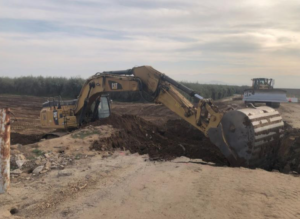 The Tule area has been the epicenter of some of the worst land subsidence due to over pumping, requiring a multi-million expense to rebuild the Friant Kern Canal – now underway.
The study has yet to tackle the impact of long term water scarcity on dairy farms except to point out that dairies will likely be growing less of their own feed crop like alfalfa, for the cows, as they do today.Imported feed will be more common if one can find it. David De Groot, watermaster on the Tule River and an engineer with 4Creeks, commented that this change will impact how dairy farmers manage their manure currently spread on their own adjacent farm land. A dairy component of this study is underway.De Groot expects dairy digesters will help.He advises dairies to put in water meters and learn just what their “water budget” is.
New 10 mile canal underway
Staffer with Milk Producers Council, Geoffrey Vanden Heuvel remarked that field crop prices right now are so high it could encourage more planting of crops like hay – fetching $400 a ton now- about a 35% more than a few years ago. “It’s pretty impressive when a truck load of hay worth $10,000 comes by” he jokes.
As for the fate of farmworkers, some are sounding the alarm of some kind of collapse of the San Joaquin Valley’s agriculture workforce with so much land being retired.
But the same study suggests the impact on the farm labor economy may be more muted since field crops do not employ large numbers anyway like permanent crops. Citrus grown in the Tule basin now employs about 6612 workers but after SGMA is implemented, the citrus industry in 2040 would still employ just under 6000. That’s not exactly a collapse of the ag workforce.
SGMA impact may not be so dire
Fewer field and forage crops on tap
A Cal Poly study “Addressing Water Scarcity” authored by Professor Michael McCullough on the effect of the Sustainable Groundwater Management Act (SGMA) in the Tule Sub Basin in the Central Valley shows the long term effect of the ongoing drought and restrictions on groundwater. It says by 2040, SGMA will likely result in fewer field crops like silage being grown but as to acreage reduction of more valuable permanent crops like grapes and citrus – not so much. The study was discussed this past week on a You-Tube podcast sponsored by Milk Producers Council and still available on their website.
The study assumed a drastic decrease in groundwater pumping in the basin between now and 2040 but an active water trade effort adding back some 40,000 acre feet to the larger 226,400 acre-feet drop in pumped groundwater.This extra supply would come from a combination of recharge ,reservoir expansion and water trades.
No collapse expected
While one might imagine such a big loss would result in a wholesale collapse of the area’s economy, the study suggests otherwise.
Groundwater scarcity will result in big declines in field crop plantings while permanent crops like citrus and grapes will continue to be grown in the Tule area at slightly reduced acreage. Citrus grown today on 31,300 acres will decline to 28,100 and almonds from 52,400 to 46,700 acres by 2040, says the report.
The Tule area has been the epicenter of some of the worst land subsidence due to over pumping, requiring a multi-million expense to rebuild the Friant Kern Canal – now underway.
The study has yet to tackle the impact of long term water scarcity on dairy farms except to point out that dairies will likely be growing less of their own feed crop like alfalfa, for the cows, as they do today.Imported feed will be more common if one can find it. David De Groot, watermaster on the Tule River and an engineer with 4Creeks, commented that this change will impact how dairy farmers manage their manure currently spread on their own adjacent farm land. A dairy component of this study is underway.De Groot expects dairy digesters will help.He advises dairies to put in water meters and learn just what their “water budget” is.
Staffer with Milk Producers Council, Geoffrey Vanden Heuvel remarked that field crop prices right now are so high it could encourage more planting of crops like hay – fetching $400 a ton now- about a 35% more than a few years ago. “It’s pretty impressive when a truck load of hay worth $10,000 comes by” he jokes.
As for the fate of farmworkers, some are sounding the alarm of some kind of collapse of the San Joaquin Valley’s agriculture workforce with so much land being retired.
But the same study suggests the impact on the farm labor economy may be more muted since field crops do not employ large numbers anyway like permanent crops. Citrus grown in the Tule basin now employs about 6612 workers but after SGMA is implemented, the citrus industry in 2040 would still employ just under 6000. That’s not exactly a collapse of the ag workforce.
Caption Study shows big decline in field crops but not permanent plantings
Contractor photo of new 10 mile canal to fix subsidence