
-September 2,202300-
Parts of the high speed rail construction route through the Valley were swamped earlier this year by widespread flooding. Today work carries on along the 63-mile stretch through Kings,Tulare and Kern counties.The HSR Authority has targeted running trains in the Central Valley by 2030.
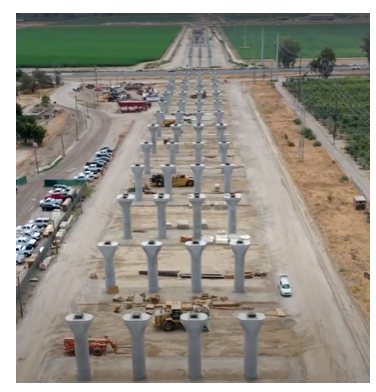 One of the most visible high speed rail structures locally is the Hanford Viaduct – the largest in the Central Valley spanning over a mile – nearly 6,330 feet lon
Picture: Highway 198 in background
Located in Kings County just east of Hanford , the viaduct or bridge will allow high-speed trains to cross over Grangeville Boulevard, San Joaquin Valley Railroad, and State Route Hwy 198 as they travel north or south. This section of the viaduct – just north of 198 – will also be the home of the future HS Rail station.
For the past year passerbys traveling along 198 have watched what seems to be slow but methodical progress to erect the long row of giant concrete pillars or columns that will support the elevated rail line that now march across the horizon like massive chess pieces. Today the vertical columns have been erected on both sides of Hwy 198.
So what ’s next?
HSR Spokesperson Augie Blancas says work will begin soon to cross over busy freeway 198. arguably a significant milestone.
“We anticipate beginning work on State Route 198 in mid-October. This will include substructure work and traffic shifts along the highway. We will also have some traffic impacts on the north and south sides of SR 198 on Lacey and 7th Road in September. Please note construction schedules are subject to change.”
All the while, work continues along the Hanford Viaduct to the north of SR 198. Horizontal precast girders are still being placed to form the superstructure. To date, over half – 494 of the 978 precast concrete girders that connect the columns have been placed.
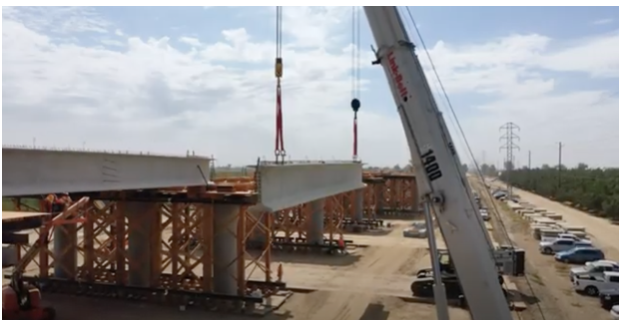 Once the columns and the girders are attached, the diaphragm is placed horizontally to support the rail tracks. A diaphragm of a structure does double duty as the floor system on a bridge, which simultaneously supports gravity loads.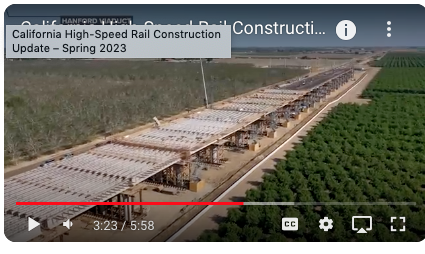
In place since 2018,the Dragados Flatiron Joint Venture Precast facility continues its work, manufacturing thousands of these gigantic concrete building blocks to help the nation’s first high-speed rail system stay flat and 200 miles-per-hour-fast in the Central Valley.
Rain or shine the Hanford manufacturing facility hums along, often working at night and early in the AM. The pieces get catalogued and stored until they can be placed on structures where needed.
The precast facility will be the site of the new rail station as well.
Concrete beams are key support pieces for elevated rail structures including the seven high-speed rail structures in Fresno, Kings, and Kern counties completed so far in 2023.
Time to order trains
In other HS Rail news, in the past few weeks the High-Speed Rail Authority’s board of directors approved a plan to ask for Request for Qualifications from prospective vendors to manufacture and maintain the electrified high-speed trains. They want to create a shortlist of qualified teams capable of delivering high-speed trainsets and formally release a Request for Proposals in the first quarter of 2024 to qualified teams.
This trainset procurement process will allow the Authority to:
• Procure six trainsets capable of operating at 220 mph and tested up to 242 mph;
• Receive two prototypes in 2028 to support static/dynamic testing and trial running;
• Receive an additional four trainsets by the end of 2030 to support revenue operations on the 171-mile Merced to Bakersfield section.
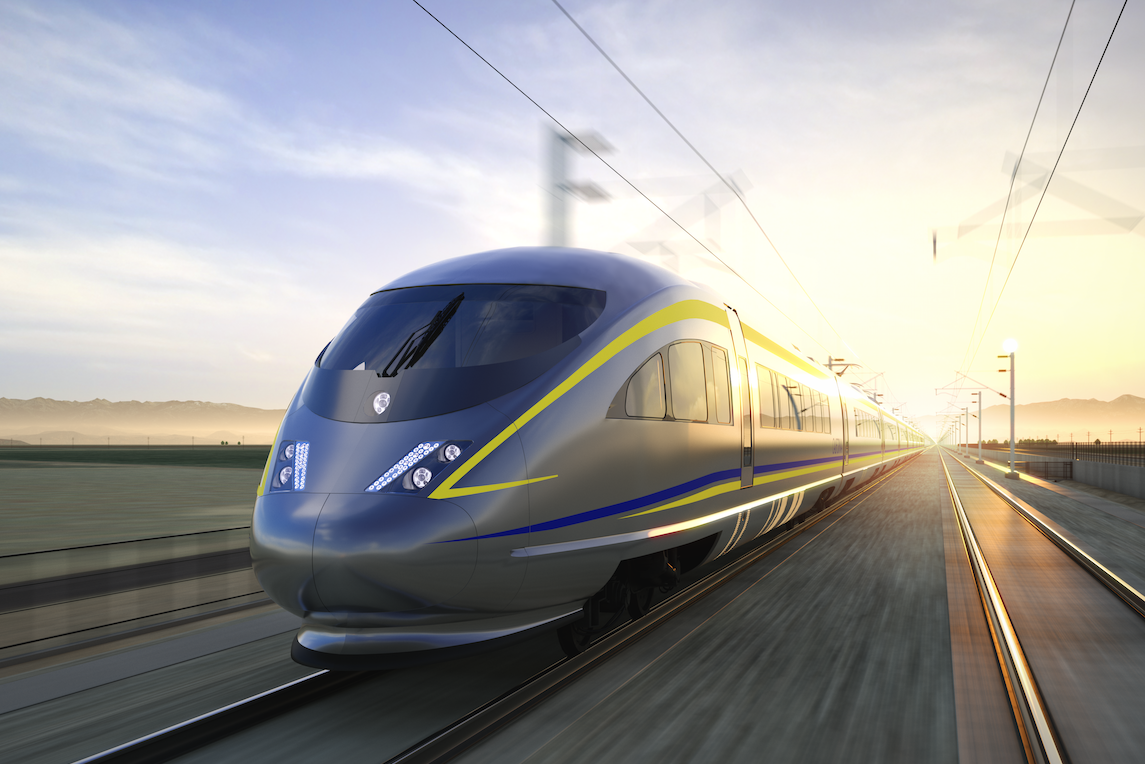 “These trainsets ensure that we are procuring the latest generation of high-speed trains for this first-in-the-nation project,” said Authority CEO Brian Kelly. “We look forward to working with members of the industry as we strive to develop a market for high-speed trains in the United States.”
US-located train manufacturers include German-owned Siemens, with a manufacturing plant in Sacramento and new one on the drawing board in North Carolina and Alstom, a French industrial conglomerate that competes with Siemens in rail production. Alstom has expanded U.S. production of locomotives and passenger cars at its Hornell, New York, factory that’s making next-generation Acela trains for Amtrak’s Northeast Corridor.
HSR is mandated to buy American-made units as it chugs forward with this and other projects.That includes funds to aid high-speed rail projects planned by private companies such as Brightline, which expects to build a bullet train between Las Vegas and Los Angeles.