
May 10,2018-
Adventist gears up as Coalinga hospital shuts down
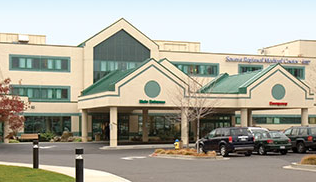 News that the 136-bed Coalinga Regional Medical Center is closing all of its healthcare services is affecting not just locals and 200 employees but other care-givers like Adventists Health in Hanford and Selma. Recently the closure of the 112-bed Tulare hospital, also for financial reasons, resulted in one fewer choice for residents between Tulare and Hanford.Both Tulare and Coalinga have shut down their emergency rooms that served the westside of the South Valley. The nearest emergency department to Coalinga is Adventist Health in Hanford, some 40 miles away. Some years back both Corcoran and Kingsburg closed their hospitals.
Responding to the news Adventist Health’s Andrea Kofl, Central Valley Network President said “ Our hearts and prayers go out to the community members and healthcare workers affected by the recent hospital closures. Because our Valley services are part of the larger nonprofit Adventist Health system, we’re fortunate to maintain a strong foundation in the more than 20 communities we serve. We are aware of the need for quality care in rural areas of the Central Valley, which is why we’re partnering with Valley Children’s Healthcare to offer an extensive outpatient facility in Fowler. We also are expanding our emergency department in Selma and adding an intensive care unit and catheterization lab. Our doors are open to anyone who needs care.”
California to adopt Federal Milk Marketing Order
California milk producers voted yes on transitioning to a Federal Milk Marketing Order from a state system after all California’s big milk coops voted yes in a producer referendum. Three cooperatives including Land O Lakes and CDI in the Central Valley represent over 75% of the producers in the state. The U.S. Department of Agriculture will not make it official until early June. USDA will be targeting November 1, 2018 as a start date. Dairymen hope for a better price for their products under a federal order like the rest of the nation has.
Meanwhile concern over labor shortages has Wisconsin dairymen looking to robots.One report says “fewer than five percent of the nine million US dairy cows are now milked by robots, but in 2019 the share may rise to 25 percent. Walk-up milking robots that feed cows can milk 60 cows a day, so that a 300-cow dairy could do its milking with five robots that cost $200,000 each.”
Both local dairy auctions postponed/rescheduled
Two high-profile local dairy dispersal auctions set for this month have been postponed due to bankruptcy court proceedings. Both the Greg TeVelde auction set for May 5 and the Triple V (Valadao) auction were postponed with the Triple V auction now scheduled for May 22.”It’s tied up in court” says auctioneer Richard Martella.
Kings County population climbs thanks to Hanford
 Kings County’s population grew to 151,662 as of January 1, 2018 says the California Department of Finance. That is up up 2125 persons with some communities gaining and others losing population. Hanford grew the most, up 2,531 or a brisk 4.5% while Lemoore lost 477. Avenal grew due to more prisoners, now up to 4103, being housed there. Kings County grew for the first time since 2007, just before the recession impacted the local economy and the world. Of the total county population of 151,662, some 12,735 were prisoners either housed in Avenal or Corcoran. NAS Lemoore’s population was 6797 compared to over 7000 in 2007 and 2008 and over 8000 in the late 70s.
County hires new EDC director
The Board of Supervisors has offered the position of the Economic and Workforce Development Director to Lance Lippincott. He has accepted the position and will begin work on June 4, 2018 with an annual salary of $130,164. Lippincott would replace John Lehn who continues on a consultant basis. Lance is Deputy Director at Merced County-Department of Workforce Investment and is a lawyer.
Governor candidate gets both farm and labor support
When was the last time Cesar Chavez’s UFW and mainline farmer groups in California were backing the same candidate for governor? Former Los Angeles Mayor and Democrat Antonio Villaraigosa received the endorsement of Exeter-based California Citrus Mutual this month and Fresno’s Nisei Farmers League this past week after the United Farm Workers endorsed his candidacy in late February.
A few weeks ago farmer advocate Manuel Cunha was first farm leader out the gate talking up Villalagosa who faces a tough primary in June with Lt Governor Gavin Newsom. Newsom, who has a power base in the Bay Area, is competing as well with several strong GOP candidates popular in the San Joaquin Valley.
Political realities and the need for both water and labor are playing a part in these practical political calculations.
Reports suggest growers in the California heartland are donating to the LA-based candidate. This account is from the publication CALmatters, suggesting large farmers are coming around.
“Villaraigosa will be in Modesto later this month for a fundraiser hosted by almond growers, one of dozens of trips he has made as a candidate to the Other California. It’s paying off. Political action committees representing pistachio growers, berry farmers and dairy operators have given him $20,000 or more each.
J.G. Boswell Co., one the state’s largest farmland owners, has given him $50,000. Fresno almond farmer Donald Preach chipped in $25,000. Peracchi is president of the Westlands Water District, which supplies water to farms in Fresno and Kings counties, and no issue is more important to farmers than water. Woolf Farming donated $15,000 to his campaign.”Even Dan Gerawan, bitter rival of the UFW, has donated money to Villaraigosa.
Valadao knocks tariffs
Local congressman David Valadao joined 8 California congressmen from both sides of the aisle this week asking the Trump administration to rethink the current tariff battle with China.
“Agriculture drives the American economy and is the backbone of the Central Valley’s economy,” said Rep. David Valadao (R-Hanford). “Not only do the proposed tariffs fail to adequately remedy China’s unfair practices, such tariffs seriously jeopardize our farmers’ access to export markets, which accounts for roughly twenty percent of their production.”
“While advancing equitable trade policies between foreign nations and the United States is critical, implementing such tariffs will have a long-lasting negative impact on hardworking Central Valley farmers who are already struggling.”