COVID brings less income and fewer babies at local hospital

Kaweah Delta experiences a ‘baby bust’

-March 11,2021

The area’s largest hospital – Kaweah Delta in Visalia- has reported millions of dollars in lower revenue in the past year due to Covid-19.
crib t 2021-02-26 at 10.19.38 AMThe big medical center has been unable to perform many typical surgical procedures it counts on to make payroll and pay bills.
The chart on this page shows the dire condition of the hospital
due to the pandemic and the link between fewer surgeries and less revenue.

But it’s not just typical surgeries that are down this past year.

What may surprise you is that all those months that couples were locked up at home with not much of a social calendar, there was no big baby boom as a result -in fact the opposite – a baby bust.

Figures from around the world and across the US tell the same story. And right here in Visalia too.

The COVID quarantine has led to a decline of about 20% in the number of births at Kaweah Delta this past year compared to 2019.In As of December 2020, the hospital reported 342 deliveries compared to 415 in December 2019 – the same trend seen in every month this past year.

If births are down deaths – unfortunately – deaths are up.The hospital keeps track of Hospice Days -and it’s up around 25%.

They see it all at this medical center – whether you are coming or going -more are leaving and fewer are arriving.

Factors affecting decisions not to have a baby in these times may include economic uncertainty, social stress and of course anxieties about the virus. Then there is the long term trends that result in fewer new babies. California’s population is getting older and couples are having fewer children .The number of births here has been heading south for a long time.

State figures show Tulare County births numbered 8537 in 2007 and in 2020 with a higher population -birth were 7315. Similarly in 1990, California saw 611,000 births. By 2020 it was around 457,000.

But the pandemic seems to have accelerated the trend.
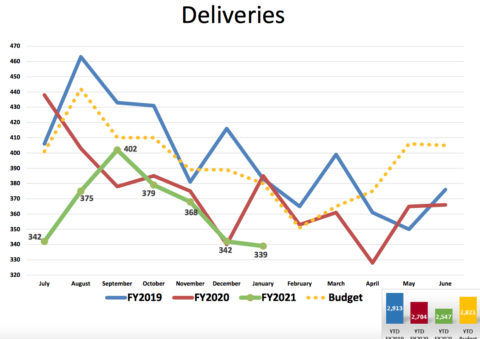
KD Deliveries 2021-02-16 at 3.51.43 PMSeveral states that keep track of births in near-real-time as well as some hospital systems contacted by TV outlet NBCLX – recorded significant drops in Dec. 2020 birthrates, compared to the same period from one year earlier. That includes Florida (down 8% from Dec. 2019); Ohio (down 7%); and Arizona (down 5%). “

California, Arizona, Hawaii, and Ohio are reporting the number of babies born in 2020 is down a total of more than 50,000 from 2019, as reported by the Brookings Institution.

Overall Kaweah Delta welcomes fewer patents with Covid so it can get back to taking care of all our other ailments from diabetes to heart disease. Covid cases are down to 59 this week from a high of over 150 in January.

This week CEO Gary Herbst noted the district may soon re-open the Lifestyle Center.
“We’re seeing some bright spots and we hope you’ll LIKE & SHARE the good news. In this video, you’ll hear about the signifcant decline in the number of COVID-19 patients that we’re caring for TODAY, along with the increase in the number of available beds, PPE, ventilators, and even our ability to turn floors that were being used as surge overflow areas back to their regular uses (that includes our Neonatal Intensive Care Unit and our Endoscopy Unit)”

If there is optimism at the hospital that we may return to more normal times, it may rub off on the general populace. Having a child is an inherently optimistic act. Couples in the US seem to be doing less and less of it.

One report notes “Those that are just thinking about becoming pregnant have a lot of concerns as well about how COVID could affect their pregnancy,” Dr. Edward Miller, the UofL Health Maternal-Fetal Medicine director, said. “Also, for the first time about how a lot of other things could affect their pregnancies. We have a lot of patients with lost insurance, lost access to health care, so we’re having a lot more conversations with our non-pregnant populations about effective birth control measures.”

Expectant and new mothers described added stress after they became pregnant as COVID was forcing shutdowns and causing disruptions.

The KD Board heard recently that net patient revenue was less than January budget expectation by $2.1 million due to lower surgical, cath lab and overall outpatient volumes. Also, other operating revenue was $1.1 million lower than it had budgeted as COVID continues to impact these revenue generating areas which are not open or are experiencing lower‐than‐budgeted volumes.
Hanford meat plant expansion would triple production

 -March 11,2021-

Central Valley Meat wants to do a two-phase expansion of their beef processing plant in Hanford and has applied to Kings County for a conditional use permit. The big plant already processes about 1500 head of cattle a day.

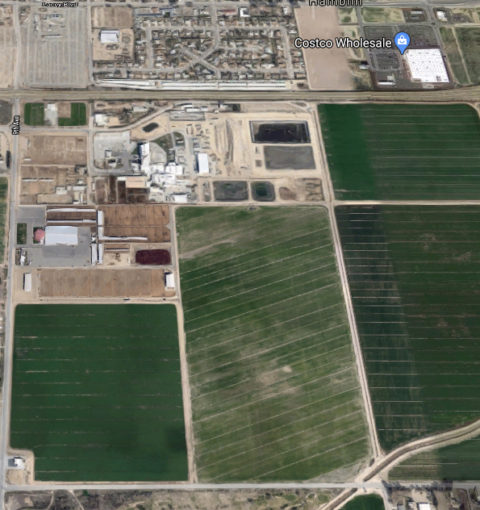
CVM 2021-02-26 at 7.41.26 AMAccording to their application, filed earlier this year, they plan to increase the capacity three-fold, to 4500 head a day. The facility is located just off Highway 198 at the urban edge of Hanford, putting jurisdiction for permitting with the county.
County planner Kao Nou Yang says the process is in an early stage in their environmental review, just now receiving comments from stakeholders including the city and CalTrans.

”The project will be heard by the county planning commission with a public hearing but not any time soon” says Ms Yang. She adds the county has not yet determined the extent of the environmental review.

The application from company owner Brian Coelho says they want to expand the footprint of the plant by 130 acres on farmland to the south – with new access off Hanford-Armona Rd. The company hopes to break ground on the first phase this summer with build-out of both phases within the next five years.

The application does not indicate how many employees would be added once the expansion is complete. Already the meat plant is staffed by 1020 employees. The scale of expansion proposed would seem to argue for more workers although meat processors across the nation are working on automation technology and robotics to do more of the work. Mr Coelho did not return this reporter’s phone call.

The largest expansion would be in phase 2 with the addition of a new 103,000sf processing facility along with a 187,000sf freezer.

The application says the new rendering plant will process 10.5 million pounds a week resulting in 2 million pounds of tallow and about 3 million pounds of bone and meat.

Harris Ranch merger

Screen Shot 2021-03-11 at 6.51.05 AMCentral Valley Meat made news in 2019 when it purchased Selma-based Harris Ranch including Harris Feeding Company and Harris Ranch Beef Company. Although both companies are operating separately, this new application indicates more head from its sister company will soon be coming to Hanford.

The application also makes reference to another company- NewCo (pet food maker) ”affiliated with Central Valley Meat Company (CVM) in Hanford, CA and Harris Ranch Beef Company (HRBC) in Selma, CA. NewCo is proposing to construct and operate a new meat rendering facility in Hanford immediately adjacent to the CVM beef processing facility. NewCo will service the needs of CVM and HRBC along with other regional beef processing facilities. The NewCo rendering facility shall be designed as a single species, all-beef facility, with all required certifications for a pet food-grade rendering facility.

The plant is intended to primarily service the needs of two beef processing plants with a present combined slaughter capacity of up to 3,000 head per day. Additionally, the facility will be sized to accept other regional beef suppliers with enough additional capacity to process approximately another 1,500 head of cattle per day. The facility will be designed and constructed in proper capacity to handle maximum combined total of 4,500 head of cattle derived every day over six days of slaughter operations per week” according to their application.

Covid impacts

Central Valley Meat also made news in 2020 in the midst of the COVID outbreak when it was fined $50,000 over its lack of enforcement of masks for employees and failing to prevent COVID-19 infections at their facility. They were among 5 companies charged by California’s Occupational Safety and Health Administration. During the worst of COVID’s spread CVM employees working in close quarters fell ill to the virus with as many as 200 employees impacted.The company was slapped with at least one lawsuit from a former employee.

The pandemic has pushed many food operators dependent on a mostly immigrant workforce, to look at labor-saving technology including robotics to do typically the repetitive tasks found in a slaughterhouse.

The U.S. meatpacking industry employed nearly 600,000 workers — a large portion of whom are immigrants — at wages averaging $15.92 an hour in 2019. The field has high turnover, and a January 2005 report released by the Government Accountability Office showed that some worksites experience over 100% annual churn.

Not just beef plants have been impacted by the pandemic. Foster Farms, the largest chicken processor in California, has struggled to contain Covid in its facilities. The Merced County Health Department ordered one of the Foster Livingston plants to close for a week in September 2020 after 400 of the 3,700 workers tested positive for Covid and eight died. The United Farm Workers union, which represents Foster’s Livingston employees, sued Foster in December 2020, seeking a court order to require Foster to do more to protect its employees.

In December 2020, after 200 of the 1,400 workers in a Foster plant in Fresno tested positive, Foster closed the plant for a deep cleaning and promised to test employees twice a week after reopening, reports Rural Migration News.

Not far away from Hanford, the Darling Ingredients rendering plant near Fresno has been targeted by environmental and justice groups for odor issues and may have to close by 2023 says a report.

But, by comparison, the Hanford plant has not seen many odor complaints says Yang, that she is aware of.

Shut down

Central Valley Meat has been shut several times by the USDA -once in 2012 after an undercover video showed what was called animal cruelty and then again in 2014 for unsanitary conditions. Federal purchases were suspended for a while and In-N-Out Burger withdrew from a contract to buy meat.

The beef industry faces criticism from those who say it accelerates global warming. In the past year plant alternatives -fake meat -appears to be making a big dent in consumers preference both at the grocery store and in restaurants. Even the largest meat packer- JBS is investing in “faux burgers “promoting the idea that a growing world population can’t all afford meat.“Plant-based will help us to reduce this protein gap with more affordable products compared with animal protein, which will be more premium,” JBS present said. “We see plant-based as an independent business in the future.”

Even this week a cadre of animal rights advocates were seen protesting along Hwy 5 near the Harris Ranch feedyard asking for a ban on “factory farms”.

Facing the competition

Today Central Valley Meat is probably the largest independent beef packer in California. The beef industry in the US is concentrated with 4 top packers controlling about 70 to 80% of all cattle used to supply food. Two large packers are majority owned by Brazilian investors.

Central Valley Meat is said to be the 7th largest by head slaughtered daily – now with Harris Ranch and CVM combined.The company supplies the big California market – a top burger eating state – but also exports some product. Recent reports suggest beef exports are on the rise in 2021. At the same time, Covid-19 cases are falling and demand for beef and pork could see an increase.

The annual Top 30 Beef Packers report compiled by Cattle Buyers Weekly shows that the top three operators – Tyson, JBS USA and Cargill – controlled 60.4 percent of the US commercial cattle slaughter in 2019. The top five operators, extended to include National and American Foods Group, controlled 76.1 percent.

Even with the pandemic, beef boosters are optimistic.

”The great news for the beef industry is when consumers did dine out in 2020, they were choosing meat. Eighty-five percent of consumers indicated they were regularly eating a meat dish when dining out and if eating out for dinner, they indicated beef was their popular choice. As an industry, “the goal needs to focus on keeping meat a relevant option.”says one analyst.

It appears Central Valley Meat sees a bright future in this bid to build a new modern facility looking to put its troubles behind them. Unlike many of the big packers, CVM continues to be family-owned. Coelho tells the story.

“In 1981, my father started Coelho Meat Company with 3 employees, processing 15 head of cattle a day. Today, our family of companies employs over 900 people, processes over 1500 head of cattle a day, and operates two state of the art facilities in Hanford and Vernon, CA.

From our humble beginnings, we have not forgotten our core principle of “Excellence Beyond Expectations”. We continually strive for improvement and work hard to provide our customers with the safest, highest quality food products, and outstanding services. We invest our continued efforts in supporting our customers, employees, and suppliers ongoing success.”


Amazon confirms Visalia “Fulfillment Center” and 1000 jobs

Company posts local job openings
-March 11,2021-
 
Screen Shot 2021-03-08 at 2.30.36 PMThe big 1.3 million square foot warehouse next to UPS at Riggin and Plaza in the Visalia Industrial Park is now only a few months from completion.Construction started last September. The contractor working for Gray Construction who is building Visalia’s largest industrial warehouse said they were building it for e-commerce giant Amazon. But until this week – Amazon had not confirmed they would be the occupant -until now.

 
When asked for comment on recent job postings by Amazon listing the location as Visalia, Amazon Public Relations specialist Eileen Hards responded March 8 “We are expecting this fulfillment center to launch in early fall of this year.” 
 
Asked how many jobs, Ms Hards said “This Amazon site will create over 1,000 full time jobs, paying a minimum of $15 per hour and offering a variety of benefits packages from day one. On top of Amazon’s industry-leading starting wage of $15, full-time employees receive comprehensive benefits, including full medical, vision and dental insurance as well as a 401(k) with a 50 percent company match, starting on Day One. The company also offers up to 20 weeks of maternal and parental paid leave and innovative benefits such as Leave Share and Ramp Back, which give new parents flexibility with their growing families.”
 
Job postings online this week include the Area Manager, Amazon-Visalia that lists a start date between April 1, 2021 and June 28, 2021. In addition they are offering a number of positions in HR, as well as warehouse and driver jobs.
 
In the region, Amazon is  planning to open a new distribution center in Shafter as well. as Visalia, Fresno and Bakersfield. Amazon’s first distribution center in the Inland Empire happened in 2012 and now they have 14 in that area – growing employment from 2700 in 2012 to 18,000. Now it is happening in the San Joaquin Valley.

Around the region- COVID cases / car sales / more

-February 12,2021-

Local & state COVID cases fall

The latest COVID-19 numbers for the state of California are showing new cases falling dramatically from a month earlier – from the holiday season. California had 8,390 new virus cases as of February 9 – down from 52,000 on January 8.

The drop in new cases is even more significant in Kings County. The latest numbers for Kings County list new cases of COVID-19 at just 24 as of February 7 compared to 411 on January 16.

Corcoran State Prison has seen a similar drop among the prisoners from 208 on Jan 4 to 47 as of Feb 9.

Likewise in San Luis Obispo County new cases have dropped to 136 from 505 over the same time period.

In Tulare County, Kaweah Delta hospital reports 93 cases in the hospital (Feb 9) compared to around 160 a month earlier. Only 9 are in the ICU compared to 20 in mid-January. Tulare County’s new cases are 145 on Feb 4 vs 738 on Jan 9.

KART Transit Center makes progress

After years of study, work to build a new $35 million transit center in Downtown Hanford has reached a milestone. The agency has purchased all the property needed and demolition of the site is expected next month says KART director Angie Dow.

The KART Transit Center will be located on several parcels in a four-acre project site adding up to 174,240 sf. The site is bounded by 7th Street to the south, Harris Street to the west, Brown Street to the east, and the alley between 8th Street and 9th Street. Construction would consist of a Transit Center, Transit Administration Offices, Regional Planning Agency office space, 20 bus bay, bike lockers, bike rental, car share space, vanpool space, TNC’s space, pickup/drop off area, commercial retail, and a public plaza.

“We’re now in the design phase” says Dow, expecting construction to be complete in 2024.

Dow says the single story center will include commercial space to be leased that should help finance maintenance of the complex as well as enhance visitor use. The center will include a plaza with an eatery and other vendors. Already the agency has commitments for 8000sf of space in the new complex. Among the tenants – Kings County Association of Governments will take some 4,000 sf.

COVID has hurt transit ridership and one goal of the project is to help raise ridership by making better connections and reducing wait time. Ridership was down 48% in August.

Another goal of the new transit site is to revitalize this part of town along with creating jobs, provide employment access, and stimulate commerce.

The KART Transit Center will be a safe and welcoming facility enhanced by restrooms, food, retail, shade, meeting rooms, public plaza, and transportation, says a report.

The project will have a clean air component.The California Air Resource Board has mandated all transit agencies transition from Gas, diesel, and CNG Buses to Electric Buses. To meet that goal and help keep the electric buses in use, the bus bays design will include bus-charging stations to recharge while waiting to embark on their next route. Providing these charging stations will eliminate travel times to the bus maintenance facility for charging and saves vehicle mileage. Dow says the agency will convert its fleet of 36 vehicles to all electric.

California auto industry looks for recovery

Screen Shot 2021-02-12 at 6.00.10 AMCalifornia new car dealers are hoping for a better year in 2021 after a decrease in sales last year to 1.64 mil units That compares to 2.12 million new vehicle registrations a few years ago. The dealers are projecting 1.77 mil unit sales in 2021.
California’s light vehicle registrations declined 21.7% in 2020 vs a drop of 14.4 % in the US market.
California’s light truck registration fell 14.2% in 2020 compared to 2019 while passenger car sales dropped by 32.3%.
Truck wars
The battle for top spot in truck sales in California continues with the Ford-F series enjoying a 31% market share that compares to Chevrolet’s Silverado at 27%. Still,GM claims the top spot if you add the GMC Sierra and Chevy sales together. The best selling compact car was Honda Civic and midsize was Toyota Camry. Toyota RAV4 was the top selling small SUV,
By brand,Toyota was top seller in the state with a 17.2% market share followed by Honda at 11.5% and Ford with 8.9% Across the US, Toyota and Honda had a smaller share while Ford claimed the top spot with 11.8%.
In the used car market, sales also declined last year but less than new cars falling by 8.5% vs 21.7% for new cars.
Electric car market
Like all cars, electric and hybrid vehicle sales were down in 2020 but the market share of electric/hybrid cars climbed in 2020 to 15 percent of all new vehicle registrations.Electric-only sales are now 6.2% of all sales compared to 5.1% in 2019.

Valentine’s Day flower demand increases

People may not be able to take their sweethearts on a date as readily this Valentine’s Day, but they can still buy flowers—and that has been a boon for California flower growers. Demand for flowers has risen prior to the holiday, and supply may be constricted. Some growers went out of business earlier in the pandemic, and air transportation of imported roses has been disrupted. California leads the nation in production of flowers and nursery crops according to the California Farm Bureau.

Costco closing store photo department

The photo department at all Costco locations will close on
Sunday, February 14, 2021. Yup, that’s Valentine’s Day.

The following products will remain available on the Costco Photo Center website for delivery to home or business:
• Prints, Enlargements & Posters
• Stationery & Photo Greeting Cards
• Canvas, Metal & Acrylic Prints
• Photo Books & Calendars
• Photo Blankets & Other Photo Gifts
• Business Printing Products
YesVideo Home Movie Transfer service will remain available on CostcoDVD.com for delivery to home or business.
The following services will not be available after Sunday, February 14, 2021:
• Ink Refill
• Passport Photos
• Photo Restoration

Around Tulare County

-February 7,2021-

Dutch Bros Coffee seeks third Visalia location

Screen Shot 2021-02-06 at 7.21.30 AM Fast growing Dutch Bros Coffee has cars ling up on Mooney at their new location across the street from COS. In a few weeks they will have a second spot open on Akers near the Lifestyle Center. Now the Oregon-based phenom wants a location on south Mooney across from Target in a new center on the SW corner of Mooney and Visalia Parkway.                                                                      
The company filed a site plan for the project with the city to be heard next week. The company  has around 400 locations.

Raising the ire of neighbors nearby the current Mooney site has only a single drive thru lane resulting in a car stacking that sometime backs up on Mooney. All the pending new ones will a have a double drive-thru.

Local & state COVID cases fall

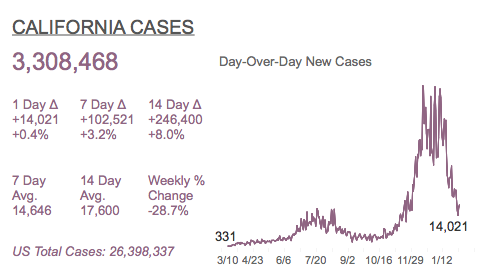
Screen Shot 2021-02-06 at 6.18.27 AMThe latest COVID-19 numbers for the state of California are showing  new cases falling dramatically from a month earlier – from holiday season. California had 10,500 new virus cases as of February 6 – down from 52,000 on January 8.
Likewise in our reading area San Luis Obispo County new cases  have dropped to 136 from 505 over the same time period.

In Tulare County, Kaweah Delta hospital reports about 100 cases in the hospital compared to around 160 a month earlier. Tulare County’s new cases are 145 on Feb 4 vs 738 on Jan 9.

Costco closing store photo department

The photo department at all Costco locations will close on  Sunday, February 14, 2021. Yup, that’s Valentine’s Day.

The following products will remain available on the Costco Photo Center website for delivery to home or business:

•Prints, Enlargements & Posters

•Stationery & Photo Greeting Cards

•Canvas, Metal & Acrylic Prints

•Photo Books & Calendars

•Photo Blankets & Other Photo Gifts

•Business Printing Products

YesVideo Home Movie Transfer service will remain available on CostcoDVD.com for delivery to home or business.

The following services will not be available after Sunday, February 14, 2021:

•Ink Refill

•Passport Photos

•Photo Restoration

UPS sales up 21 Percent

United Parcel Service Inc. notched a 21% jump in fourth-quarter

sales to $24.9 billion, a record for the company, boosted by 

pandemic-fueled online shopping during the holidays.

UPS has new Valley distribution hub in Visalia that recently 

opened.

The company’s operating profit grew 26% in the quarter ended

Dec. 31, a sign that added fees and a hard-line approach to 

volume limits instituted for Chief Executive Carol Tomé’s first 

peak shipping season helped offset higher expenses.


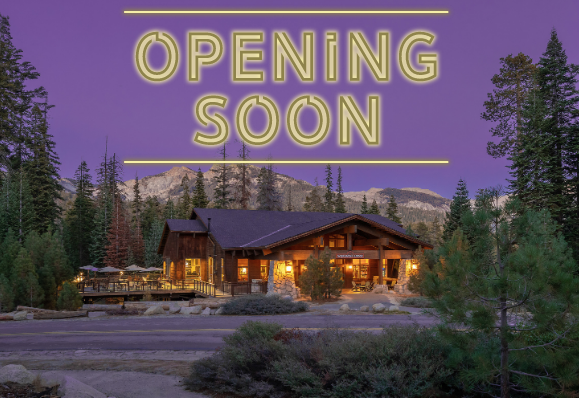
Sequoia’s Waksachi Lodge will reopen

Screen Shot 2021-02-05 at 9.31.23 AMVisitors seeking an overnight stay in Sequoia Park this spring have the chance soon. With the lifting of state restrictions, the lodge will reopen February 12.


Double-Double locations for hamburger chain

Permit for new North Visalia In-N-Out issued

Northside commercial development stays active

-February 6,2021-

The City of Visalia last week issued a $1.5 million building permit for In-N-Out Burgers to build a new 3900 square foot restaurant at the NW corner of Riggin and Dinuba Blvd.

Screen Shot 2021-01-31 at 6.34.59 AMFamous of their double-double hamburger, the new drive-thru would be their second location in Visalia and second one to break ground in the county in recent weeks – the other being in Tulare, next to Evolutions
Both new Tulare County locations should be lining up cars at their drive-thru sometime the summer. The privately held hamburger chain, based in Irvine California, has around 360 locations.

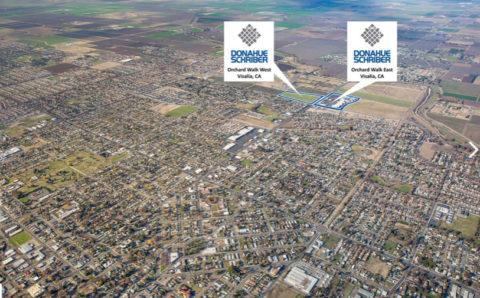
The North Visalia site anchors a new Donahue Schreiber developed shopping center – Orchard Walk West- right across from their big Target shopping center -Orchard Walk East. The new center is expected to have at least three fast food operators, a gas station and convenience store ,a credit union and space for several larger retailers- but no big box stores.

Originally the site was slated for a Home Depot more than a decade ago.That never happened.

The City of Visalia Planning Commission approved the new In-N Out location in November 2019. So it has taken 15 months to get this far.

Without any big box to anchor this 13 acre site- the developer is building the commercial center in limited phases, adding popular eateries like In-N-Out that enables them to attract other tenants because of their reputation and traffic they will generate.

That seems to be what is happening along the two mile stretch of Dinuba Highway that once had few national retailers or restaurants some 20 years ago.

That changed when developer Donate Schreiber planned the Orchard Walk shopping center back in 2007 bringing in popular retailers like Ross and Target- second locations of retailers found on the 4 mile south side strip – Mooney Blvd.

But after that development of the remaining strip has been slower. That has now changed in the past year with a boom in home buying north of Hwy 198 and particularly in NW Visalia. Today as many Visalians live north 198 as they do south of the highway.

Secondly, national fast food operators have discovered Dinuba Blvd and now Riggin. There are now 10 fast food operators along N Dinuba Blvd or on Riggin that are either open, under construction or planned. McDonalds was the first at the Target center.

What’s New

Despite the Covid-19 pandemic development projects in this part of Visalia have been brisk. On the NEC of Dinuba Blvd and Shannon Parkway in North Visalia,Omni Development is building a 6 acre commercial center. The center will feature a Circle K C-Store, Jack in the Box, and Xpress Car Wash. It will be the 6th Jack N The Box in the city. Now a 7th is planned on Lovers Lane and Tulare Ave.

Also a new 6,500 square foot building is being proposed near the southeast corner of Dinuba Boulevard and Riggin Avenue. The project will include a dental use and quick service food. A new oil changing facility to be located just south of the current AM/PM gas station and convenience store is also being proposed.

Cypress Bakery, a local Mexican bakery, is expanding at their 2126 North Dinuba Boulevard location. A new Mexican flavored iced cream parlor is expanding in the same center anchored by Food 4 Less. Called Michoacan Plus this is a small chain featuring fruit flavored ice treats. They are also under construction in Tulare.

Broker Walter Smith leases space at the Food 4 Less complex says business has been strong this year despite COVID. “We have only a few spots left” says Smith even though the former CVS Drug store is still empty. The center now features a new Wendy’s that just opened. Also there is a new shoe store- Shoe Farm and new pediatric dentist.

Another hot spot in North Visalia is the corner of Mooney and Riggin being developed by the Shannon family.The corner will feature a new Burger King locating near the new Starbucks on the northeast corner and a new Pro PT physical therapy clinic being proposed on the northwest corner. A Tulare County Federal Credit Union is also being built near the northeast corner.

Finally an independent gas station on Dinuba Blvd, just north of Houston is being rebranded as a Valero gas station.

Looking north -Donahue Schreiber projects

Looking north -Donahue Schreiber projects

The coming of more rooftops to what had been a largely open area of town is making a difference.Near Orchard Walk West residential growth continues to expand including 264 homes immediately north of the subject property, a 212 unit multi-family project to the east, and another 104 homes just Northeast of the property.


2 Attachments

Around Kings County:Faraday Future merger promises to raise $1 billion & make electric cars in Hanford

-February 6,2021-

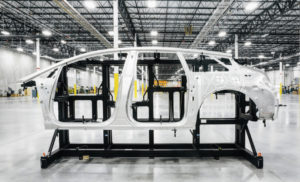
Kings residents have heard the promises before – to make electric cars at the old Pirelli tire plant in Hanford to sell worldwide.

FF91 2021-01-28 at 11.27.40 AM
The start-up company, LA-based Faraday Future(FF) has had less than a stellar record to date.But now may just be their time.

They have leased the sprawling Hanford facility since 2017. The company prototype car FF91 made a big splash at an automotive show in 2016 where it was compared favorably to Tesla’s performance. But it has been downhill since with staff hired then fired and the founder going bankrupt.

But it is a new day with new management – coming at a time when the world seems eager to buy electric vehicles backed by governments looking to cut greenhouse gases. Witness the fever over the stock of Tesla or rival – Chinese-owned NIO.

Faraday Future has had the vehicle but not the cash to ramp up its own production. Now, there may be a way.

The way would be a merger with a company that is already traded publicly – Property Solutions Acquisition Corporation(PSAC). This company has only been in business since 2020 itself. Called a special purpose acquisition company (SPAC) it has been set up solely for this purpose. If this deal happens, Faraday Future would be traded on the NASDAQ under the symbol FFIE.

The merger would have the car made in both Hanford and in Asia where electric vehicles are hot -particularly in China where several start-up companies have ramped up sales. The Asia FF factory would be in South Korea with several partners. Production is anticipated a year from now says the company.

FF says they have received over 14,000 reservations to buy the $180,000 luxury car.

“This is an important milestone in our company’s transformation, one that we achieved with strong commitment from our employees, suppliers, and partners in the U.S. and China, as well as the city of Hanford, California,” CEO Dr. Carsten Breitfel said in a statement.

The boards of directors for both FF and PSAC have unanimously approved the proposed business combination, which is expected to be completed in the second quarter of 2021.Between the stock sale and PSACs investment, they hope to raise $1 billion.

On January 27, 2021, PSAC entered into additional Subscription Agreements with Subscription Investors in the amount of 2,000,000 shares of shares of common stock of PSAC for a purchase price of $10.00 per share, or an aggregate of approximately $20 million, which increases the total amount of the private placement pursuant to the Subscription Agreements to 79,500,000 shares of common stock of PSAC for a purchase price of $10.00 per share, or an aggregate of approximately $795 million according to a financial filing.

Since the announcement, the stock of PSAC has climbed from around $10 in early January to around $18 as of Feb 3.

The Wall Street Journal reported this week – Here’s a rule of thumb for investors looking for the next Tesla: Wait for the futuristic vehicles pictured in company presentations to hit the road.
Electric-vehicle startups are racing onto the stock market through special-purpose acquisition companies or SPACs. The latest is Faraday Future, which after years of financial troubles has finally bagged a deal to get its first luxury EV to launch next year. Shares in Property Solutions Acquisition Corp. , the blank-check company acquiring Faraday, have risen 42% since the announcement Thursday.
The happy couple join at least a dozen other EV ventures and SPACs that have announced similar mergers over the past half year or so. The deals have triggered trading surges and stock-market valuations ranging from speculative to incomprehensible, underpinned by the rally in Tesla’s even more highly valued shares.

Snowpack improves with storms

fallen seqoia 2021-01-31 at 6.29.10 AMSnow pack has improved in recent days with those strong storms that dropped plenty of the white stuff in the Sierra. Snow water equivalent for Feb 2 is 67% of average for this date in Northern California ,72% in the Central Sierra and 58% in the Southern Sierra. Statewide we are 68%. A week before, the state average stood at 41%. Skiers at China Peak are happy as up to 7 feet of snow was measured on the upper slopes. Not so happy are some 15 Giant Sequoias that fell due to high winds in Yosemite.
Oil prices rebound

Midway Sunset crude oil has climbed since the election from around $35 a barrel to over $56 a barrel today as the oil patch rebounds from a depressed market for the past year. Meanwhile Chevron, with extensive holdings in Kern, Fresno and Kings Counties is eying a merger with Texas-based Exxon/Mobil. The latter has fueling stations in the state but few operations.

Ceil Howe III on Westlands WD Board

On January 19, Westlands Water District Board of Directors appointed Ceil Howe III to the vacancy created when Director Don Peracchi resigned last month. Howe will serve through the end of Peracchi’s term in 2022.
“Ceil has farmed in Fresno and Kings counties for many years, and he will be an important voice on our Board as we address the important issues that will face Westlands in the months and years ahead,” said Westlands Board President Daniel Errotabere.
Howe currently serves as Partner and Principal at Pomona Farming which grows raisins, wine grapes, pistachios, and almonds in Westlands Water District. Howe, a third-generation farmer, was born and raised in Stratford, on his diversified family farm, Westlake Farms Inc.
Farm employees begin to receive COVID-19 vaccine

California Farm Bureau reports that work is just beginning to bring COVID-19 vaccinations to California farm employees, but inoculation clinics have been held on a number of farms. County Farm Bureaus around the state have been coordinating with local public-health agencies to arrange for farm employees to receive vaccines. Local task forces are working to reach farm employees in their native languages with information, so more can receive vaccines as supplies improve.Reports say Foster Farms in Fresno is vaccinating 1000 workers at their Fresno plant.

Fresno State’s Viticulture greenhouse breaks ground

Fresno State’s Viticulture Department broke ground late last month on a 30-foot by 30-foot greenhouse located at the center of the campus viticulture and enology complex. It will allow students, staff and faculty to grow and graft an array of vines for industry-supported research projects and the University Agricultural Laboratory’s 120-acre vineyard.
Construction is expected to start in February and be completed by fall 2021.The project was made possible through a $250,000 fund raising effort supported by local industry.

Growing the Visalia Industrial Park

 Tulare County approves 80 acre parcel map on Riggin/Shirk

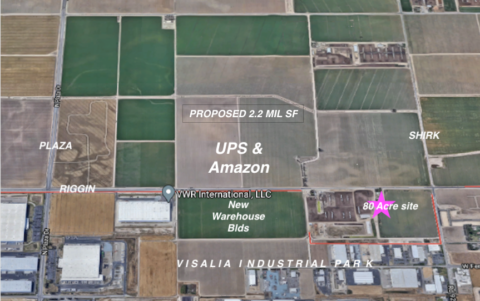
An 80-acre parcel of ag land next to the Visalia Industrial Park looks to be set up to be future industrial park located now in the county.In recent  week sthe county planning commission approved the division is of an 80-acre parcel into four 20-acre parcels.The proposed parcels lie on the south side of Avenue 312 (Riggin) and the west side of Road 92(Shirk). The site, now zoned ag has a dairy which is no longer operating.The parcel is located within the Visalia Urban Development Boundary with the Land Use Designation of “Service Commercial/Light Industrial.” The land may now be ripe to be annexed into the city as this part of the industrial park booms with new industries like UPS and Amazon.

Screen Shot 2021-01-12 at 6.44.34 AM


SOME HOPE -COVID CASES DOWN

-January 24,2021-

Screen Shot 2021-01-24 at 6.31.47 AMKaweah Delta’s COVID-19 caseload continues to drop following a pattern seen around the country. Patients hospitalized with the virus now number 109 at the Visalia hospital -down from a high of 169 as of January 5. The number of KD employees with Covid is  down by half from 231 around Christmas  to 117 now.
New cases of COVID in California are also falling according to state figures- dropping about 34% over 2 weeks.Statewide new positive case as of January 20 were around 20,000 compared to near 53,000 on January 8. New cases in Tulare County were  almost 1300 on 12/15 and now number 225 as of 01/22.

California Ag & UFW hail new immigration bills

Over 300,000 Valley farmworkers & “Dreamers” could benefit
-January 23,2021-
 
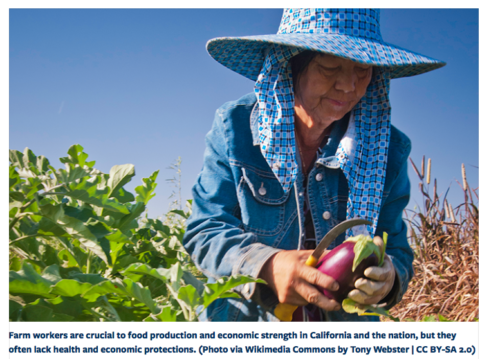
Screen Shot 2021-01-22 at 6.52.58 AMBoth California farmer groups and the UFW and labor groups are supporting President Biden’s action to send Congress an immigration bill on his first day in office. Biden’s plan would grant legal status to both farmworkers and “Dreamers”  in the United States. Dreamers are young undocumented immigrants —who arrived in the U.S. at a young age.
 
Fresno-based Nisei Famer’s League President Manuel Cunha says there are now two bills working their way through Congress on a similar path. Their group have been backing a bill by California Senator Dianne Feinstein that would shield farmworkers from deportation and put them on a path toward earned legal status and eventual citizenship. Whichever bill emerges, it would benefit up to 250,000 Valley farmworkers and about 70,000 Dreamers, some in ag jobs, estimates Cunha. 
 
Cunha adds his family farm group is also excited about the appointment of the new Secretary of Homeland Security Alejandro Mayorkas –  critical to implementing any new immigration regulations that will come out of legislation.“He is an honest man” says Cunha.
 
Cunha says he hopes new regulations can be ready by April or May, showing optimism something will pass this time around after decades of stalemate over the contentious issue.
 
In the past few days, a coalition of 180 groups including the California Farm Bureau called for “strong leadership and bipartisanship” from Congress and the incoming Biden administration, urging quick action on immigration reform. It described immigration laws as “decades overdue for an overhaul” to create a “modern, humane and effective immigration system.”
 
The United Farmworkers Union (UFW) announced their support as well. “Farm workers eligible under the legislation would have to pass criminal background checks and show they have labored in agriculture at least 100 days in four of the previous five years. The new president also announced he is simultaneously taking immediate actions, including restoring rights to the Dreamers under the Deferred Action for Childhood Arrivals (DACA) program and cancelling Donald Trump’s vindictive executive orders enforcing immigration policies.
 
“Under the Biden bill, farm workers with work histories would immediately get legal status, along with Dreamers and Temporary Protected Status recipients,” said UFW President Teresa Romero.”

 
Western Growers added their voice. ”President Biden’s decision to send Congress an immigration reform bill on his first day in office sends a clear statement about his commitment to resolving one of the most pressing issues facing the agriculture industry. We are encouraged by the President’s focus on modernizing the immigration system, and are confident we can work within his framework to fully address the agricultural labor crisis. As we did on a bipartisan basis in 2013 and 2019, we will collaborate with our Congressional champions to ensure that the two key needs of American farmers are met in any legislative package that arrives on the President’s desk – an earned pathway to legalization for our existing, experienced workers and a streamlined temporary nonimmigrant program that provides a reliable future flow of guest workers.”
 
Farm groups and labor advocates share the goal to protect the large existing immigrant workforce here – for both humanitarian reasons as well as practical business reasons – workers are needed to pick the crops. Many have lived and worked here for decades. Farmers point to a shortage of workers in key crop industries.
 
Advocates argue under Prudent Trump’s leadership “Farmworker communities across the country are living and working in fear and uncertainty due to President Trump’s harsh anti-immigrant enforcement and deportation agenda.”
 
Polling consistently shows broad, bipartisan support for immigrants and immigration reform says the 180-group coalition. Recent polls have found that over 77% of Americans believe that immigration is good for the country and 78% believe DACA recipients should be able to remain in America, and a Fox News poll on Election Day that found 71% of Americans support legal status for undocumented immigrants. Historically, strong support has existed for immigration reform that addresses border security, expanded visa programs for high-skilled and agricultural workers, and regularizing the status of undocumented immigrants.
 
Citrus industry too 
 
Tulare County-based California Citrus Mutual backs this approach.
 
“The California citrus industry employs over 20,000 people and requires labor nearly year-round. Our long growing season and the need for skilled, hand labor, keeps people working in citrus longer than most other agricultural commodities.
 
Labor supply is an issue most citrus growers and packers face at various points of the growing and harvest seasons when the demand for workers across the agriculture sector exceeds supply. Unlike in other areas of the country, the E-Verify system does not work well in California. This is why California Citrus Mutual believes federal immigration reform must be addressed.”
Since 2019, when the bill was introduced, farm groups backed the Feinstein approach that would offer  a “blue card” to farmworkers that would shield them for deportation.  Farmworkers who maintain blue card status for  three years or five years—depending on hours worked in agriculture—would be eligible to adjust to lawful permanent residence (green card).
 
Backing the Feinstein bill in 2019 California Senator Kamala Harris -now the Vice President  – also supported the plan.
“Protecting undocumented farm workers from deportation and giving them a pathway to citizenship will do much to improve their working conditions and bring people out of the shadows. It’s the smart thing to do and the right thing to do.”
 
Blue Card
Supporters of the” Blue Card” approach believe that the blue card will solve the problem of undocumented workers in the agriculture industry by making the process of hiring foreigners easier for employers, and also provide a route for farm workers to gain legal status.
 
Farm workers who are granted a blue card are offered several benefits. Under the bill, immigrants seeking citizenship will have to wait 13 years, while agricultural workers will only have to wait 10 years. “Blue card” status would provide legal temporary U.S. residency, employment, and allow the holder to travel outside of the U.S. but would not allow the holder to receive any federal public benefits.
 
The requirements for a blue card are as follows: have performed agricultural work for at least 575 hours or 100 work days during a two-year period ending on December 31, 2012; be physically present in the U.S. since Dec. 31, 2012; and an application fee of $100. If they meet this requirement, along with other criminal and admissibility requirements, they will hold “blue-card” status and will be able to apply for LPR status 5 years after the bill is enacted.
 
Additionally, during the application process for “blue card” status, the applicant may not be deported, unless they commit a crime or become ineligible for the status. An employer can employ the applicant without fear of penalty. The “blue card” status expires after eight years.
Sounding a note of caution the new Administration’s proposal to grant legal status, and eventual citizenship to the approximately 11 million undocumented immigrants currently in the U.S. may run into GOP opposition who insist the US/ Mexican border must be strengthened before they can back an immigration bill. Also, the US dairy industry wants to insure they can bring in guest workers if needed.