Residential Solar Boom For Central Coast

January 25,2015

More locals want to say goodbye to PG&E.

Screen Shot 2015-01-25 at 5.48.38 PMHome owners in San Luis Obispo and Santa Barbara counties installed a record number of solar panel units, typically on rooftops in 2014, according to Construction Monitor.

The solar boom saw solar installations surge from 848 in the two- county area in 2013 to 2529 in 2014, a 300% jump.

The busiest contractor was Solar City with 659 permits,followed by Sunrun with 269 and then by locally-owned Solarponics with 195.

The average price was just under $15,000 with a 30% federal tax credit available.

The boom times started in 2013 – a banner year for clean energy and the U.S. solar industry. California, the nation’s solar standout, more than doubled its rooftop solar installations in 2013 from 1,000 megawatts (MW) to 2,000 MWs.

Decreasing regulatory hurdles and fees and the cost of solar itself has helped increase activity to say nothing of rising utility costs. Add ready financing for both lease and ownership of the panels.

Leasing a system can put a dent in your PG&E bill but if you buy it  your utility bill is likely to drop to $10 a month or less.

Go Solar

The Go Solar California! campaign – a joint effort of the California Energy Commission and the California Public Utilities Commission.has the goal is to encourage Californians to install 3,000 megawatts of solar energy systems on homes and businesses by the end of 2016, making renewable energy an everyday reality. The program also has a goal to install 585 million therms of gas-displacing solar hot water systems by the end of 2017.

The Go Solar California website provides California consumers a “one-stop shop” for information on solar programs, rebates, tax credits, and information on installing and interconnecting solar electric and solar thermal systems. The site has information on program rules, including eligible equipment and standards, as well as information on how to find an eligible, licensed solar contractor.

California is not  alone in moving quickly  to renewable  energy sources.

According to Bloomberg New Energy Finance, low-carbon, clean energy investments jumped by 16 percent last year worldwide, totaling $310 billion, a five-fold increase from 10 years ago.

Screen Shot 2015-01-25 at 5.48.25 PMGraphic  shows potential savings over the years with  lease. Savings are much bigger if you own the system.

SLO Jobless Rate Falls To 8-Year Low

January 24,2015

Screen shot 2013-01-19 at 11.41.42 AMSan Luis Obispo‘s December jobless rate is down to 5 percent says EDD – the best December reading since 2007. December 2013 saw 5.8 percent and there were a number of years the rate was 8% or higher.

Some 6900 were unemployed last month compared to 8000 residents a year ago.

Surprisingly there was a jump in farm employment in December, up 100 from a year earlier. Nonfarm jobs climbed by 1400.

Construction and goods producing jobs were up 3.9 and 4.8% but retail jobs were lower by 6.4%. Real estate jobs also fell year-over- year. Tourist related jobs climbed 5%.

Statewide the jobless rate fell to 6.7% from 7.9% a year earlier. The US rate is down to 5.4%.

No McDonalds For Los Osos

Screen Shot 2015-01-20 at 11.00.40 AM

 Fast Food Giant Now Out Of Favor?

January 21,201

The franchisee working to bring in a McDonalds restaurant into Los Osos has thrown in the towel.

“With all the expenses adding up the deal just did not pencil out” says Judy Reyes who heads  up the project.”We feel sad and want to thank Los Osos for their support.” But it is tough times in the restaurant business and McDonalds is concentrating on their existing stores, she says.

With much controversy the fast food giant in 2013 sought to occupy the long vacant Bank of America in Los Osos wanting to do a drive-thru. Opposition was strong but the Los Osos Community Advisory Board narrowly supported the project and the Board of Supervisors gave it a 4 to 1 OK last April.

Mitigation requirements were strong as well and the eatery was denied a 24 hour license to operate.

After approval McDonalds did nothing with their permit and now will no longer pursue the deal.

Reyes says another potential McDonalds across from the SLO airport is still under consideration.

With its stock  down,McDonald’s Corporation ended 2014 with its worst performance in 30 years.

Growing Coffee On Central Coast

from CFB

January 17,2015

From his Southern California farm, entrepreneur and exotic tree-fruit grower Jay Ruskey is setting out to elevate people’s coffee experiences around the world. He’s making a name for himself with a crop that traditionalists say can be grown only in countries closer to the Equator.

Raised in Hollywood, Ruskey left Tinseltown to pursue life alongside the ocean in Goleta, near Santa Barbara. He partnered with his family to purchase 42 acres for his farm, Good Land Organics, in 1990 and since has grown exotic, subtropical crops such as avocados, cherimoyas, passion fruit, dragon fruit, finger limes and caviar limes.

He now also grows, processes and roasts his own specialty coffee varieties, with Good Land Organics holding title as the first successful commercial coffee farm in the continental United States.

“The whole coffee world is blowing up,” said Ruskey, who harvested, roasted and bagged his first coffee crop in 2008. “Today, specialty coffee is treated like wine was 10 years ago. It is emerging; people are appreciating it for its flavor, for the story, how it’s brewed, what it’s paired with. It is now up there as a fine food.”

Good Land Organics owner Jay Ruskey is California’s first successful commercial coffee grower.

Coastal coffee
Growing coffee in California is the result of a longtime collaboration between Ruskey and University of California Cooperative Extension farm advisor Mark Gaskell. The pair, after about a dozen years of research, found a way for coffee trees and other exotic crops to flourish, thanks to the area’s temperate climate.

Good Land Organics is located just 2 miles from the Pacific Ocean, at an elevation of 650 feet, and Ruskey said the farm benefits from the mild summers and frost-free winters.

“In the tropics, most coffee is grown in full sun, but the valuable coffee is grown in the shade or the higher elevations, which slows down the maturation of the bean, which makes it a little more flavorful,” he explained. “What is done in altitude or shade in the tropics, we are achieving with cooler average temperatures. It just takes longer—up to a year—to go from flower to ripe fruit and, in turn, this creates some very unique and strong flavors, which we are getting recognized for.”

Ruskey plants the coffee trees, which are actually small, flowering shrubs, sharing space among avocados in a layered agricultural system. This system protects the coffee trees from wind and provides shade on sunny days. It also increases productivity of the land, he said, “in a way that everybody benefits,” because he can more efficiently use resources such as land and water.


Tree to bean

Each summer, Good Land Organics harvests the ripened fruit of the coffee shrub, known as cherries, from about a dozen different coffee tree varieties. Ruskey’s trees have been growing for about nine years, with harvest times from May through September. Coffee tours are offered during those months (see article below) and participants can view flowering trees as well as the harvesting of coffee cherries.

Operations Manager Lindsey Mesta harvesting coffee cherries.

“That’s quite an experience because it is pretty rare to see both anywhere in the world,” Ruskey said.

Each cherry on the coffee plant typically contains two seeds, which are referred to as beans. Ruskey explained that harvest happens when the coffee cherries are as red as possible, “so that the sugar content is 20 percent or above, so they are very sweet.”

“The specialty market is starting to pay farmers for harvesting the cherries when they are actually ripe, so they are beginning to get rewarded for good agricultural practices, which is resulting in improved cups of coffee,” he said.

Once the cherries are hand-harvested, the pulp is separated from the beans. After fermenting in water, the beans are sun-dried on racks and rotated daily. They are next moved into a temperature-controlled corner of the farm’s barn to continue drying. Once the beans reach a specific moisture content, they are stored in breathable cloth bags for curing, which lasts two to three months.

Lindsey Mesta, Good Land Organics operations manager, oversees the post-harvest process and quality control. She said once the coffee has finished curing, it is hulled, which means the bean’s thin outer layer (known as parchment) is removed. It can then be sold in its green bean form or roasted.

Chris Calkins, a farmer from Carlsbad, recently visited Good Land Organics and tasted two of its coffee varieties.”Coffee goes through many stages that can make or break it in the final cup; everything is extremely relevant to the quality,” Mesta said. “What’s unique about our farm is it goes through every stage in our hands. We touch the bean in every stage, so that we can be very in control of the quality that we are selling.”

“It was as good as or better than any coffee I’ve tasted anywhere,” Calkins said, adding that he believes coffee is a “wonderful niche crop” for California.

“Jay’s passion for the product and for trying to find ways in which you can diversify—in unique ways—California’s agriculture, I think is important,” he continued. “What he has done is bring a passion for trying to find some unique products for California that fit today’s obsession or interest in food and food crops.”

Coffee cherries turn red when ripe, as shown in cup, and are then harvested and processed into green coffee beans. Good Land Organics sells green coffee beans to specialty roasters and consumers, and also offers freshly roasted beans.

Bean to cup
Good Land Organics sells the green coffee beans wholesale to international and domestic clients and to local coffee roasters. The farm also offers fresh-roasted beans through its website at www.goodlandorganics.com. Ruskey said 8 pounds of cherries yield about 1 pound of dried green coffee beans.

“My ultimate goal is to provide specialty roasters and coffee shops with green beans and they get to roast it to their preference and then serve it fresh,” Ruskey said. “There is a time clock: Roasted beans should be served no later than 10 days after they are roasted or they start losing their aromas.

“When you drink the coffee and say, ‘Usually I need cream and sugar, but I don’t need cream and sugar; this is great,’ that’s my ultimate compliment, because the coffee is a balance of sweetness and acidity and has some body,” he said, adding that those qualities—as well as flavor that gets better as it cools—are what he looks for in a cup of coffee.

In addition to selling coffee beans, Ruskey started a nursery that specializes in coffee tree varieties. He sells them to farmers interested in growing coffee and also to roasteries and coffee shops as décor.

“There are new roasteries popping up, new cafés popping up. It’s a new awareness of a consumable we’ve already been drinking quite frequently,” Mesta said.

“It would just be more fun to have more people exposed to the specialty side of coffee,” she added, “to have people go look for their local roasterie and get into coffee and see where we’re headed.”

Christine Souza
csouza@californiabountiful.com

Coffee talk, walk and taste

To show people that coffee can be grown in California, Good Land Organics owner Jay Ruskey has opened his coffee plantation to the public to educate them about the coffee-growing process—from bean to cup—at his hillside farm in Goleta.

Jay Ruskey offers seasonal tours of his farm to educate people about growing, harvesting and processing coffee in California. Photo courtesy of Good Land Organics.

“Our coffee educational program has been successful because we are improving the relationship people have with their cup of coffee; it’s part of their daily ritual and we are just trying to expand their knowledge base for something that they do every day,” Ruskey said. “People come out and say, ‘Oh my goodness, you are growing coffee.'”

Good Land Organics Operations Manager Lindsey Mesta, who has experience working on coffee farms in Hawaii, said a wide range of people are attracted to the tours.

“We’ve had industry people as well as those who are just interested in coffee, to people who don’t even like coffee who are here because they like tropical fruits or enjoy organic farming,” Mesta said.

The tours also educate coffee shop and roasterie employees interested in coffee production. A significant part of the tour is tasting the sweet coffee cherries, which creates a foundation for a coffee palate, Ruskey said.

Aaron Olson and Kim Anderson, owners of Handlebar Coffee Roasters in Santa Barbara, have experienced Good Land Organics’ educational tour more than once.

“We think he is offering a great service to the coffee world and community,” Anderson said, as Olson added, “We put some fresh-picked coffee cherries through the pulp mill and put them in the sun to dry. Jay has lots of different varietals.”

Sites to savor
• Learn more about the products and tours at Good Land Organics.
• For an overview of the coffee industry, history, techniques and standards for coffee cultivation and processing, visit the Specialty Coffee Association of America.
• Advance your coffee palate with courses and additional training at www.bootcoffee.com.


Natural Foods Store Coming To SLO

January 13,2015

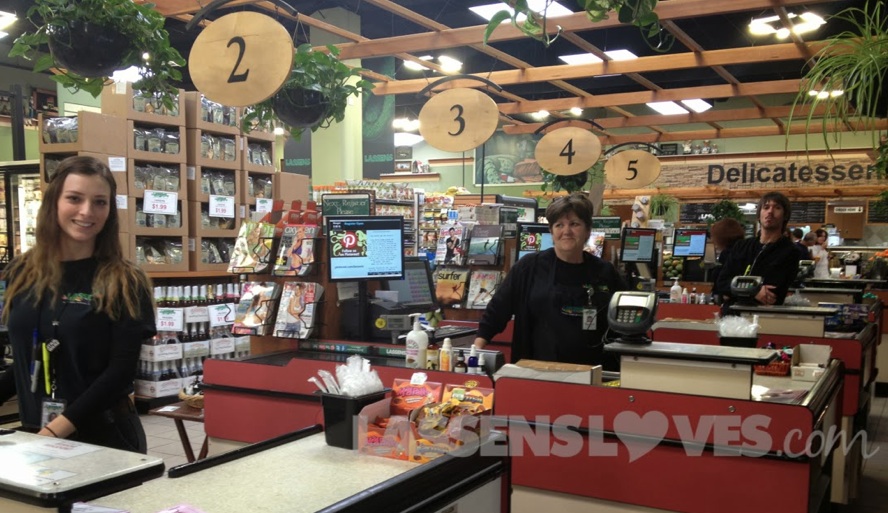
Lassens  2015-01-13 at 11.09.05 AMCamarillo-based Lassen’s Natural Foods will open a store in San Luis Obispo late this year at University Square on Foothill and Santa Rosa,  where New Frontiers used to be located. The long vacant shopping center being renovated now will also feature a new Rite Aid store says broker Stephen Leider of Lee & Associates.

The new stores that will anchor the reborn shopping center includes a 15,000sf Lassen’s grocery store and a 16,000sf Rite Aid drug outlet.The center is being developed by Nick Tompkins

Flower Children Still

Founded by Hilmar and Oda Lassen in 1971 the store came along when health food was the first big trend.

“Wheat germ, peace, love and tofu were making their way into the lives of many flower children” says the store’s website.

Now the another generation will get a taste of the apple as the city will sport a growing mix of health conscious outlets from Whole Foods who bought out New Frontiers, as well as Yuppy trend setter Trader Joe’s and Something Fresh.

None can be called locally-owned although at least Lassen’s has a nearby address and should help stimulate competition for consumers. Locally-owned Spencer’s closed in SLO city last year.

Lassen’s will now have 10 stores in California from Bakersfield to Santa Maria as well as a few other locations under different ownership.

The stores features a deli section, fresh and organic foods as well as the highest quality vitamins and supplements.

A store employee says prices are competitive with Whole Foods but not always cheaper. “Depends on the item” he adds.

The SLO grocery marketplace was shocked in recent weeks with news that Washington-based grocer Haggen stores  plans to buy 146 stores as a result of the planned merger of Alberstons and Safeway. inclding the acquisition of 6 Vons and Albertsons stores in San Luis Obispo County as part of a deal to be approved by the Federal Trade Commission.

That deal set close in January 2015 will mean Vons in Los Osos and Paso Robles well as the two Albertsons in San Luis Obispo,on Johnson and on Foothill and the Albertsons in Arroyo Grande and Atascadero will all be rebranded to include the Haggen’s name. The stores will be be converted in phases.
As for the present deal, Rite Aid – with two stores already in town has one just a few blocks away, also on Foothill. The store manager says she is “unaware of any moving plans.”

Eyesore No More

Realtors on the University Square project had been working with Sprout’s Farmers Market to take the grocery space but the fast growing company,who recently went public – passed on coming to SLO.

These deals take a tremendous amount of time” says broker Leider. He says “the city completely cooperated with what we were trying to do.” As for the future Leider says the economy has made developers “ cautiously optimistic” about 2015.

The property called an”eyesore” in the Tribune a year ago can now have the last laugh.

Around SLO” Development News

January 10,2015

Bids Sought For New Seaside Holiday Inn

Screen Shot 2015-01-10 at 5.41.41 AMBids are expected to build a new 4-story Holiday Inn in Grover Beach. The $10 million,178,000 sf complex would be located at the end of Grand Ave on city-owned land on the beach. The big project is a result of the long awaited city sponsored hotel and conference center at this location, in the works for years.

Pacifica Companies submitted the planning application to the City of Grover Beach for the Grover Beach Lodge and Conference Center.  The approximately 13.4-acre project site is within Pismo State Beach and the property is owned by the State Department of Parks and Recreation.

Former Furniture Store Slated For Brew Pub

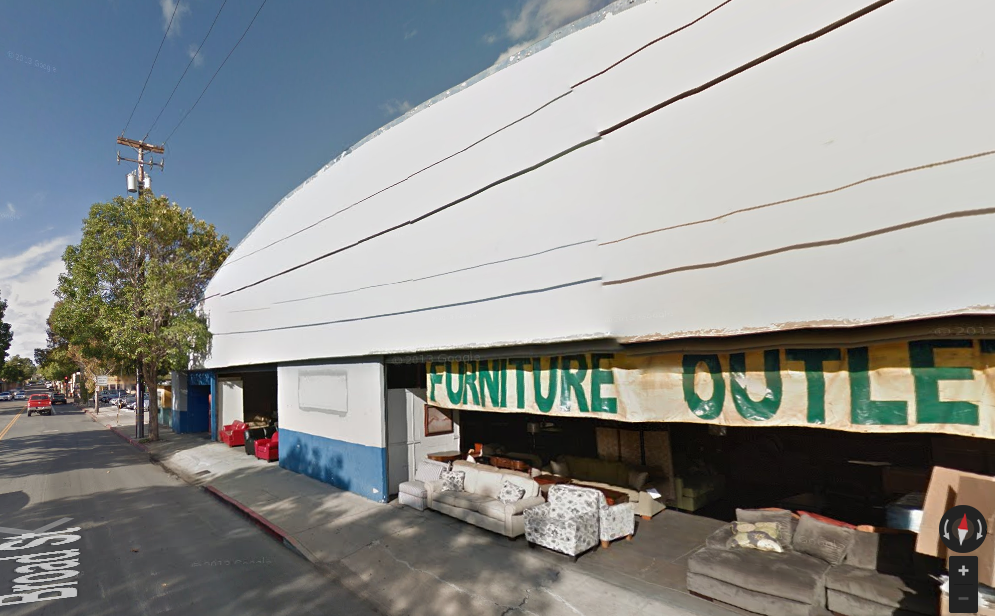
Screen Shot 2015-01-09 at 7.21.17 AMSan Luis Obispo’s planning commission will hear an application for 1234 Broad Street to establish a brewpub with full food service, retail uses, and wine tasting. The site is the former furniture store location to be be renovated as another brewpub for Downtown.

Morro Bay To Acquire 180 Car Parking Lot On Embarcadero

The Morro Bay City Council is expected to accept a quit claim deed from Dynegy, owner of the now idled  Morro Bay power plant for a 3-acres180 car lot southeast of the plant.The acquisition, to be discussed at the next council meeting comes after the city and Dynegy failed to agree to a trade for some properties in lieu of payment of owed funds. Instead Dynegy paid the city $525,000 last year.

Northwest Grocery Chain To Buy Six SLO County Albertsons/Vons

Deal Result Of Merger Of Albertsons and Safeway

December 20,2014

Screen Shot 2014-12-20 at 6.13.00 AMBellingham Washington-based grocer Haggen plans to buy 146 stores as a result of the planned merger of Alberstons and Safeway.The small Pacific NW chain has just 18 stores but will now operate 164 locations including the acquisition of 6 Vons and Albertsons stores in San Luis Obispo County as part of a deal to be approved by the Federal Trade Commission. The FTC required divestment in the planned merger of Albertsons and Safeway  – selling off some of the stores to encourage competition.

Haggen will now have locations in Washington, Oregon, California, Nevada and Arizona and be a new player here on the Central Coast.

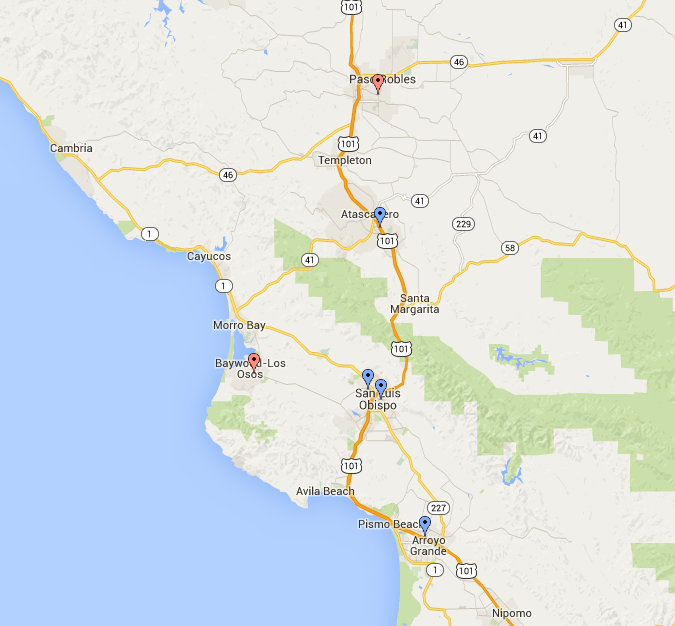
The deal set close in January 2015 will mean SLO County Vons in Los Osos and Paso Robles well as the two Albertsons in San Luis Obispo,on Johnson and on Foothill and the Albertsons in Arroyo Grande and Atascadero will all be rebranded to include the Haggen’s name. The stores be be converted in phases.

Screen Shot 2014-12-20 at 5.59.40 AMStill operating as Albertsons will be the Morro Bay store,the Santa Maria Albertsons, the Vons on Broad in SLO, the Grover Beach Vons location,the Atascadero Vons and the Vons in Nipomo.The stores will be all under the merged management once approved by the FTC.

All Albertsons and Safeway store employees will have the opportunity to be rehired, growing Haggen’s workforce from 2,000 in two states to more than 10,000 across five states.

Unified Grocers, Inc., the largest wholesale grocery distributor in the western United States, announced Friday that it will be the primary and preferred supplier for all of Haggen’s newly acquired stores in California, Nevada and Arizona and will be a substantial supplier for the Oregon and Washington stores. Additionally, Unified’s Market Centre subsidiary will supply specialty products for all the acquired stores. This agreement represents about 
$750 million in annual new business. The company also announced today that it has successfully completed a refinancing of its credit facilities to provide greater flexibility to finance its growth plans and lower its ongoing interest costs.

AB Acquisition LLC (Albertsons) and Safeway Inc. (NYSE: SWY) confirmed the deal Friday saying that they have entered into agreements, subject to approval by the Federal Trade Commission (FTC), to sell 168 stores across eight states to four buyers:
Associated Food Stores (AFS) will purchase eight stores in Montana and Wyoming;
Associated Wholesale Grocers (AWG)/Minyards will purchase 12 stores in Texas;
SUPERVALU will purchase two stores in Washington; and
Haggen will purchase 146 stores across Arizona, California, Nevada, Oregon and Washington.

Divestiture of these stores is being undertaken in order to secure FTC clearance of the companies’ proposed merger, which was announced in March and is expected to close in January 2015. The purchase agreements with the four buyers are all subject to approval by the FTC.

Under the terms of the purchase agreements, the buyers will acquire the stores, equipment and inventory, and they intend to hire most, if not all, of the store employees upon the closing of the purchase of the stores.. For a complete list of stores to be divested, please visit: http://www.albertsons.com/tellmemore.

“We’re pleased to have found strong buyers for these stores and to have completed this important step toward combining Albertsons and Safeway,” said Safeway President and Chief Executive Officer Robert Edwards, who will serve as the combined company’s President and CEO. “We look forward now to the transaction’s close, so we can begin working together to enhance the loyalty of grocery shoppers by delivering high quality products, great service and lower prices to become the favorite local supermarket in every neighborhood we serve.”

Changing Climate May Move Fish Populations North

December 19,2014

From Northwest Fish LetterScreen Shot 2014-12-19 at 7.46.19 AM
An article in the latest issue of the peer-reviewed journal, Progress in Oceanography, suggests that the range of many West Coast fish species may move further north by 2050, as the Pacific Ocean warms in coming decades.
Authors William W.L. Cheung, of the University of British Columbia, Richard D. Brodeur of NOAA Fisheries, Thomas A. Okey, of the University of Victoria, and Daniel Pauly of the University of British Columbia, say they combined published data, expert knowledge, and pelagic fish survey data to predict the current range of 28 species in the NE Pacific and projected changes in ocean conditions from three models to simulate changes in their spatial distribution.
Their results show that the range of these fish species is expected to shift northward at about 30 km per decade “The projected species range shifts result in a high rate of range expansion of this group of species into the Gulf of Alaska and the Bering Sea. Rate of range contraction of these species is highest at the Aleutian Islands, and in the California Current Large Marine Ecosystem. We also predict increasing dominance of warmer water species in all regions,” said their abstract, with large ecological implications to follow, “through mismatches of co-evolved species, unexpected trophic effects, and shifts of fishing grounds.”
The study says species from warmer waters like thresher sharks and chub mackerel are likely to become more prominent in the Gulf of Alaska and off B.C., while sea lions and seabirds may find their natural prey moving out of their current foraging range.

Around SLO CIty: Affordable Apts / French Hospital Expansion

December 17,2014

South Street Family Apartments Move Forward

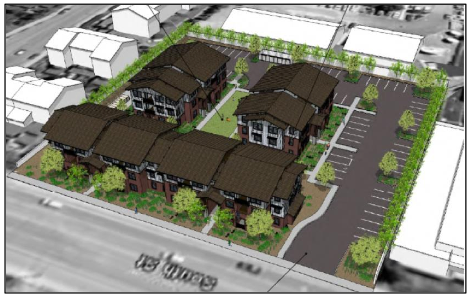
Screen Shot 2014-12-15 at 5.09.53 PMOn December 4th, South Street Family Apartments LLP – closed escrow on property located at 313 South Street for the development of a 43 unit multi- family rental apartment project. The project is 100% affordable to extremely-low, very-low and low income households earning 30% to 60% of the Area Median Income (AMI). Consistent with City goals, the project provides much needed affordable housing within close proximity to downtown.
A city of SLO note says “this project has a very complex financing package including federal, state and local funding sources. The City provided a loan in the amount of $650,000 from the Affordable Housing Fund and a development impact fee deferral loan in the amount of $716,166.”

The project has received a building permit and construction is slated to begin in spring 2015.

Panel Reviews French Hospital Campus Expansion

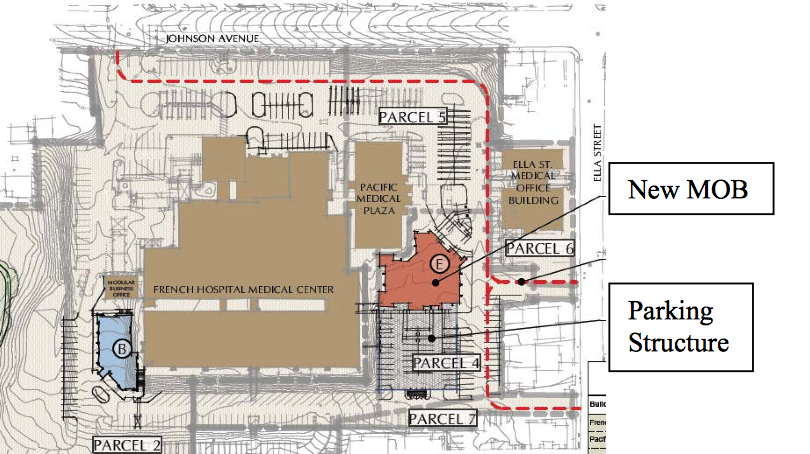
Earlier this month and in previous meetings the city Architectural Review Committee approved plans for  a total of four new buildings on the French Hospital campus. The latest is  a four-story, 31,471 square-foot office building with two-level parking garage on the south side of the main hospital building on the French Hospital campus located near the intersection of Johnson Avenue and Lizzie Street.
Already under construction is the so called Pavilion Building on the north side of the campus with 17,591sf.A second approved building was an urgent care clinic that will be a freestanding structure in the front parking lot and will contain 5,450 square-foot of floor area. It will be located just to the south of the existing hospital’s main entry, but construction has not begun on it yet.
In conjunction with the proposed 31,471sf office building, a two-level parking garage with a total of 112 spaces is proposed. The garage will be located directly to the west of the office building.

Click to Enlarge
Click to Enlarge

Morro Bay Approves Construction Of Multi-Use Trail

December 17,2014

The Morro Creek Multi-Use Trail and Bridge Project was approved for design in July, 2013. The design was completed and all permits acquired in August, 2014. Additional funding was procured to cover increases in anticipated costs due to design changes (emergency vehicle loading and lighting) and revised cost estimates based on detailed design.
The initial Invitation for Bids resulted in a low bid from Souza Construction of $1,560,560. As this exceeded available funds, Council rejected all bids on October 28, 2014 and the project was redesigned to reduce costs. Cost-saving redesign features include a more cost-effective foundation installation method, a less complex boardwalk stamped concrete pattern, and a reduction in landscape maintenance requirements from 5 years to 90. The project was re-advertised on November 2.
One of the risks in rebidding this project was associated with meeting the December 31, 2014 award deadline as prescribed by the funding agency; awarding the project now, allows the City to meet this deadline.
At the December 2 council meeting the city awarded the contract for the Morro Creek Multi-Use Trail and Bridge Project to CalPortland Construction of Santa Maria, CA in the amount of $1,184,654. The City Engineer’s estimate for this project is $1,200,000. The construction phase of the project, including construction management services, is substantially funded by a grant from federal and state funds in the amount of $1,268,000. The funding application commits the City to a match of $168,670 allotting total available funds at $1,436,670.

Bicycle and Pedestrian Facilities

Trail will be in front of former tank farm seen in this photo

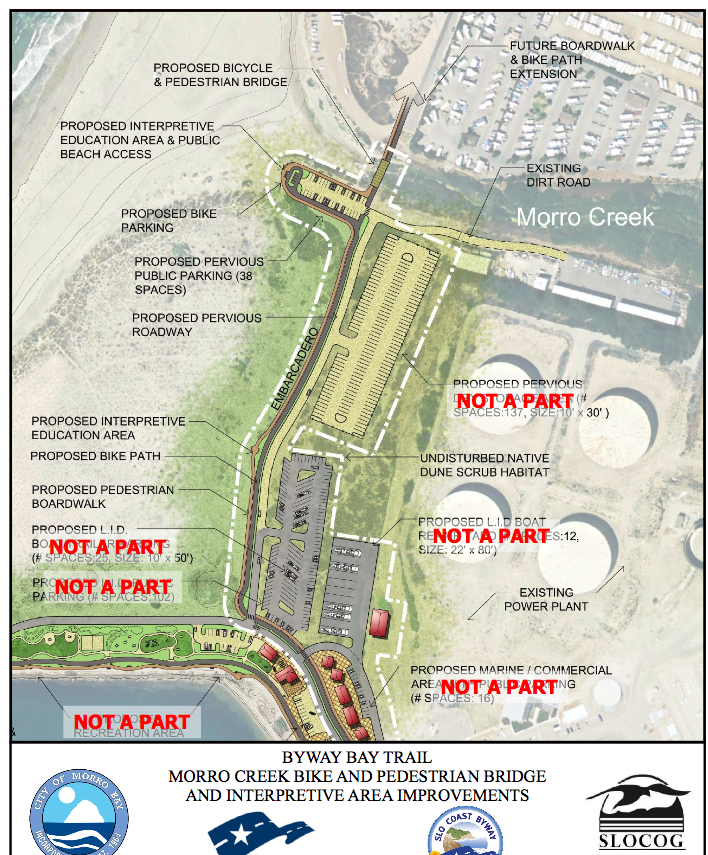
The proposed project will include an extension of Harborwalk with a pedestrian boardwalk and separate bike path from existing parking area and crossing on Embarcadero Avenue northward 1,200 feet adjacent to the recently restored native dune scrub and snowy pl over habitat area. Additionally, a bicycle and pedestrian bridge would extend the pedestrian boardwalk and bike path across Morro Creek to connect to north Morro Bay on Atascadero
Road (State Route 41). And, as the new trail approaches the proposed Morro Creek Bike/Ped bridge there will be an opportunity for cyclists or pedestrians to follow the trail to the proposed interpretive area where a bike parking facility will be located.

click to enlarge
click to enlarge