

Category: Central Coast

REI Co-op to open new store in San Luis Obispo in fall 2019
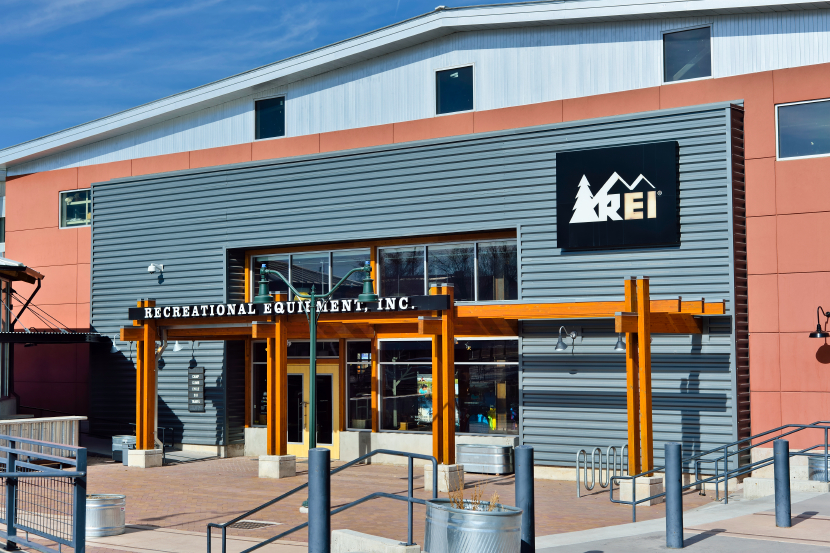 New store will offer customers top-quality gear, equipment rentals and outdoor experiences
SEATTLE – REI Co-op is opening a new store in San Luis Obispo, California in fall 2019, offering a wide assortment of quality outdoor gear, equipment rentals, experiences and expertise to customers along California’s central coast. The new 22,000-square-foot store will be located at the SLO Promenade and gear for the region’s most popular outdoor activities including hiking, camping, cycling and climbing.
“Close to the California coast and Los Padres National Forest, San Luis Obispo is a thriving outdoor hub,” said Greg Mellinger, REI retail director for the California-Nevada district. “We are thrilled to finally join San Luis Obispo and further connect our members to the amazing outdoor opportunities this community has to offer.”
In addition to outdoor gear and rentals, REI San Luis Obispo will offer workshops and outdoor experiences to connect people to a life outdoors. A national leader in outdoor experiences, REI helped more than 350,000 people across the country get outside last year.
To celebrate the new store, REI will partner with The Land Conservancy of San Luis Obispo County and Central Coast Concerned Mountain Bikers (CCMB) to support stewardship efforts in the local community. In 2018, REI invested over $3 million in nonprofits in California.
REI opened its first store in California– and its second store in the country- in Berkeley in 1975. Today, REI has 28 stores and more than 3.8 million members in the state. For more than 40 years, REI has invested heavily in California’s outdoor community, actively working with nonprofits to steward and maintain local trails and public lands and connect people to the outdoors.
Join the REI team
Candidates interested in joining the REI team can apply online at REI.com/jobs. This year, REI expects to hire nearly 45 employees for the San Luis Obispo store. Employees receive a wide variety of benefits, including generous product and service discounts, competitive pay and retirement contributions. REI employees also enjoy unique perks, like two paid “Yay Days” that allow them to enjoy their favorite outdoor activity and an additional paid day off on Black Friday to #OptOutside with family and friends. REI has been recognized as one of Fortune magazine’s “100 Best Companies to Work For” for 22 consecutive years.
Store facts:
- Address: 313 Madonna Road, Suite B
- Square footage: 22,000 square feet
- Open date: Fall 2019
- Special features: Bike shop for maintenance and repairs, gear rentals
- REI Co-op membership: Over 3.8 million lifetime members in California
About the REI Co-op
REI is a specialty outdoor retailer, headquartered near Seattle. The nation’s largest consumer co-op, REI is a growing community of more than 18 million members who expect and love the best quality gear, inspiring expert classes and trips, and outstanding customer service. REI has 154 stores in 35 states and the District of Columbia. If you can’t visit a store, you can shop at REI.com, REI Outlet or the free REI shopping app. REI isn’t just about gear. Adventurers can take the trip of a lifetime with REI’s active adventure travel company, a global leader that runs more than 250 itineraries across all continents. In every community where REI has a presence, professionally trained instructors share their expertise by hosting beginner-to advanced-level classes and workshops about a wide range of activities. To build on the infrastructure that makes life outside possible, REI invests millions annually in hundreds of local and national nonprofits that create access to—and steward—the outdoor places that inspire us all.


Can Los Osos rekindle historic tree planting spirit?
-April25,2019-
A newly formed group, Greening Los Osos, wants to encourage the community to participate in a widespread tree planting effort in a bid to fight global warming and beautify this coastal community.
“We’ve lost so many trees in Los Osos in the past decade from development, disease, drought and now removal of a once plentiful water source – hundreds of septic tanks.” says president the organization Tony Salome. With the tanks gone, trees can no longer feed off the leach lines.
“We want to bring back the canopy we once had”adds Tony.

Besides the iconic pigmy oaks of Los Osos, much of the tree canopy here did not sprout by itself in this sand dune city. In the 1920s, in an effort to draw people to the new city, developers planted some 20,000 trees in the Baywood district in town. Visitors to Baywood still enjoy standing under those magnificent 70 to 80 year old trees, many of them Monterey Cypress, native to California.
“We think Los Osos is ready to plant new Oaks, Cypress and other drought resistant trees all over town” says Tony.
This Saturday, April 27 from 2-5 the group will hold an inaugural event at the Sea Pines Golf Course in conjunction with Earth Day and Sea Pine’s famed Barefoot on the Grass concert featuring Damon Castillo. Talk to tree experts and see tree varieties, pick up free seedlings and view childrens’ Earth Day artwork. Kids acorn planting too. Lots of valuable info available.
Come talk with the group about planting and caring for trees and have a chance to win a ready-to-plant Monterey Cypress tree.
Sea Pines itself will be planting a Cypress as as part of the event to encourage Los Osos residents to participate, donate and or volunteer.The golf course itself lost over 100 pine trees over the past decade mostly due to pine disease says owner Gary Settings who backs the community effort.
To reach Greening Los Osos email them at Greening LosOsos@gmail.com

Central Coast tourism down in February
-April20,2019-
Visitors stayed home as storms pounded the state
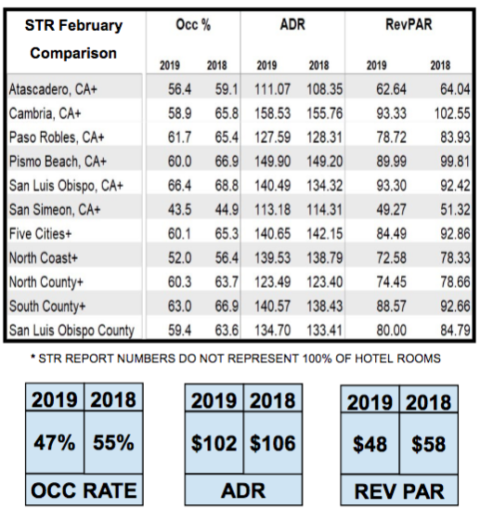
Hotel occupancy across the Central Coast dropped in February 2019 compared to the year before, the latest figures available Morro Bay saw its hotel occupancy fall to 47% compared to 55% in February 2018, typically the quietist month of the year anyway. The measure of profitability – RevPar( revenue per available room) dropped to $48 compared to $58 for Feb 2018 according to the Morro Bay Business Improvement District.
Morro Bay was not alone as the doldrums hit virtually every other Central Coast city. One key factor was the frequent closure of Highway 1 in February which was a stormy month to say the least. Highway 1 through Big Sur suffered frequent closures as Caltrans regularly closed two sections through Big Sur often as a safety precaution because of approaching storm systems.
Morro Bay itself had 12 days of rain in February vs 1 in February 2018, a drought year according to the city tourism group. Of course tourism is flourishing now that the rains are gone and the flowers are everywhere.
Typical weather this past February was the arrival of well publicized atmospheric river events with their subtropical moisture from the waters south of Hawaii. In some cases the bullseye for the storms appeared to be the Central Coast around Big Sur, where rainfall totals were near 6 inches at the highest peaks.
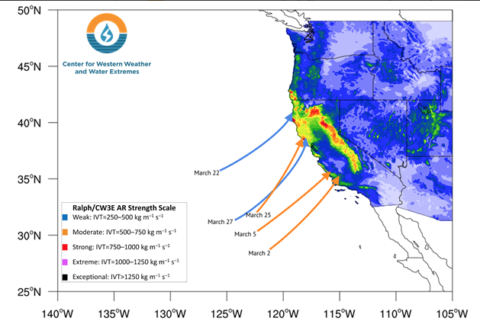
Wet weather statewide likely kept travelers at home likely into March.
Statewide hotel occupancy averaged 73.9 percent through February 2019, a 0.1 percent decrease year over year says Smith Travel.Rain did not hurt everyone however, as San Francisco hotel occupancy was up in February despite all those storms.

Morro Bay grocer expected to close
-March 29,2019-
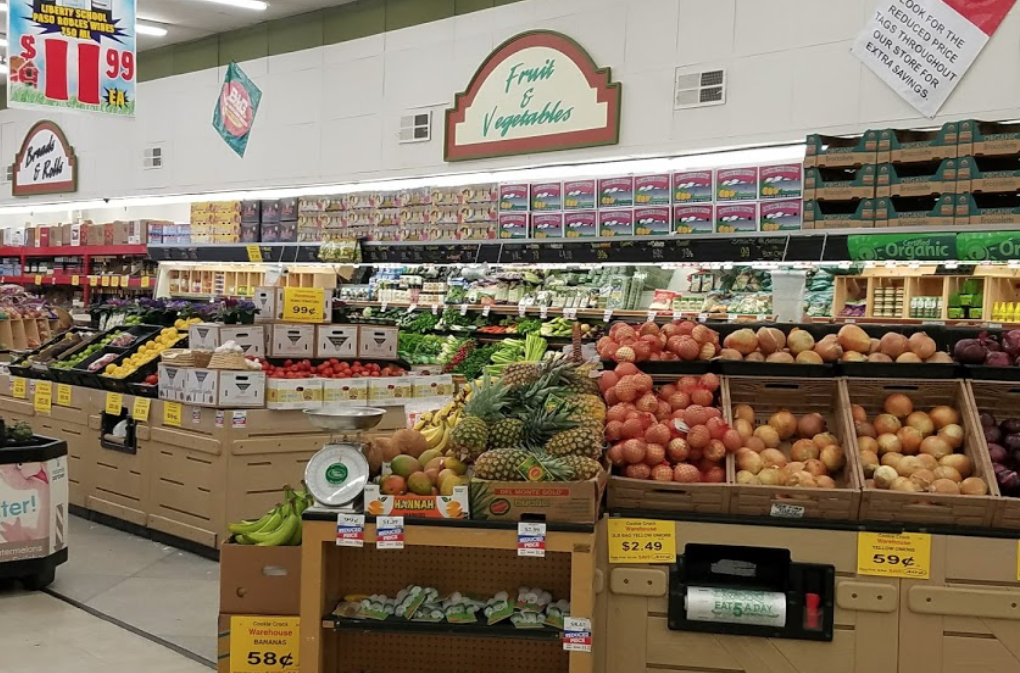 It’s got to be the worst kept secret in Morro Bay. Every shopper that walks into the Morro Bay Cookie Crock grocery store on Quintana this week asks the same question. Is it true you are going to close?
The response from every employee this reporter observed is affirmative. Each employee says they has been told to expect the closure in a few months, likely by May, with a big sale coming in April.
Management in the Cambria corporate office will not comment nor confirm the closure.
But there is no doubt – the place is for lease.The Bakersfield office of Newmark Grubb lists the property at 490 Quintana for lease,with a flyer first published last August. The lease covers 1.16 acres and 19,500 square feet under roof. Brokers with the company say the property is available within 30 to 60 days and the current tenant will vacate.
No word on who might replace the modest size store.Some comments on the popular social media website Next Door where the news was shared widely in recent days – suggest they will miss the home town atmposhere.”Where will I buy bird seed” “says one. Some hope it could mean Trader Joe’s comes while other responders puff that TJ will never happen here.
Cookie Crock has a store Cambria that will remain open. But the Cookie Crock location in Arroyo Grande closed in 2014. In its place in Arroyo Grande, German owned Aldi signed a lease for the former space, just under 24,000 square feet at what was the renovated shopping center in 2018. Aldi is operating there now.
Could the discount chain Aldi come to Morro Bay? The town is dominated by its largest player Albertsons, just a half block down the street from Cookie Crock.The other grocer in town is Central Coast owned Spencer’s.
Cookie Crock says it is the longest continuously operated independent super market on the Central Coast. Locally owned and operated -they brag they still bag your groceries with a smile. “We are your hometown supermarket, serving the central coast for three generations.”
The place started as a bakery in 1965 in Cambria – so you can imagine how they came upon their name.

SLO weighs two new airport hotels
-March 21,2019-
As the SLO airport attracts more passengers, they will need more places to lay their heads once they arrive. For now there are no airport-area hotels. But that is about to change.
 San Luis Obispo’s Architectural Review Committee this week heard a presentation on a proposal for two new 100-plus room hotels near the airport. The two hotels, one 100 room and the other 118 room would be off Broad St at Aero Drive – only blocks from the air terminal.
The conceptual project consists of the phased development of a 100‐room hotel and a 118‐room hotel, approximately 63,000 and 66,000 square feet each with surface parking.
According to the applicant Templeton-based Sunsmit LLC, Sanjay Ganpule, no brand names for the hotels have been selected.
Proposed hotel amenities would include outdoor patio and dining areas, meeting space, fitness room, breakfast area, and a hotel guest bar. The larger hotel includes an outdoor pool. Each hotel would be 45 feet in height, with architectural features extending to 52 feet in height. The two‐parcel, five‐acre project site is located on the northern side of Aero Drive, on the west side of Broad Street, currently vacant. The site is zoned as a Business Park. The development would be be near SLO Brew’s restaurant The Rock.
The proposal comes as the SLO airport continues to attract new flights to a number of destinations around the West Coast. As of this week there are 14 airline departures leaving from the new SLO terminal. On December 13, it was announced a new daily flight destination would be launched to Dallas Fort Worth International Airport. American Airlines will begin the flights from San Luis Obispo to the national and international travel hub starting on April 2. Dallas is major hub for worldwide flights including the Caribbean and South America.
Already through the end of 2018 passenger traffic was up 19% compared to 2017 with nearly half a million passengers. The new Alaska Airlines flight each day here and back to Seattle have attracted 48,000 passengers in 2018. United attracted 279,236- up over 25% for the year and American attracted 158,780 passengers- up single digits.
For January 2019 passenger traffic continues strong – up 19% with rental car activity up 17%.

$2 mil building permit for new REI store in SLO
-March 20,2019
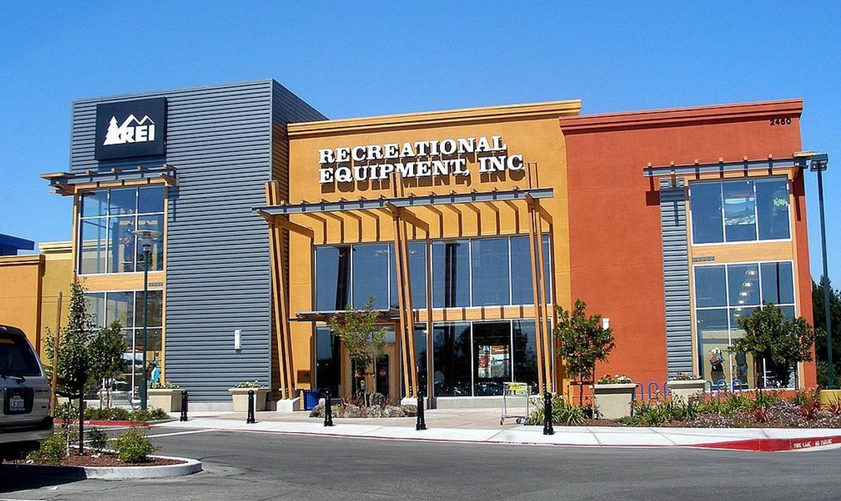 The City of San Luis Obispo has approved nearly $2 million in building permits to remodel the proposed REI sporting goods store next to the new Sprouts on Madonna Rd. The new RIE would be 22,200 square feet.
Irvine-based Bogard Construction, who does a number of RIE tenant improvements, took out the permit March 6.
Asked about their new store, a REI spokesperson said they have not announced a location in San Luis Obispo. The closest location now is in Santa Barbara. The Washington state co-op specializes in camping and outdoor recreation equipment.
But the building permits are piling up with their name on it – this being the second one for REI in this spot in the last month.
“We are working on a third permit for additional improvements” says Doug Davidson, the city’s Deputy Community Development Director. He says the city has not been advised when the new store could open. But look for it to happen before the holidays.
Next door – the grocer Sprouts is set to open April 3.
Both Sprouts and REI would help fill the former Gottschalks /Forever 21 space that has been vacant for years.
Two more spaces next to RIE are still available according to the real estate brokerage firm The Shopping Center Group.

Off year for local avocados
-March 14,2019-
 The California avocado industry is expecting a light year crop in 2019 with avocados, an alternate bearing crop. So far this season the state has harvested just 564 thousand pounds compared to 5.8 million pounds as of the same time, March 10, 2018. The figures are according to the the California Avocado Commission.
“Growers are hopeful that market conditions will be strong and good and we’ll have a good shipping season” says Avocado Commission President Tom Bellamore.
Mexico dominates the global industry with that country importing almost 2 billion pounds of avocados to the US in 2018. California produces 300-340 million pounds in a good year (over 500 million pounds in 2010) with expectations of a crop size of only 175 million pounds this year.
Our production is strongest from mid-March to mid-September.Last year cold and hot weather and the drought hurt production here.
It is expected that this would the smallest crop for California in a decade. For those who have product – prices could be good.
Mexico is expected to send an average of more than 50 million pounds of avocados to the United States each week through March. At that point, there should be a reduction in Mexican supplies, which could lead to a stronger marketing situation says an industry analysis.
Wet weather good
A California Avocados Commission report says “A wetter than usual winter, and continued rain in the forecast, is making it much easier for California avocado growers to hold onto their fruit and wait for the stronger marketing opportunity that typically comes in the late spring into summer time period.
A survey during February of several handlers of California fruit indicated that while there was some fruit in the market, and it would continue to slowly increase, it will probably be well into April before the weekly numbers jump. May, June and July appear to be the sweet spot for this year’s crop. Rob Wedin, vice president of fresh sales and marketing for Calavo, said the signi – cant rainfall has had a “calming effect” on growers as it makes any decision to hold the fruit for a better market easier to make. He added that rain makes the trees healthier, which makes them better suited to carry the fruit into the summer.”
Consumer are gobbling up their avocados. In January, a record number of avocados were sold with back-to-back weeks topping 70 million pounds of avocados in the U.S. marketplace, almost all imported.

Weather slows strawberry production
-March 14,2019-
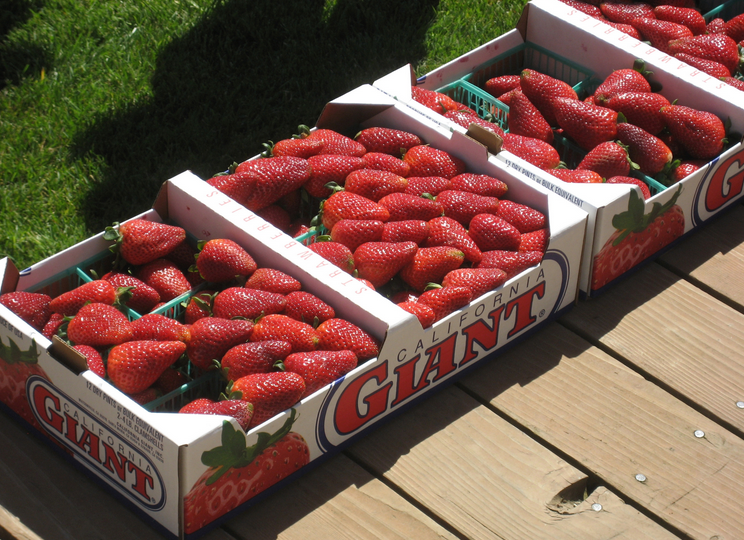 Stormy weather and heavy rain in the first three months of 2019 have slowed California’s strawberry harvest compared to the same period in 2018. Through March 11 California has produced 15.6 million flats compared to 19.4 million through the same time in 2018 according to the the National Berry Report.
But it has been far more dramatic than that in the Santa Maria strawberry district where farmers grew just 175,345 flats this season so far compared to 1.5 million over the same period the year before.
Nothing
The California Farm Bureau reports that even though he has production in Salinas, Santa Maria, Oxnard, Florida and Mexico, David Lawrence, president and owner of Red Blossom, a grower-shipper-packer based in Los Olivos, said he won’t have “any considerable volume” until March, when production in Santa Maria begins to pick up.
Having some production in Oxnard allows him to “catch a little bit more of that early marketing window,” when there’s not much competing fruit on the market and prices are historically higher, he said. But with rain curtailing harvest, he said his crews have picked about a thousand boxes, which he described as “nothing” compared to the last three years, when weather was more favorable for production.
“This year, we got a considerable amount of rain to hold back production. It’s the perfect scenario for a high market,” he said.
Kevin Gee, a grower in Santa Maria, said a bumper crop last year “killed the market,” adding that the financial hit was especially hard for smaller growers, leading some to get out of the business and others to reduce strawberry acreage.
This year fields protected by hoop houses fared better than open field production.
The strawberry commission reported a 12 percent decline in California acreage during the last three years, though it noted that “total volume for each of those years has achieved record production.”
Blueberries off too
California blueberry production has suffered as well with a harvest of only 276 thousand flats so far this year compared to over a million flats for the same time in 2018.
The blueberries in the supermarket today in the US typically come from South America adding up to nearly 50 million flats compared to to 56.7 million flats this time last year. Chile and Peru send the most here.

Climate change is shifting productivity of fisheries worldwide
-March 8,2019-
from Science Daily
University of California – Santa Barbara
Fish provide a vital source of protein for over half the world’s population, with over 56 million people employed by or subsisting on fisheries. But climate change is beginning to disrupt the complex, interconnected systems that underpin this major source of food.
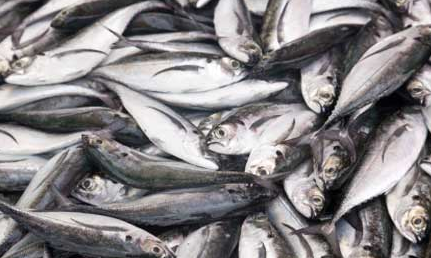 Fish provide a vital source of protein for over half the world’s population, with over 56 million people employed by or subsisting on fisheries. But climate change is beginning to disrupt the complex, interconnected systems that underpin this major source of food.
A team of scientists led by Christopher Free, a postdoctoral scholar at UC Santa Barbara’s Bren School of Environmental Science & Management, has published an investigation of how warming waters may affect the productivity of fisheries. The results appear in the journal Science.
The study looked at historical abundance data for 124 species in 38 regions, which represents roughly one-third of the reported global catch. The researchers compared this data to records of ocean temperature and found that 8 percent of populations were significantly negatively impacted by warming, while 4 percent saw positive impacts. Overall, though, the losses outweigh the gains.
“We were surprised how strongly fish populations around the world have already been affected by warming,” said Free, “and that, among the populations we studied, the climate ‘losers’ outweigh the climate ‘winners.'”
Region had the greatest influence on how fish responded to rising temperatures, according to the study. Species in the same region tended to respond in similar ways. Fishes in the same families also showed similarities in how they responded to changes. The researchers reasoned that related species would have similar traits and lifecycles, giving them similar strengths and vulnerabilities.
When examining how the availability of fish for food has changed from 1930 to 2010, the researchers saw the greatest losses in productivity in the Sea of Japan, North Sea, Iberian Coastal, Kuroshio Current and Celtic-Biscay Shelf ecoregions. On the other hand, the greatest gains occurred in the Labrador-Newfoundland region, Baltic Sea, Indian Ocean and Northeastern United States.
Although the changes in fisheries productivity have so far been small, there are vast regional discrepancies. For instance, East Asia has seen some of the largest warming-driven declines, with 15 to 35 percent reductions in fisheries productivity. “This means 15 to 35 percent less fish available for food and employment in a region with some of the fastest growing human populations in the world,” said Free. Mitigating the impacts of regional disparities will be a major challenge in the future.
These findings highlight the importance of accounting for the effects of climate change in fisheries management. This means coming up with new tools for assessing the size of fish populations, new strategies for setting catch limits that consider changing productivity, and new agreements for sharing catch between winning and losing regions, Free explained.
“Knowing exactly how fisheries will change under future warming is challenging, but we do know that failing to adapt to changing fisheries productivity will result in less food and fewer profits relative to today,” Free explained.
Preventing overfishing will be a critical part of addressing the threat that climate change poses to the world’s fisheries. “Overfishing presents a one-two punch,” said Free. It makes fish populations more vulnerable to warming, while warming hinders the recovery of overfished populations.
Free also stressed that ocean warming is just one of many processes affecting marine life and the industries that rely on it. Ocean acidification, falling oxygen levels and habitat loss will also impact marine life. More research is necessary to fully understand how climate change will affect fish populations and the livelihoods of people that depend on them.