Biz News Around The Region: Tractor Supply Coming To Dinuba / Gas Prices Falling / US Home Sales Strong / Small Avocados

Tractor Supply Eyes Dinuba

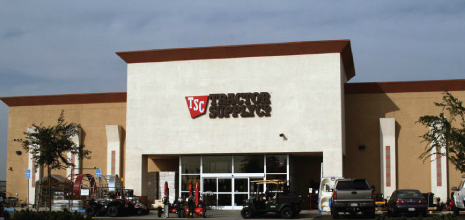
Retailer Farm Supply who targets more rural locations to sell their wares is considering a Dinuba location sources says. Tractor Supply Company is the largest operator of retail farm and ranch stores in the United States with over 1,223 stores in 46 states, focused on supplying the lifestyle needs of recreational farmers and ranchers.

The company has locations in Clovis, Tulare and Sonora in the area.

Developer Scot Patterson of California Gold Development Corp has been negotiating with the City of Dinuba for a location for an unnamed store on 2.5 acres along El Monte Way(416) for a city owned parcel. City manager Ed Todd said he could not reveal what business was being considered.

But California Gold Development Corp works to develop new sites for Tractor supply in Central California and has built several stores in the past few years.

City memos say the user wants to build a 19,000 sf building with a 15,000 sf outside sales yard,the same footprint as several Tractor Supply stores. The business would add some 15 jobs for Dinuba. The site is next door to the new Les Schwab tire outlet and not far from the SuperWalmart.

Tractor Supply is a fast growing company.The company announced recently that net sales increased 12.7% to $1.46 billion from $1.29 billion in the prior year’s second quarter.  Same-store sales increased 7.2% compared to a 3.2% increase in the prior-year period. The firm is publicly traded.

The retailer says they supply their customers’ rural lifestyle, from welders and generators to animal care products and men and women’s workwear. You can also find pet supplies, animal feed, power tools, riding mowers, lawn and garden products and more. Each store team includes welders, farmers and horse owners who collectively provide an exceptional depth of knowledge and resources.
Gas Prices Still Falling

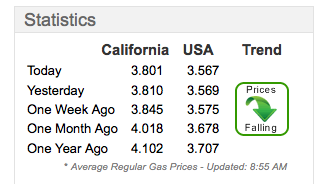
Gas prices fell in the past week across California.In the latest government EIA inventory report wholesale gasoline supplies rose in the US West providing  impetus for future drops.

Gas Buddy says the average price in the state today is $3.79. The latest report says the cheapest price in the state is $3.40 in Sacramento.The best price in the S2S reading area includes Tulare at $3.57 at Fastrip and in SLO County the best price appears  to be at Vons in Nipomo at $3.65.

Gas Buddy says California gas prices are 30cents cheaper than they were this time last year.

SO Cal Avocados On The Small Size

Avocados are about 30 percent smaller than usual this year.
An unusual weather pattern over the last year has led to an abundance of small-sized avocados on Southern California trees, reported National Public Radio. The radio news service sought an explanation from Gary Bender, UC Cooperative Extension advisor in San Diego County.

Bender said in his 29 years on the job he has not seen such tiny avocados as those being picked this year.
Typically, several months after pollination, high temperatures in July cause a significant amount of developing fruit to drop to the orchard floor. That didn’t happen in the summer of 2012. The heavy crop on the tree, combined with low rainfall, cool temperatures and sluggish photosynthesizing, has likely caused the stunting, Bender said.
NPR reporter Alastair Bland found avocados being sold 6 or 10 to a bag for $1. “That’s just ridiculous,” Bender said.
Author: Jeannette E. Warnert

Despite Higher Interest Rates US Home Sales Rose Sharply In July

WASHINGTON (August 21, 2013) – Existing-home sales rose strongly in July, with the median price maintaining double-digit year-over-year increases, according to the National Association of Realtors®.
Total existing-home sales1, which are completed transactions that include single-family homes, townhomes, condominiums and co-ops, increased 6.5 percent to a seasonally adjusted annual rate of 5.39 million in July from a downwardly revised 5.06 million in June, and are 17.2 percent above the 4.60 million-unit pace in July 2012; sales have remained above year-ago levels for 25 months.
Lawrence Yun, NAR chief economist, said changes in affordability are impacting the market. “Mortgage interest rates are at the highest level in two years, pushing some buyers off the sidelines,” he said. “The initial rise in interest rates provided strong incentive for closing deals. However, further rate increases will diminish the pool of eligible buyers.”
Despite higher mortgage interest rates, Yun identified compensating factors that can sustain a continued recovery. “Although housing affordability conditions will become less attractive, jobs are being added to the economy, and mortgage underwriting standards should normalize over time from current stringent conditions as default rates fall.”
According to Freddie Mac, the national average commitment rate for a 30-year, conventional, fixed-rate mortgage rose to 4.37 percent in July from 4.07 percent in June, and is the highest since July 2011 when it was 4.55 percent; the rate was 3.55 percent in July 2012.
Total housing inventory at the end of July rose 5.6 percent to 2.28 million existing homes available for sale, which represents a 5.1-month supply2 at the current sales pace, unchanged from June. Listed inventory is 5.0 percent below a year ago, when there was a 6.3-month supply. “Tight inventory in many areas means above-normal price growth for the foreseeable future,” Yun said.


Fresno Hotel Bookings Way Up

Renovated room at the Piccidilly Inn in Fresno,one of the Fresno hotels who has come back from tough times

No city and industry was hit harder by the recession than the hospitality industry in Fresno the past five years. A number of well known hotel properties closed and/or faced bankruptcy.

But in July 2013 you might want to mark your calendars as the month Fresno climbed out of the doldrums and on to the bandwagon. Now the last is first.

Smith Travel reports Fresno room revenue in July, the hight of the summer travel season – climbed to a state best – up 14.9% compared to the same month of 2012. Closely watched REVPAR was up 15.2% also highest in the state.  Hotels were 10.2 % busier at 62.1% occupancy – and rooms sold were up 9.9%.

Of course hotel occupancy at 62.1 % is far from great and is among the lowest in the state.But the rebound is here and cash registers are ringing again.RevPAR was $53.41 in July compared to just $46.37  a year ago.

Around The Biz Beat….

Brown Says Ruling On HS Rail Will Be Overcome

“Governor Brown was questioned by reporters at the Lake Tahoe Summit on Monday where he said, “It’s not a setback”
He said the ruling “didn’t stop our spending, so we’re continuing. As we speak we’re spending money, we’re moving ahead.”…
Brown said the ruling “didn’t stop anything … It raises some questions, and I think they’ll be answered within that judge’s framework.”…
“We have to take bold steps,” Brown said. “I think we’re well on our way. If you read that decision carefully, there’s a lot of room for interpretation, and I think the outcome will be positive.”

Citrus Greening Stunts Florida OJ Crop

From the Wall Street Journal ….

“Elizabeth Steger, an independent citrus consultant whose estimates are closely followed by orange-juice traders, said Florida will likely produce 130 million 90-pound boxes of oranges in the season that begins in October. Her estimate is 2.5% below Florida’s orange output this season, according to the U.S. Department of Agriculture.”

This year’s coming crop would be stunted due the presence of citrus greening disease spread by Asian Citrus Psyllid. The bug but not the disease has been found in California citrus groves.

Corn Prices Rise to $4.85 per Bushel For December
Ag Web reports…

“Corn and soybeans rose in Chicago on speculation yields may be lower than expected in the U.S., the world’s biggest grower of both crops, as dry weather persists in parts of the Midwest. Wheat gained.
Less than half the normal amount of rain fell in the past month in parts of Iowa, Illinois, Minnesota and Wisconsin, National Weather Service data show.

California New Car Sales Up 12.4%

The California New Car Dealers Association says the California new vehicle market had another double digit percentage increase in the Second Quarter of this year, with new light vehicle registrations improving 12.4 percent versus a year earlier. It was the eleventh consecutive quarterly year-over-year increase. Outlook is now projecting that this year’s annual total will approach 1.7 million units, up 11.1 percent from 2011 and more than a 60 percent increase over the recessionary low point in 2009. Other key trends in the state market:

Among the top 15 selling brands, Subaru, Dodge, BMW, and Chevrolet had the biggest percentage increases in the first half of this year. New registrations for each of the four brands increased by more than 22 percent.Domestic brand registrations increased 19.3 percent during the first six months.

Meanwhile,used car registration was down during  the first half of the year by nearly 5%.

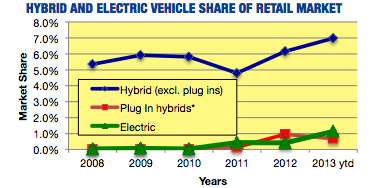
Hybrid and electric cars sales in the California market are now about 9% of all sales.

Industrial Park Developers See Amazon Effect

As More Consumers Shop On Line They Want Their Products Faster….How About Now?

There is certainly one big thing brick and mortar retail has over shopping on line.You can take the purchase home with you right now.
Now firms like Amazon,Walmart and others are investing billions of dollars to offer a higher level of service to internet customers – same-day delivery that feeds that basic need for instant gratification.
That, in turn, is changing both the number, technology and location of warehouse distribution centers that companies are building closer to big population centers.
California industrial park developer Pat Daniels of MSJ Partners who has been marketing a 150 acre site in the Visalia Industrial Park says the Amazon Effect is real and offers “both challenges and opportunities for Visalia.”
More Internet Sales
“We see internet sales of products going from about 2% today to 25% in the next 15 years” suggest Daniels. That includes new trends like shopping for groceries on-line, a category where instant gratification is already the standard.
Daniels says the term comes from supply chain consultant Jim Thompkins who sees the uber- retailer Amazon adding 47 million sf of distribution from 2010 to 2012 and another 44 million sf from 2013 to 2016.The company sells 35 million items.
Like many trends this Amazon Effect started in California. After nationwide pressure over tax fairness succeeded – Amazon agreed to start collecting sales tax on purchases made through their site in this state last September. With resolution of the sales tax issue in California – Amazon wasted no time and has now built or is building almost four million square feet of distribution centers -2 on the edge of the Bay Area and 2 in Southern California.
Prior to this,Amazon sited its fulfillment centers in low-cost, far away places including Nevada and Arizona.
We Lost Business
“We lost a lot of business before the tax agreement” says Fresno developer John Brelsford who says the myriad of companies who supply Amazon “set up away from the California island to avoid the taxes” but that now are coming back to the state. He counts 14 such companies.
“Our fourth quarter of 2012 was the best we’ve had in five years” says Brelsford whose Fresno-based Diversified Development has sprawling warehouse industrial parks in Fresno and Visalia.
So last October Amazon opened its first fulfillment center in California in San Bernardino employing 700. The company is also building a site in Patterson – expected to open in summer of 2013 and announced a new fulfillment center in Tracy that Brelsford says” has 1 million sf and a 1 million sf mezzanine.” Now there are reports the big internet seller will locate its fourth California distribution center in Rialto in the Inland Empire.
For Amazon the goal is not to just compete with rivals on price but on how quick you can supply the purchase.
The trend is not lost on existing retailers like Macy’s who now are investing in ship-from-store capability – taking online orders and routing them to local stores.Customers can either pick up their purchase from the store or have it delivered to them.
Daniels expects Amazon to get into groceries where quick transactions are required They are already doing it in the Seattle area.
Tough Competition
He says Visalia – some 190 miles from Los Angeles and 230 miles from San Francisco can supply both areas from one location but may be at a disadvantage for same-day service.
Brelsford says he sees the Amazon Effect offering smaller companies withe less than a million sf distribution center a chance to supply the state from Fresno or Visalia.
Competition from city-edge places like Patterson and Tejon Ranch that may have a small advantage a few hours closer to the dense population centers. Tejon, at the foot of the Grapevine, landed a Dollar General center,Caterpillar,Camping World and IKIA. Nearby,Shafter’s logistics park, owned by billionaire Stewart Resnick, is a tough competitor and recently added a new 1.7 million sf Ross Stores  distribution center and 1500 jobs.
But Daniels sees Visalia as a place that can offer a statewide location to resupply the edge-city centers with the heavy presence of both FedEx and UPS offering next-day shipping to one third of the US from their city limits.
Not just retail or electronics shipments want to be close to their customers. All kinds of industries chose Visalia for example to be close to their users including VWR for pharmaceuticals,MWI  – veterinary supplies and International Paper who serves the fast food industry. Then there are all the food suppliers like all the dairy manufacturers who source their raw products here but are also able to supply their customers quickly as well.
These are companies that won’t pick up and relocate somewhere else tomorrow.

Central California Airports Busier

Kern’s Meadows Field

Mid-state airports are busier places this year with some boasting of record passenger numbers.

Fresno Air Terminal spokesperson Vickkie Calderon says June’s  numbers were “highest passenger count ever” with ten major airlines operating. Monthly numbers show a 5 to 11% increase during the first 6 months of 2013. Factors contributing to the higher passenger numbers include new air service introduced last summer with Allegiant Air adding non-stop flights to Honolulu(now suspended until possibly XMAS), as well as Alaska Airlines’ launch of twice daily non-stop service to San Diego, California.Also, this year’s addition of low-cost carrier Frontier Airlines with non- stop service to Denver, Colorado as well as seasonal flight frequencies from existing domestic air carriers and solid bookings on the international carriers to Guadalajara, Mexico.

At Kern County’s Meadows Field in Bakersfield passenger traffic is on pace to increase over last year which was the best year since 2008. Some 271,00 passengers flew through Bakersfield last year – up from a low of 208,677 in 2009. So far this year, every month is higher than the corresponding month of 2012 with some months up over 10%.

In Visalia airport manager Mario Cifuentes says total operations at the Visalia airport are up around 7% while passenger service through Lakes Airlines saw the best June and July since the service started with flights to LAX and Las Vegas. July saw 410 passengers, he says. Cifuentes says a pilot shortage in the industry is helping to keep Great Lakes from adding a third flight to LA.

In San Luis Obispo passenger numbers were up in June around 5%,the first uptick in months. “That’s because US Airways brought in a larger jet that carries more people in mid-June says Richard Howell,airport manager.”I’m optimistic that with the added seats in the market the upward trend will continue.” US Air connects SLO to Phoenix and eastern destinations. Late word is that July passenger numbers are up 3.4%.

Biz Update Offers Bullish Trend: Lower Dollar,Fuel & Corn Prices

Currency & Exports

Reuters reported this week that “China’s yuan set a record against the dollar on Thursday morning, with its second quote coming in at 6.1183 per dollar, its highest since the Chinese foreign currency market was created in 1994.”

The stronger Chinese currency makes US goods cheaper in China, a bullish trend for US exports like Central Valley farm goods. The yuan has gained 1.8 percent so far this year.

Big Corn Crop Should Lower Food Prices

Global food prices declined for the third consecutive month, largely driven by lower international prices for grains, soy and palm oil, while sugar, meat and dairy prices were also down, the United Nations Food and Agriculture Organization (FAO) reported this week.

The Rome-based agency said its Food Price Index averaged 205.9 points in July, which is 4 points below June and 7 points lower than in July 2012.

The Index measures monthly changes in international prices of a basket of meat, dairy, cereals, oils and fats, and sugar.

The FAO Cereal Price Index averaged 227.7 points in July, down 8.8 points from June and as much as 33 points below July last year. “The sharp decline mostly reflected falling maize prices as favorable weather boosted hopes of a significant production increase in several leading maize-producing countries,” said the agency.

The agency expects Global food prices could decline further in coming months after hitting their lowest level in more than a year this July as a big US corn crop is harvested.The 2013 U.S. corn harvest is expected to be the biggest ever, with a jump of 30 percent from last year. December corn futures are at multi-year lows of $4.54 a bushel as of August 9.

Gasoline Costs Head Lower Despite Higher Oil Prices

AAA reports gasoline prices were lower this week  averaging  $3.932 a gallon for regular today – 4.6 cents lower than last week- across southern California.

On the Central Coast, the average price is $4.053, which is 5 cents below last week, 1.4 cents lower than a month ago, and 12 cents more than last year.
“Today is just the ninth day since June 1 that Los Angeles area gas price averages have been below $4 a gallon,” said Auto Club spokesman Jeffrey Spring. “Local wholesale prices have dropped by more than 40 cents since mid-July, so there is continued downward pressure on prices at the pump.”
Gas Buddy says the cheapest price for gas in the state in San Jose  at $3.44 a gallon. Gas Buddy says the state average is now $3.88 with prices falling fast .
The cheapest gas in SLO County appears to be at the valero in Morro Bay at $3.89. In Tulare Arco is pumping gas gas for $3.65, the lowest price in the Visalia/Tulare market.
The lower gasoline prices in Augusts fly in the face of higher crude oil prices. In the  early weeks of May WTI crude was selling for $91 a barrel compared to $108 per barrel in the beginning of August.  The CEC website shows the average price of gas in the state  May 5 was $3.91 and $3.95 as of Aug 5 so the big jump up in crude oil costs has not spiked the California gasoline marketplace that faces its own crude realty- lower consumption by the state’s motorists.
The US Energy Information Agency says crude should be falling in coming months too,
This week the EIA said
Crude oil prices increased during the first three weeks of July 2013 as world oil markets tightened in the face of seasonal increases in world consumption, unexpected supply disruptions, and heightened uncertainty over the security of supply with the renewed unrest in Egypt. The U.S. Energy Information Administration (EIA) expects that the Brent crude oil spot price, which averaged $108 per barrel over the first half of 2013, will average $104 per barrel over the second half of 2013, and $100 per barrel in 2014.
The discount of West Texas Intermediate (WTI) crude oil to Brent crude oil, which averaged $18 per barrel in 2012 and increased to a monthly average of $21 per barrel in February 2013, closed below $1.50 per barrel on July 19, 2013, and averaged $3 per barrel for the month. The strong demand for light, sweet crude oil in the Midwest and new pipeline capacity to deliver production from the West Texas Permian Basin directly to the Gulf Coast contributed to the price of WTI rising relative to Brent crude oil. EIA expects the WTI discount to widen to $6 per barrel by the end of 2013 as crude oil production in Alberta, Canada, recovers following the heavy June flooding and as midcontinent production continues to grow.
Rising crude oil prices and seasonal demand increases contributed to U.S. regular gasoline retail prices increasing from an average of $3.50 per gallon on July 1, 2013, to $3.63 per gallon on August 5. EIA expects the regular gasoline retail price to average $3.59 per gallon in the third quarter of 2013, and the annual average price to decline from an average of $3.63 per gallon in 2012 to $3.52 per gallon in 2013 and to $3.37 per gallon in 2014.

How UC Davis Bee Research Will Benefit from Häagen-Dazs App

Author: Kathy Keatley Garvey
August 8, 2013
Haagen-Dazs ice cream, a product that helps bee research at UC Davis. (Photo by Kathy Keatley Garvey)
DAVIS–Here’s a sweet way to help honey bee research at the Harry H. Laidlaw Jr. Honey Bee Research Facility at the University of California, Davis.

Häagen-Dazs has come up with a creative way to do so and it involves downloading a free concerto timer app on your I-Phone or I-Pad, pointing it at the lid of the brand’s ice cream, and listening to a two-minute concerto until the ice cream is softened or tempered.
Two minutes is perfect for allowing the ice cream to soften or temper, the ice cream specialists say.
For every download of the concerto timer, Häagen-Dazs will donate $5 toward UC Davis bee research, up to $75,000.
Häagen-Dazs, in announcing (Aug. 8) the introduction of the Häagen-Dazs Concerto Timer app, described it as “the first iOS mobile app to integrate detailed 3D Kinect technology and video data that delivers a cutting edge augmented reality experience.”
According to a press release, “The Concerto Timer app features two-minute-long music concertos that help consumers understand the exact amount of time needed to prepare their Häagen-Dazs ice cream in order to get the full, rich consistency and allow all the flavors to fully bloom. Allowing the ice cream to soften slightly – also called tempering – for two minutes enhances the texture and exposes fans to the craftsmanship of premium ingredients that is characteristic of Häagen-Dazs ice cream, gelato, sorbet and frozen yogurt.”

Honey bee pollinating almond blossom. (Photo by Kathy Keatley Garvey)
“Waiting is not an easy task for ice cream lovers, but the process is transformed when users point their iPhone with the Concerto Timer app at one to two Häagen-Dazs cartons. The augmented reality feature showcases a perfectly timed, two-minute concert of Bach Inventions No. 14 performed by a violinist and cellist – all while users wait for the ice cream to temper. By the end of the concerto, the ice cream will have softened to a perfect consistency. “

Said Cady Behles, Häagen-Dazs brand manager: “The app concept came directly from our brand loyalists who recognized the necessity of tempering to enjoy all of the flavors in our ice cream. We took their feedback and developed an advanced mobile experience – something never seen before in the ice cream industry – that would be functional and also entertain them during the optimal time period.”
“Traditionally, augmented reality technology has involved flat video or low polygon 3D objects with a very limited and robotic range of motion,” according to the news release. “Unlike other augmented reality apps, the Concerto Timer app integrates detailed 3D Kinect and video data.”
“The app captures the nuances of the real violin and cello performances, enhanced with expressive particles, resulting in an ethereal and unique creative style. This approach allows the musicians to move with a fluid natural motion in 3D space.”
“Developed by creative agency Goodby Silverstein & Partners and digital production company JAM3, the Häagen-Dazs Concerto Timer app is now available for download in the iTunes App Store.”
Some 50 percent of Häagen-Dazs flavors are honey-bee dependent. “Honey bee colonies – which are responsible for one third of the world’s food supply — are dying at an alarming rate, posing a serious risk to our natural food supply, including many of the ingredients that define Häagen-Dazs ice cream,” according to the press release.
Häagen-Dazs has a long partnership with UC Davis. It launched the Häagen-Dazs Honey Bee Haven, a half-acre bee friendly garden that was planted in 2009 next to the Laidlaw facility. The brand also funded  Häagen-Dazs Postdoctoral Fellow, Michelle Flenniken, an insect virus researcher formerly based at UC San Francisco. She is now a research assistant professor in the Department of Plant Sciences and Plant Pathology, Montana State University.

Trade: Ag Secretary China Trip / Walnuts To India / Milk Powder Opportunity

Ross Heading To China

Following Governor Brown’s successful trip to China in April, CDFA Secretary Karen Ross will lead an agricultural trade delegation to China and Vietnam from September 16-21, 2013, as part of the California State Trade and Export Promotion (California STEP) program. This mission will visit Shanghai and Ho Chi Minh City with the goal of providing export business opportunities and sales for California farmers, ranchers and food processors.
The California-China Trade and Investment Office in Shanghai, opened by Governor Brown during his trade mission, will play an important role for delegation members by connecting California businesses with Chinese counterparts interested in purchasing California products. The California-China Office of Trade and Investment provides in-market assistance to California companies and furthers foreign direct investment opportunities in California.

California businesses participating in the trade mission will have individual meetings with foreign importers, briefings by U.S. agricultural officials, and visit wholesale/retail market outlets to learn about in-market distribution and sales formats.
China is California’s third largest export destination for agricultural products, with more than $1.7 billion in exports. Vietnam currently ranks as the 12th largest export destination for California agriculture products, with exports valued at more than $196 million – a 43 percent increase in exports from the previous year.  On average, California farmers export globally about 25 percent of their production, generating nearly 115, 000 jobs and $21.6 billion in economic activity. Over the last 10 years, California has more than doubled the value of its agricultural exports. In 2011, California agricultural exports were valued at $16.8 billion.

The California Centers for International Trade Development, the Governor’s Office of Business and Economic Development, and the California-China Trade and Investment Office.  Funding for this trade mission will come from a grant administered by the U.S. Small Business Administration. Companies interested in participating in the trade mission should contact the Fresno Center for International Trade Development at (559) 324-6401
India Opens Door For California Walnuts
On July 12, the Ministry of Agriculture in India published notification of Schedule VI of Plant Quarantine Order 2003 allowing California walnuts to be shipped to India. Walnuts can ship immediately with special conditions under the phytosanitary protocol defined in Order 2003.
The industry has eagerly awaited this news following a two year market access process. “India will play an important role in developing the industry’s future consumers,” states California Walnut Commission Chairman Donald Norene. “Opening the Indian market is consistent with our strategy of market expansion,” he goes on to say. Walnut production has doubled in the last ten years, reaching 496,000 short tons this year.
India’s increasingly affluent middle class, currently estimated at 250 million, is expected to reach 400 million by 2020. Unlike other developing nations, over 30% of middle class income is spent on food and beverages. Walnuts are an ideal complement to the traditional vegetarian based diet because they contain alpha-linolenic acid/omega-3 fatty acid which is currently deficient in the Indian diet.
Although walnut consumption is currently low (0.02 lbs. per capita), with the predominance of walnuts grown in India exported, the industry expects California walnuts to be in high demand.
“The Indian consumer has yet to experience the quality and taste distinctions that make California walnuts unique”, states Charles (Chuck) Crain, President, Crain Walnut Shelling. “The majority of Indian walnut users report eating walnuts for their health benefits. Our industry’s health research program has confirmed walnuts are beneficial for cardiovascular health which is a leading health concern in India,” he concludes.

The expertise of both the California Walnut Board (CWB) and California Walnut Commission (CWC) working together helped make Indian market access possible. The Board evaluated the phytosanitary protocol and supported post harvest research that contributed to the review process while the Commission petitioned the Indian Ministry in working with colleagues at USDA’s Animal Health and Plant Inspection Service (APHIS) and Foreign Agriculture Service (FAS) to facilitate the process.
“Walnuts are now the fourth leading export from the state of California, valued at nearly $1 billion dollars,” states Dennis. A. Balint, CWC Chief Executive Officer. 58% of the crop was exported in 2011 to countries on five continents. California walnuts account for more than 99% of the commercial U.S. supply and control roughly three-fourths of world trade.

In India, most walnuts are consumed raw as a snack food. Walnuts have primarily been consumed during the festival season (September to January), but they are now beginning to be consumed year-round as awareness of their health benefits grows and as they become available in smaller and medium cities. About 10 percent of domestic production goes to bakery, confectionary, and ice-cream industries. Around 2 to 3 percent of walnuts (normally rancid nuts) are used for oil extractions by soap and cosmetic manufacturers. 

Due to extra-ordinary health benefits walnuts are getting popular especially among health conscious young Indians as a part of their regular diet. While the demand for Walnuts in India grows, domestic walnut production has remained almost stagnant. Growing economy, changing lifestyles, rise in disposable incomes and preference for quality products have increased the demand of good quality walnuts from countries like USA.
 

Fonterra Quality Issue Opens Door For US Milk Exports
New Zealand-based Fonterra is reacting to news that some of its milk powder shipments to China, its largest customer, involving three batches of whey protein concentrate-80, tested positive for the bacterium Clostridium Botulinum which can cause botulism.

But a Fonterra news release says China will not close the doors to all Fonterra shipments. Still competitors like the US may be able to offer more product given the uncertainty.
“Fonterra has received confirmation from the Ministry for Primary Industries a short time ago that China has not imposed a blanket ban on Fonterra’s products. Chinese authorities have temporarily suspended importation of whey powder and dairy base powder (a whey based dairy ingredient used in the manufacture of infant formula) produced by Fonterra, or produced in Australia using Fonterra’s whey protein powder as an ingredient (including whey protein concentrate).

China has also increased inspection and supervision at the border for New Zealand dairy products, and indicated extra testing may be required.
“MPI has confirmed that China has not closed the market to New Zealand dairy products – and that China is being quite specific about the range of Fonterra products which it has temporarily suspended.
“Whole Milk Powder and Skim Milk Powder have not been suspended,” said NZ Milk Products Managing Director Gary Romano.

“We have been told that MPI is not aware of any additional market closures.  It is, however, getting clarity on reports that Russia appears to have put a temporary ban on New Zealand dairy products.”
Fonterra is continuing to work closely with the Ministry for Primary Industries to manage food safety concerns in New Zealand and around the world.

“Our top priority is the safety of consumers, and working with customers and regulators to make sure the public is protected.”

California Export Trade Listless Again; ‘Re-Exports’ The Culprit

August 6, 2013 – LOS ANGELES, CALIFORNIA – California’s exporters essentially treaded water in June, according to Beacon Economics’ analysis of foreign trade data released this morning by the U.S. Commerce Department.
Nominally, California exports this June ($15.23 billion) were higher than last June ($15.18 billion), however, that apparent 0.3% gain was negated by inflation.
“June was another of those ‘apparently up but actually down’ months,” said Jock O’Connell, Beacon Economics’ International Trade Adviser. California’s exports of manufactured items rose nominally from $9.71 billion last June to $9.81 billion this June. Meanwhile, the state’s exports of non-manufactured goods (chiefly agricultural produce and raw materials) also edged up, from $1.59 billion to $1.64 billion.
However, re-exports declined from $3.89 billion to $3.79 billion. Through the first half of the year, California’s overall $80.92 billion export trade is running slightly behind the $81.97 billion recorded in the same period last year. This slowness reflects trends seen at the national level, where exports are roughly the same as last year through June.
But this is not fundamental to the U.S. or California economy, according to Christopher Thornberg, Beacon Economics’ Founding Partner. “With the US dollar 20% weaker (in real terms) today than it was a decade ago, products produced here are more competitive than they have been in a long time,” said Thornberg. “The issue is that global trade has more or less stopped growing with Europe in a recession and China seeing slower expansion.”
Because data on specific export commodities and their destinations can vary abruptly from month to month for a host of reasons, Beacon Economics compares the latest three months (April-June) for which data are available with the corresponding period in the previous year. Mexico remains California’s top export market, despite a 15.4% drop in shipments. Canada retained its rank as the state’s second largest customer, although China is quickly closing the gap. Japan and South Korea continue to round out the list of the top five foreign customers for California products.
The data revealed at least a couple of other intriguing facts. “While it may seem counter-intuitive, California’s merchandise export trade with Europe has been up nearly 13% over the latest three months,” O’Connell said. By contrast, the state’s exports to the Far East declined by 3.2% during the same period, despite a 16.9% jump in the value of shipments to China.
As has been the case since late last summer, a substantial decline in exports of personal computer components has been the primary factor in restraining California’s export trade. In the latest three months, the state’s exports of those items fell 21% from the same period a year earlier. “Consumer preference for smartphones and tablets over PCs has prompted a thorough restructuring of global supply chains in the electronics components sector,” O’Connell said. “Clearly, this shake-out has yet to run its course.”
The decline hasn’t dramatically affected the tech-heavy San Francisco Bay Area economy, however. “San Jose and San Francisco continue to be two of the strongest economies in the state,” said Thornberg. As mentioned, it is re-exports, products that are shipped in from one nation and then shipped back out to another nation in essentially the same form, that make up the bulk of the decline (for example, U.S. companies often import computer components from Asia and then ship them to Mexico for assembly).
“Re-exports are typically goods in transit, and their contribution to the state’s economy is comparatively negligible,” O’Connell said. “They may support a very small number of jobs in the transportation and warehousing sector and they may profit the firms that orchestrate these transactions, but that’s about it.”
Beacon Economics’ current outlook for the state’s exporters is for modest rather than robust growth. The new U.S. competitiveness has allowed exports to remain stable despite grim news on the global front. However, in the short term the United States and California will have to look internally for growth, which is being helped  by a resurgent housing market and rising worker incomes.
“It does appear that Europe has found a bottom, and with Japan continuing to stimulate their economy and better numbers on consumer spending from China, we hope that export growth will return by next year,” Thornberg said.