Visalia Designer Shoe Warehouse (DSW) store closes
The Visalia Designer Shoe Warehouse(DSW) store in the Gateway Shopping Center at 3725 S. Mooney Blvd closed their doors last week. The national discount shoe store caters largely to women.The 10,300sf store opened in March 2016 calling itself “the greatest shoe shopping destination in Visalia.”
The pandemic hit the national chain hard as the company Designer Brands Inc. (NYSE:DBI) suffered a 36% drop in net sales in 2020.Its CEO said they were considering closing 65 stores long term and 24 in the next year after a $489 million net loss.
Property owner Dave Paynter is not waiting to refill the store. He has taken out a permit for new tenant improvements on the space in the center anchored by Dick’s Sporting Goods but has made no new tenant announcement.
DSW still has stores in Bakersfield and Fresno.
HomeTown Buffet property sold
The buffet-style restaurant HomeTown Buffet closed last summer in Visalia and now the parent company has gone bankrupt. The once popular eatery on 2.2-acres on mid-Mooney has been sold to a Valley family headed by Roger Dhaliwal who is putting the place up for lease.
”We are not marketing it yet since we just closed the deal in March” says Roger, who also has an automotive business in Visalia.”We are just looking for a solid tenant” that may or may not be a restaurant. The building itself is 10,200sf and has a large parking lot.The property sold for $1.87 million according to records.
Meanwhile the parent company of HomeTown Buffet continues its bankruptcy proceedings with its court documents reviewed by Restaurant Business saying” the company entered the pandemic with as many as 90 restaurants under the brands Ryan’s, Old Country Buffet, HomeTown Buffet, Fire Mountain, and Furr’s, all of which are buffet chains, and Tahoe Joe’s, a steakhouse chain in California. All but six locations of Tahoe Joe are closed.The Visalia Tahoe Joe’s is still open.
One media report says Fresh Acquisitions LLC and Buffets LLC, the parent of five buffet concepts and one steakhouse, declared bankruptcy as COVID-19 “significantly disrupted” operations and “severely limited” demand.
The six restaurants had a combined revenue of roughly $21 million per year before the pandemic.
FMP Management owned Fresh Acquisitions and Buffets until June 2020 when it “ceased operations.” Even though FMP no longer has operations, it’s also seeking Chapter 11 bankruptcy protection because of its co-liability “for certain of the other Debtors’ liabilities.”
Union Bank corner in play
Japanese-owned Union Bank has changed hands and has left Visalia as of February.That includes their high profile location at Walnut and Mooney.
The bank building is empty and sources say- it is for sale. The bank also had outlets at two SaveMarts in town that have closed as well.
American-owned US Bank bought the bank’s assets.The closest Union Bank is now in Tulare.
The banks location on the second busiest corner in town makes what happens here interesting given the building is right up to both Walnut and Mooney frontage with little set-back .That makes it unlikely it could be occupied by anyone except a bank. But with no drive-thru and banks getting out of brick and mortar locations – that would be unexpected.
With demolition likely, any new owner would likely have to deal with mall’s property owner Brookfield Properties for access and parking unless it ends up in their hands.
Brookfield now owns not just the mall but also two of the mall’s largest tenants- JCPenny’s and Forever 21.
Brookfield did the same thing with a bank building on the south side of their property – demolition, replaced by two new restaurants – now open.
Shopping center developers have purchased three Mooney sit-down restaurant properties. All of them had closed their doors during Covid-19 or before.
Shopping center owner Dave Paynter has purchased the former Cask N’ Cleaver restaurant that has been shuttered for around a decade. The eatery was once one of the most popular in the city, located on south Mooney near Caldwell.
He also purchased the Sizzler property that is still occupied by the steak restaurant but had been closed for some time this past year due to Covid -19 restrictions.Both restaurant sites are adjacent Paynter’s Dick’s Sporting Goods-anchored retail center.
Paynter says Sizzler has reopened and will continue operating. He says he bought the old Cask N’ Cleaver real estate to clear it and make room for new development that may or may not be a restaurant. “It was an eyesore and I think our purchasing it will benefit both the shopping center and the community.” Homeless people had been living on the property, he added.
Cask N’ Cleaver was founded by Linda and Chuck Keagle in 1967 in Rancho Cucamonga .Known as “The Place for Serious Steak Lovers” the Visisa eatery had the towns’ largest salad bar as well. Servers wore shorts and sang birthday songs at your table. I still remember one of the stanzas – “This is your birthday song….it isn’t very long.” The place featured live music sometimes including the popular band, Run4Cover, still making music today.
The small southern California chain grew to 9 locations including Visalia but has since shrunk to 5 at last count.
The Visalia location closed around 2009 during the economic downturn and the place has sat empty since. Back in 2019, the chain BJ’s Restaurants expressed interest in the site but never moved forward.
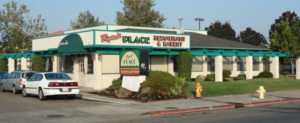
Also changing hands recently is the former Ryan’s Place sit-down restaurant on Mooney, being purchased by The Orosco Group,developers of Packwood Creek. The company looks to lease the place including build to suit.Ryan’s closed more than a year ago, both in Visalia and Hanford, due to the pandemic.The family still owns Black Bear Diner. Ryan’s Place is located in front of Bed Bath and Beyond in a center owned by Dave Paynter.
With great promise, two electric vehicle makers have said they would build factories in the Central Valley and soon employ hundreds, even thousands of locals. Both announcements came in 2017. Four years later, the promises are still coming but so far, only a handful of jobs have resulted.
Now electric vehicle stocks are rallying, bolstered by President Joe Biden’s plans to back massive investments in the EV market.In recent months our two EV companies have been raising millions from investors and jobs, it is said, are on the way. Hope or hype, that is the question?
In the case of one company – Faraday Future we have heard this before. In August 2017, the company announced that it had signed a lease for a former Pirelli tire plant in Hanford, California. The company said that it could employ up to 1,300 people over time and build up to 10,000 cars a year at that location.Today, there are a handful of workers at the sprawling million square foot facility. Yet Faraday Future’s new merger promises to raise $1 billion & make electric cars in Hanford with production slated to begin by the end of 2021.
The company’s namesake, British scientist Michael Faraday, is known for the discovery of electromagnetic fields – the basis for modern electric motors.
Faraday Future is said to be investing $90 million to remodel the Hanford plant (they lease it) and announced they already raised $100 million toward their goal of a billion dollar war chest after the merger is complete. That is expected by the end of June.
Yet the company has so far taken out no building permits at the plant in the Hanford Industrial Park with the exception of a fire pump permit a few weeks ago says the city’s chief building official Tom Webb.”We hope they will” make a major investment, he says.
As for hiring, right now Faraday Future(FF) on their website does list 60 jobs ready to fill at its Gardena (LA) facility – but just 4 in Hanford.
The company announced in late January that it is merging with a special purpose acquisition company called Property Solutions Acquisition Corp.(PSAC) and will be listed on the Nasdaq Stock Market once the transaction is complete sometime in the second quarter of this year.
The company early this year announced the following.
“The new round of debt financing will be used to fund operations and accelerate the FF 91 program even further, including the start-up of manufacturing at FF’s production facility in Hanford, California.”The preparation and start-up of the Hanford manufacturing facility will include new hiring, additional construction, and equipment installation and calibration to ensure the on-time production and delivery of FF 91.”
At their January announcement, management said on a call with reporters ”We are pursuing a hybrid manufacturing strategy that balances quality control considerations with cost and scalability. We operate our own plant in Hanford, California, which will have an initial capacity of ten thousand units, and needs an investment of less than $90 million to begin production. This allows us to control the production process and really understand quality control considerations. In addition, to deliver the volumes in our business plan, we have secured contract manufacturing capacity with a partner in South Korea for volumes of up to 270,000 units.”
The first futuristic version car FF 91 will be for the wealthy only – slated to be launched within 12 months after funding, and positioned to compete with Maybach, Bentley, Lamborghini and Ferrari.
Hanford almost ready to go?
“The most important thing we want to highlight is that FF has completed the majority of the work needed to launch the FF 91. We have concluded the prototype phase and the preproduction validation. Production tooling is 91% complete and 75% of the equipment in our production facility is onsite and ready in Hanford. FF’s next step will be to initiate the production tryout process, followed by launch of production….”
PSAC stock rose to $19 a share in February but has declined to just over $12 today.
It is a similar story in nearby Porterville.
Porterville- City orders buses from GreenPower rival company
In 2016, Canadian start-up GreenPower Motors announced they would make Porterville its US manufacturing base for a line of electric buses and transit vehicles.
Porterville itself was excited to buy ten 40-ft electric buses for their transit system buoyed by state vouchers to pay for them plus adding a new home-town manufacturer.
This was big news around Porterville with a local TV station announcing After months of being under-wraps, an electric-powered bus business venture is coming to Porterville.
Nearly 10 acres of empty, dry land will soon be taken over by something very green.
Canada-based GreenPower Motor Company plans to build a 150,000 square foot assembly facility here for their electric-powered vehicles.
“There are billions of dollars that are looking to be programmed over the next several years into low-carbon emission vehicles, electric vehicles,” city manager John Lollis said.
A 2016 editorial in the local paper welcomed the company to Porterville and laid out a rosy scenario.
“City officials said the company will employ as many as 60 workers at the start, but could grow to more than 1,000 employees. The jobs are factory jobs with good pay and benefits.
City manager “Lollis said the company plans to grow in phases with more than $10 million being invested locally over the next two years.
GreenPower offers seven different buses, ranging in length from 35- to 45-feet. They hold anywhere from 25 to 100 passengers and have a range of 175 to 240 hours. All can come with air conditioning.
The company delivers buses all over the world.”
In a federal Securities and Exchange filing, GreenPower repeated the promised plan.
“During the year ended March 31, 2017, we purchased 9.3 acres on Hope Drive in Porterville California which is being financed with a promissory note. We completed the plans for the civil work, obtained a grading permit and have submitted plans for the construction of a 144,000-square-foot manufacturing facility. The facility will be built in three phases with the first phase consisting of 50,000 square feet to come online next year.”
Still waiting
But here we are 4 years later and the permit is “still waiting to be picked up” says Porterville city Transit Manager Richard Tree.
Tree says, like most locals, is anxious for the bus maker to move forward on what they had announced.
Tree adds that in the past months ”They told us that their manufacturing plant is dependent on the fund raising from their going public on the Nasdaq last summer- taking advantage of investor interest in electric-powered vehicles like Tesla.”
Last August, the company issued stock that has gone from $8 a share, climbing to $34 and now around $18 – falling slowly this calendar year.
Tree adds that other issues are troublesome.That includes GreenPower’s refusal to carry out accepted crash tests on their large buses – a requirement for federal funds that transit agencies use to buy the vehicles.”They told me that they want to concentrate on smaller transit vehicles” he explains.
In addition, questions have arisen about whether GreenPower vehicles are “Buy America compliant”, again a requirement for federal funds.Tree notes that GreenPower gets their buses and smaller transit vans from a manufacturer in China and they are only modified here in the US.
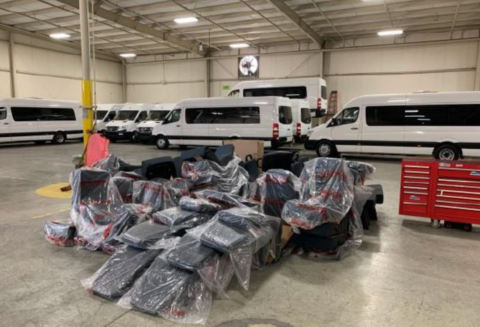
One critical Wall Street report done by White Diamond Research charges that ” All they do is sometimes install seats and wheelchair ramps in the buses. The source asked the warehouse manager where they integrate the parts, and he responded “oh, that’s all done in China”. We have pictures that the source took in the warehouse, as well as side by side images of GreenPower’s bus and the Chinese company bus, they are exactly the same except for the GreenPower logo.
Transit manager Richard Tree says he has read these reports and believes they are essentially true.
“Are they a US manufacturer of electric vehicles – probably not” he suggests.
Tree, like most here, are still pulling for GreenPower to come through.”We would like to see them do a manufacturing plant here sooner than later” he says
All these questions have resulted in fewer GreenPower sales- in Porterville, their home base, and all over Kings and Tulare Counties for that matter.
A few weeks ago the Porterville City Council approved the purchase of three new electric buses from a rival of GreenPower – New Flyer – a US company with three American manufacturing plants
LA Proterra factoryThe choice was between GreenPower, New Flyer and Proterra, another US- based bus maker who has a major manufacturing plant in Los Angeles where they assemble buses from the ground up with US-made components including making batteries for the buses.
Pushing agencies into buying American-made components is President Biden’s stricter Buy America rules requiring buses have 75% US-made parts.
Tree says “Tulare County transit agencies need to upgrade their fleet and are scheduling purchase of up to 100 electric buses. “ We would love to buy them from a local manufacturer.” A new Regional Transit agency is being formed in Tulare County who’ll buy all the clean vehicles for all the cities except for Visalia. But they must meet the crash test and Buy America rules that GreenPower may not qualify for.
GreenPower in Porterville
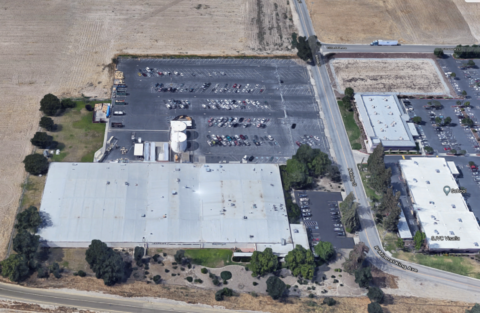
Not only did Porterville recently choose to buy 3 rival firm’s electric buses recently, Visalia, who already has Proterra-made buses, is about to buy 4 more 35 ft buses as well from Proterra. The company’s factory in Los Angeles is state of the art and full of machinery. It contrasts with Porterville’s GreenPower’s leased warehouse, largely empty of machinery. Like in Hanford, only a handful of jobs are based in Porterville. Here are pictures of both facilit
Other transit operators also need some convincing.
Kings County transit agency led by Angie Dow says they plan to replace their fleet in the next few years, The California Air Resource Board has mandated all transit agencies transition from gas, diesel, and CNG Buses to Electric Buses.Dow says the agency will convert its fleet of 36 vehicles to all-electric. Asked if the agency would consider Valley-produced GreenPower buses for purchase,Dow quickly replied “Oh no – they are not Buy-America Compliant”.
Compared to Tesla?
If there are critics of GreenPower, there are also plenty of boosters. Here is a recent article suggesting investors purchase stock of GreenPower (GP)
“Canadian-based GreenPower with its assembling plant right here in Porterville is set to become the “Tesla of Buses,” according to an article recently posted on NASDAQ.com and InvestorPlace.
The article stated the company, worth less than $200 million now, has the potential to be worth as much as $10 billion in the future.
GreenPower listed on the NASDAQ in 2019 and has continued to grow in value since its listing. The NASDAQ is a listing for electronic trading that includes mostly technology and up and coming companies. GreenPower can definitely be referred to as an up and coming company.
Since its listing, $38 million in capital has been generated that could possibly be used to expand the Porterville facilities’ expansion capability. The Porterville facilities design, build and distribute battery-electric full-size buses, school buses and shuttle buses. There’s also a nine-acre piece of property in Porterville that can be used for expansion.”
The most recent financial report in February showed the firm had revenue of $2.40 million for the quarter, compared to analysts’ expectations of $4.36 million.
A glance at their website shows in the past few days they have posted a job request listed as Production Team Member.
Calls to GreenPower CEO Fraser Atkinson were not returned.
Visalia’s former Jostens to be leased to Italian produce firm
One of the mainstays of the Visalia economy for decades has been Jostens American Yearbook who closed their doors about a year ago after 25 years. The big printing plant churned out yearbooks for high school students all over the West Coast and employed up to 700 at times of the year. Over 100 were laid off when it closed.
Now a produce industry printing company, Italian-owned Sorma Inc, wants to lease the 100,000sf building for its operation working with flexible, plastic packaging films to be used for consumer products for fresh produce firms like Sunkist and Del Monte. Packages run the gamut from plastic clam shell to film-based bags to netting for produce like onions and avocados.
The ag-based firm has been in Visalia in a smaller rented warehouse on Ferguson since 2012.
Tracy Hart, CEO of the company says “Currently we employ 36, and with the expansion into the new facility, expect that to grow to 50 or more within 12 months.”
For several years Sorma was planning on constructing a new 70,000sf building but the re-use of the building vacated by Jostens at 231 Kelsey Ave has apparently changed their plans.
The Sorma Group was established in 1973 and has become one of the world’s largest providers of packaging materials and machinery with an annual revenue of over 300 million Euros per year.
They also sell, install and service packaging equipment that we manufacture in Europe for all regions of North America, including Mexico and Canada. Sorma USA LLC is the North American division of Sorma SpA and Netpack SpA, both headquartered in Cesena, Italy.
Making all this happen is developer Butch Oldfield, of American Inc who is also seeking approval to do a lot split on excess land he is acquiring from Jostens. He plans to re-sell acreage north of the building that will allow Hillsdale to connect to the industrial park and open several lots for development in this busy part of the city, north of Hwy 198.
Oldfield has re-leased several other large vacant buildings in Visalia including the former TreeHouse Foods building on Goshen and a large pipe storage building on Johnson near Downtown, where an indoor soccer facility that includes a brewery is being built.
Below average rainfall is expected in middle and southern California this month, our last chance before summer to reduce the impact of the drought in the state and across the southwest that is staring at us.
Chances for Sierra snow this month appeared favorable a few weeks ago with a couple of storms expected to visit us according to weather models. But those hopes are now fading.
Now the entire month looks dry says a forecaster on This Week in Agribusiness.
Tahoe snow watchers fear it looks like a duster as ski resorts prepare to close for the season says the Tahoe Daily Snow Report.
“April sees 35 inches of snow on average at the Central Sierra Snow Lab near Donner Summit. We have zero inches so far this month and a forecast for zero now through at least the 12th of April. In the last 50 years, we have never had no snow in April, the lowest was 2 inches in 1992.”
Precipitation in the southern San Joaquin is 45% of average today.Below is the 7 day forecast for precipitation showing nothing.
Despite the surge in online shopping during the pandemic, most consumers still value the experience they can only get shopping in-store says research by Zenreach.
A recent survey revealed that 82% of shoppers say that seeing, holding, or demoing a product in-person made them more likely to actually go through with a purchase.
In fact, four out of every five retail dollars are being spent in-store. That means the majority of customers still enjoy a tactile, in-person shopping experience.
Even in 2021, it’s still important to have a brick-and-mortar storefront for your business. Here’s some more key reasons why.
Consumers Spend More In-store
Customers spend more when shopping in-person compared to online. One study found that over 70% of in-store customers spend over $50, and more than a third spend over $100. Compare that to just 54% of online shoppers who spend over $50, and a comparatively paltry 21% who spend more than $100.
The Human Touch & Instant Gratification
In-person interaction remains an advantage to in-store shopping. Good sales associates can answer any questions about products and give good recommendations. Another great advantage is the instant gratification consumers feel when they’re able to bring their purchases home and enjoy their merchandise immediately.
Credibility & Brand Awareness
Having a physical storefront adds another layer of credibility to a business especially for customers not familiar with the brand or who might be skeptical about making purchases online. It can also provide a huge boost to a brand name, especially if the storefront is located in a high-traffic area.
Impulse Buying
Consumers love adding last-minute, unplanned items to their shopping carts when they shop in-store. 11% more men and 12% more women said they were more likely to make spontaneous additions to their shopping carts when inside of a physical store.
Here’s what John Kelly, CEO of Zenreach, has to say about this trend:
“As consumers begin to return to physical stores in greater numbers, and as new technologies, like ours, enable retailers to identify and follow their most valuable customers across the online and offline experience, we will likely see more retailers adopting an integrated approach to the ecommerce and brick-and-mortar parts of their businesses.”
San Francisco Bay hotels have seen their revenue fall in a big way through early 2021 with expectations that things are about to get better. This region has been hardest hit in the state but California overall has seen a decline in RevPAR from $114 to $48 on a year to date basis.Revenue per available room (RevPAR) is a performance measure used in the hospitality industry. RevPAR is calculated by multiplying a hotel’s average daily room rate by its occupancy rate.
Through February 2021, statistics offered by by Smith Travel Research show Bay Area hotels revenue as measured by RevPAR have dropped from $150 to $40. The decline measures both loss of occupancy as well as revenue per room as occupancy has also dropped on a year to date basis. The average SF hotel occupancy was 69% in early 2020 compared to 38% in Feb 2021.
SF hotels fetched an average price of $218 per room in February 2020 compared to $108 this February. Add in the lower number of rooms sold and you get the lower RevPAR number.
By contrast hotel operations in Tulare County have fared better as occupancy has stayed around 55% in Feb 2020 as well as Feb 2021. RevPAR has dropped from $61 to $55.
On the coast, San Luis Obispo hotel occupancy has dropped from 62% to 54% year over year. RevPAR has declined from $140 to $80. But performance varies widely with Pismo enjoying higher returns than, say Morro Bay, where RevPAR was $67 in February.
The S&P CoreLogic Case-Shiller U.S. National Home Price NSA Index, covering all nine U.S. census divisions, reported an 11.2% annual gain in January, up from 10.4% in the previous month. The 10-City Composite annual increase came in at 10.9%, up from 9.9% in the previous month. The 20-City Composite posted an 11.1% year-over-year gain, up from 10.2% in the previous month.
Rates continued their upward climb in the past week. For the week ending March 25, Freddie Mac announced that 30-year fixed rates increased to 3.17% from 3.09% the week before. The average for 15-year loans rose to 2.45% and the average for five-year ARMs increased to 2.84%. A year ago, 30-year fixed rates averaged 3.50%, over 0.25% higher than today. Attributed to Sam Khater, Chief Economist, Freddie Mac – “During the course of the pandemic, ‘home’ has become more important than ever. As a result, strong purchase demand continues—but buyers also outnumber the sellers. Since January, rates have increased half a percentage point from historic lows and home prices have risen, leaving potential homebuyers with less purchasing power. Unfortunately, this has disproportionately affected the low end of the market, where supply is the slimmest.”
– Tulare Basin precipitation Index is just 40% of average as of March 14.Northern California is at 52%.We are still ahead of the driest years 76-77.
– Visalia Mall manager Rick Feder says they are experiencing about 70% of typical shopper traffic after being closed for months last year and reopening in September. “We see light at the end of the tunnel” says Feder. Tulare County is among those counties who will loosen restrictions on opening for stores, gyms theaters and restaurants this Wednesday -March 15. Yes, that’s St Patrick’s Day!
-TSA officers screened the highest number of airline passengers on a single day since March 15, 2020. But passenger numbers are 20% lower than last year about 38% of the numbers this time in 2019
– About 50,000 cases of coronavirus have been recorded in Tulare County since the pandemic began a year ago. Meanwhile, some 100,000 doses of the vaccines have been administered. The County says these shots represent 62,500 adults fully vaccinated and more with some immunity who have one shot in them.
Add those that got the virus to those inoculated and you get 100,000 to 150,000 persons in the county who would have antibodies protecting them from any new infection. The County has about 318,000 adults – so one third – up to almost one half have immunity in mid-March.
– Mass vaccination clinics can do 1,500 shots a day and big ones like Dodger stadium can do 12,000 daily. The drive-up Agri Center site in Tulare has administered 2000 doses a day. The pace should increase. President Biden hopes to have enough vaccines to inoculate all U.S. adults by May 1. There are 45 locations in Tulare County offering the vaccine.
The average number of vaccine doses being administered across the country was over two million for the first time last week according to data from the Centers for Disease Control and Prevention. A month ago, the average was 1.3 million.
-Latest numbers form Kaweah Delta shows 29 COVID patients in hospital beds – down from 154 in mid-January
-Tulare County deaths from COVID number near 800 since the start.But in the past few days – according to a trusted data base -there has been one with a 7 day average at 1.4. In California, the nation’s most populous state, the state averaged more than 560 deaths a day at its peak in January. By contrast, for much of November, it reported fewer than 50 deaths a day on average.In March the state is reporting just over 200 deaths a day with the rate declining.The state has reported some 51,000 deaths total.
-There are still plenty of people who, even with access to the vaccine, do not want to take it. CDC says Hispanic and Latino people were 3.1 times more likely than non-Hispanic white people to be hospitalized and 2.3 times more likely to die from COVID-19 infection.
-This week Tulare County Public Health has updated its COVID Vaccine Plan and is now offering vaccinations to those eligible with underlying and high-risk health conditions. People 16-64 years of age who have an underlying health condition or disability which increases their risk of severe COVID-19 can now make an appointment to get vaccinated.
– This week! The House of Representatives is set to vote on a new farm labor bill that would provide a path to legal status for many of the nation’s farmworkers. H.R. 1603, brought by Reps. Zoe Lofgren (R-Calif.) and Dan Newhouse (R-Wash.), would make it easier for farmers to hire employees through the H-2A foreign guestworker program.
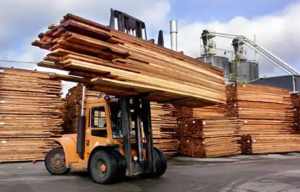
Reps. Jim Costa (D-Calif.) and Jodey Arrington (R-Texas) sent a letter to President Biden and the Department of Justice on March 4 urging the administration to respond to rising building materials prices and supply shortages, particularly, lumber, that are harming the housing market and threaten the economic recovery.
Using data provided by Nation Association of Home Builders, the lawmakers stated that “shortages of lumber have nearly tripled the price of lumber since mid-April 2020, causing the price of a new single-family home to increase by more than $24,000.”
Lumber futures are near $10000 per thousand board feet after spiking over $1000 in February. The current price this winter compares to $360 this time a year ago.
NAHB is urging the Commerce Department to investigate why lumber production — particularly sawmill output — remains at such low levels during a period of prolonged high demand.
Reps. Costa and Arrington mirrored our concerns and stressed the need to boost sawmill activity in their letter to Biden and the Department of Justice. “Unfortunately, this unprecedented price increase on new homeowners, as well as home builders, will persist until new sawmills come online and current mills re-open and operate at full capacity,” the letter stated. “To address this issue, we ask your Administration to facilitate a discussion with all stakeholders, including sawmills, home builders, loggers, and distributors, to ensure all needs are met in a timely manner.”
Tule Indian dispensary still not open as Tachi Palace has no plans to sell pot
Local tribes are expanding their casino businesses but pot sales may not be part of it. The Tule Indians announced almost a year ago they would open a dispensary near their Eagle Feather gas station on Hwy 190. Called The Eh-Lo Dispensary, it was expected to open by April of last year at 31071 Hwy 190.
But that never happened and the project is on hold says a tribal member, no doubt due in part to COVID-19.
Still, the Tule Indian economic development office is vying to open a dispensary in Porterville – based on a pending city council decision. Of course, the huge Eagle Mountain Casino project is in the works near the airport but there is no word if pot will be on the menu there.
Meanwhile near Lemoore, there are “no plans to sell cannabis”
on the rancheria,says the administration at the Tachi Palace where they are undertaking a massive expansion of their complex.
Kern oil industry fights back
The Kern County Board of Supervisor this week approved a plan to fast-track drilling of some 40,000 new oil and gas wells over the next 15 years over objections by environmental groups. The Bakersfield Californian reported that in the aftermath of the 5-0 vote, local oil producers praised reinstatement of the streamlined process that had been on hold while some farmers and environmentalists promised to head to court. Earlier, Supervisor Zack Scrivner argued “Why on earth would we import 60, 70 percent of California’s oil needs from other countries when we could produce so much here?” He added that critics of the proposal were “really missing the fundamentals of this argument.”


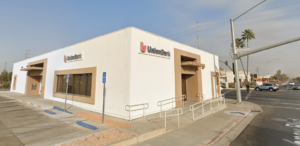 The bank building is empty and sources say- it is for sale. The bank also had outlets at two SaveMarts in town that have closed as well.
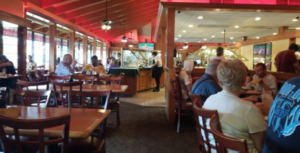
 Shopping center owner Dave Paynter has purchased the former Cask N’ Cleaver restaurant that has been shuttered for around a decade. The eatery was once one of the most popular in the city, located on south Mooney near Caldwell.
 Now electric vehicle stocks are rallying, bolstered by President Joe Biden’s plans to back massive investments in the EV market.In recent months our two EV companies have been raising millions from investors and jobs, it is said, are on the way. Hope or hype, that is the question?
 One critical Wall Street report done by White Diamond Research charges that ” All they do is sometimes install seats and wheelchair ramps in the buses. The source asked the warehouse manager where they integrate the parts, and he responded “oh, that’s all done in China”. We have pictures that the source took in the warehouse, as well as side by side images of GreenPower’s bus and the Chinese company bus, they are exactly the same except for the GreenPower logo.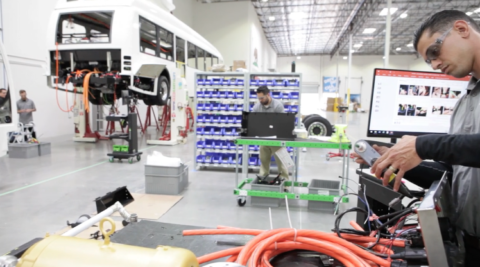

 Now a produce industry printing company, Italian-owned Sorma Inc, wants to lease the 100,000sf building for its operation working with flexible, plastic packaging films to be used for consumer products for fresh produce firms like Sunkist and Del Monte. Packages run the gamut from plastic clam shell to film-based bags to netting for produce like onions and avocados.
 Below average rainfall is expected in middle and southern California this month, our last chance before summer to reduce the impact of the drought in the state and across the southwest that is staring at us.

 In fact, four out of every five retail dollars are being spent in-store. That means the majority of customers still enjoy a tactile, in-person shopping experience.
 San Francisco Bay hotels have seen their revenue fall in a big way through early 2021 with expectations that things are about to get better. This region has been hardest hit in the state but California overall has seen a decline in RevPAR from $114 to $48 on a year to date basis.Revenue per available room (RevPAR) is a performance measure used in the hospitality industry. RevPAR is calculated by multiplying a hotel’s average daily room rate by its occupancy rate.
 The S&P CoreLogic Case-Shiller U.S. National Home Price NSA Index, covering all nine U.S. census divisions, reported an 11.2% annual gain in January, up from 10.4% in the previous month. The 10-City Composite annual increase came in at 10.9%, up from 9.9% in the previous month. The 20-City Composite posted an 11.1% year-over-year gain, up from 10.2% in the previous month.
 – About 50,000 cases of coronavirus have been recorded in Tulare County since the pandemic began a year ago. Meanwhile, some 100,000 doses of the vaccines have been administered. The County says these shots represent 62,500 adults fully vaccinated and more with some immunity who have one shot in them.
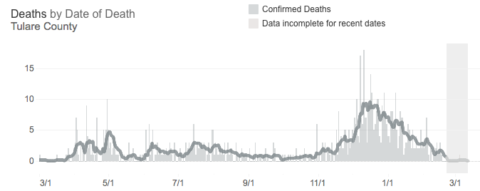 -Tulare County deaths from COVID
 March 4 urging the administration to respond to rising building materials prices and supply shortages, particularly, lumber, that are harming the housing market and threaten the economic recovery.