
-February 12,2020-
Farmers saw price drop for most grape varieties in 2019
- Volume declined 9.3 percent says USDA
- Industry saw tons of grapes left to rot
- Tariffs hurt exports
USDA reported this week what farmers already knew. There were too many grapes in California sending the price for most varieties down this past season.
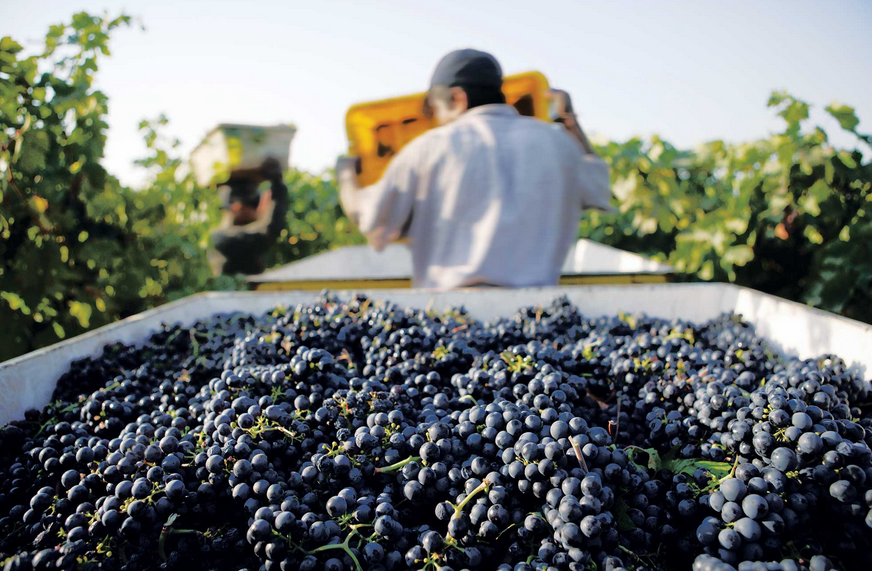 California’s 2019 grape crush totaled 4,085,772 tons, down 9.3 percent from the 2018 crush of 4,506,010 tons. Red wine varieties accounted for the largest share of all grapes crushed, at 2,135,112 tons, down 12.8 percent from 2018. The 2019 white wine variety crush totaled 1,755,141 tons, down 4.3 percent from 2018. Tons crushed of raisin type varieties totaled 61,051, down 26.0 percent from 2018, and tons crushed of table type varieties totaled 134,468 down 5.6 percent from 2018.
The 2019 average price of all varieties was $790.43, down 5.0 percent from 2018. Average prices for the 2019 crop by type were as follows: red wine grapes, $990.07, down 2.9 percent from 2018; white wine grapes, $580.66, down 8.6 percent from 2018; table grapes, $262.60, up 36.8 percent; and raisin grapes, $244.88, down 19.0 percent.
Winegrape industry sees stagnating sales /oversupply
Allied Grape Growers offered their industry perspective to members in January facing a problem of oversupply and stagnating shipments.
Allied’s latest blog says “it took the wine industry a couple of years to recognize and appreciate the reality and severity of stagnating wine shipments. The trend started in 2015, but nobody was talking about it with any particular concern until 2018, recognizing the issue of lackluster overall wine shipments even though the consumer may be willing to pay more for better quality wine.”
Allied says the industry “did not quickly or correctly adjust to slowing shipment growth, inventories began to build. The concern around those inventories was relatively minimal when margins and profits were holding up. But eventually, growing inventories become costly. The relatively large 2018 crop pushed the industry over the edge, with most processors finally reaching the breaking point of inventory comfort.”
No buyers
“Considering the outcome of the 2019 harvest, many winegrape growers have questions about the future. It is a well-known fact that tens of thousands (we will stop short of saying hundreds of thousands) of winegrapes were left hanging on the vines statewide, with no buyers. Growers were largely caught off – guard by the suddenness and severity of the grape market shift, particularly in California’s interior regions, where unharvested fruit is a rarity. “
“So, How many grapes were left hanging on the vines in 2019?
While there is “no official tally on grapes left to hang, we can anecdotally account for +/-100,000 tons being left behind. Rumors have run the industry about the number being much more than that. Some estimates have been as high as 10 percent of the size of the crush, but we have no evidence to support any assertion that 400,000 tons were left to rot.”
The solution says Allied – is simple – we have to “shrink ourselves” back into balance.”
“We believe our industry is structurally oversupplied due to deficits of growth that were at least 1-2 percent per year for the last five years. Doing simple math, that equates to somewhere between 30,000 to 60,000 acres. In other words, we need to decrease our bearing acreage base down to 550,000 acres or less, to consistently produce the “correct” amount of supply needed, given today’s demand.”
In 2019 USDA says there were 637,000 acres of both bearing and non-bearing wine grape – perhaps 10% too much.
Raisins too
It not just crushed grapes that are hurting In the latest Anderson Exports report from last year – raisin exports to China were “down 49% or 1,479 packed tons, largely due to the increased tariff on California raisins which is making the product more expensive than other growing regions like Chile. Taiwan is increasing imports of California raisins but is still down 32% compared to the prior year period.”
Tariffs not helping
When it comes to demand a 93% retaliatory tariff on California wine by China is not helping sales. Now President Trump wants to impose a 100% tariff on European wines sending more European wine to China since the US market is shut to them. If European wine goes to the rest of the world US exports of wine will be hurt.
Responding to the the tariff issue with Europe The Wine Institute favors free markets they say. “ Export markets are a key growth opportunity for US wineries, but tariffs of any kind stand in the way. It is time for all governments to recognize the unique benefits of the wine trade and eliminate tariffs once and for all,” said Robert P. “Bobby” Koch, President and CEO of Wine Institute.
Both the US and the EU are each other’s largest export markets, with total trade reaching $5.33 (€4.66) billion in 2018, creating jobs and investment on both sides of the Atlantic. ”
A news release in the past few days outlines the issue
“Due to ill-advised tariffs on wine, we are witnessing the direct transfer of the American-European wine trade to China and other markets and the only people getting hurt are American business owners and consumers,” according to Harry Root of the U.S. Wine Trade Alliance and Ben Aneff, National Association of Wine Retailers (NAWR).
Current 25% tariffs on European wine and looming threats of increasing those tariffs to 100% stem from a dispute over subsidies the EU provides to Airbus. The EU needs to comply with the WTO rulings, and the US is within its rights to impose fair and effective tariffs to ensure this happens.
However, tariffs on wine are neither effective nor efficient as they do more harm to American owned businesses than they do to Europeans.
“China is a ready and willing customer for European wines not sold to American importers. New numbers from the Global Trade Atlas verify that the 25% tariffs are already speeding the growth of the Chinese market. While case sales of wine from France to the US plummeted by 48% during the first month of 25% tariffs, exports from France to China grew by 35%. China’s purchases of French wines were 118% higher than the US in November,” said Root.
Further, despite the huge drop in French wine exports to the U.S., overall French wine exports actually increased after the tariffs, showing just how ineffective tariffs on wine are in punishing France.