
August 1,2018-
U.S. farmers can expect an $11 billion hit from China’s retaliatory tariffs. California’s specialty growers expect little relief from President Trump proposed $12 billion farm relief package. Growers say they want their markets back, not a handout from Washington.
Meanwhile the impact for the retaliatory tariffs are hitting home in California like the heat waves and fires.
CDFA reports that California exports 100 percent of the nation’s table grapes and tree nuts, 91 percent of wine, 56 percent of citrus and more than 31 percent of the nation’s dairy products. Tariffs are not only impacting current shipments, but also food processing and canning with increased steel costs as well as other rising on-farm expenses.
California farmers and ranchers are seeking immediate resolution to the ongoing tariff and trade re-negotiations to keep exports growing and farmers farming. Every dollar of agricultural exports stimulate another $1.28 in business activity, according to U.S. Department of Agriculture. California exports more than $20 billion in agricultural products.
By crop – here is what we are seeing.
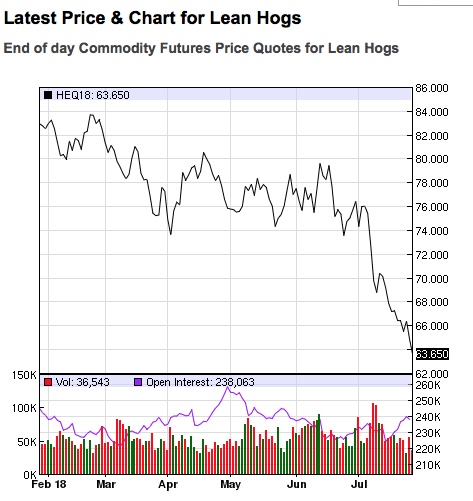 Pork farmers are suffering. China’s implementation of tariffs on U.S. products means U.S. pork faces a 62 percent tariff level. In response pork prices have declined by one-third since spring.
Almond prices take a dive
Wall Street Journal reports that prices for California almonds have fallen by more than 10% over the past two month as farmers face a bumper crop coming in but steep tariffs in China. Some Chinese businesses say they are trying to buy more nuts grown domestically and from other producers such as those in Australia and Africa.
“And in yet another setback for U.S. farmers, China has quietly closed a trading loophole that for years allowed large volumes of American almonds to be transported into the country via Vietnam without incurring import taxes. Beijing is also cracking down on commodities that have been illegally smuggled into the country or brought in via transshipments, where they are routed to other countries and then shipped to China.”
Chinese tariffs on almonds begin to bite
 Retaliatory tariffs in response to President Donald Trump’s trade policies are starting to bite. .
The California Almond Board’s Julie Adams,VP of Global Technical, Regulatory & Government Affairs for the grower group says processor are experiencing a” slowdown in orders for the 2018 crop” with a large crop expected causing concern in the industry.
California exports 70 percent of almonds harvested, but the current trade war with China has raised the tariffs to 50 percent on imported almonds.
US growers are concerned Australian almonds, the second largest exporter of almonds, now gets a 50% leg up in sales from here on.
Because of Trump’s trade war, India is joining China and Europe in enforcing higher import duties on several U.S. items, including almonds. The duties, which will affect almonds in and out of the shell, will go in to effect on August 4.India is the world’s biggest buyer of U.S.-grown almonds.
Higher Chinese reprisal tariffs are already reducing almond shipments from California right now. The Almond Board of California says exports to China in June 2018 were half the tonnage they were in June 2017. The June shipment report says all exports were off 15% from June 2017.
The Almond Market Review says there has been a downward trend for two months in a row.”The downward price trend and tariff concerns put buyers in a hand-to-mouth buying approach. Additionally, buyers in China and other regions shifted purchases toward Australia due to duty advantages or at least higher certainty about the duty structure. The Australian crop is selling out faster and increased demand should return to California in the near future. Some of this lower May-July shipments is due to good stocks overseas in late spring, but some should be made up for later when buyers need to re-fill the pipelines, and Australia is sold out.”
New Crop Sales are said to be 156 million lbs. vs. 287 million lbs. a year ago. “This is a double-edged sword as buyers are underbought and sellers are undersold.”
Walnut exports fall
California Walnut Board reports that growers exported about 13% fewer tons this year than last. Through June we shipped 68% less than we did through June 2017 to Hong Kong.In June itself there were zero tons shipped to either Hong Kong or China while India, where there is also retaliatory tariff , was down 112%.
One third of California plum exports face Chinese tariffs
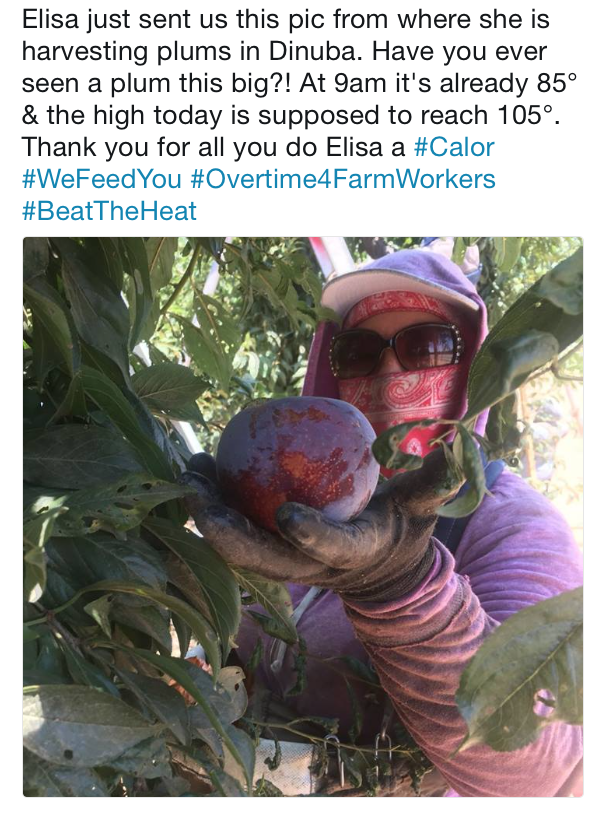 California Farm Bureau says California plum growers and marketers will see an impact from retaliatory trade tariffs on California plums destined for China, according to Marcy Martin, director of trade for the California Fresh Fruit Association.
“One-third of all plum exports were destined for China, and so the impact is significant because that’s our No. 1 plum export market,” Martin said. “The tariff went from 15 percent and it is now at 50 percent, plus about a 15 percent value-added tax, which means someone who is buying a box of plums is now paying 65 percent on top of what they are buying it for.”
Unlike peaches and nectarines, she said, plums have had access to the Chinese market, with exports to China valued at about $28 million.
With a decline in sales to China now expected, Martin said, that fruit must go elsewhere—and the interruption in exports also impacts the domestic market for plums.
Most of the fresh plums grown in California go into the domestic market, but Allred notes that fruit exported to Canada, Mexico and Asia could account for as high as one-third of plums grown, depending on the year.
“The increased tariffs have slowed down shipments, but we’re shipping a lot of fruit into Canada and Mexico and we still have other export distribution,” he said. “I think anybody that has a commodity or an item that is subject to additional tariffs is feeling the effects of it, because there is just not as wide a distribution path that you can move your products to.”
How about California wine?
 The total tariff and tax paid on a bottle of U.S. wine imported into China goes from 48.2% to 66%. Chile, Georgia and New Zealand wines enter China tariff-free and only pay the 27% combined tax rate. Australian wines will be tariff free starting in 2019
A recent trade journal suggests the winner of the trade war between China and the US could be Chile.
“American wine exports to mainland China last year totaled US$75.6 million, the highest in years, but the recent punitive tariff introduced by the Chinese government in retaliation to the Trump administration has consequently dampened American wineries’ hope of expanding their foothold in China.
Other New World producers such as Chile, China’s third biggest source for wine, is poised to seize the opportunity and replace much of the US$75.6 million exported to China by US producers, especially in the premium wine sector.
The two countries have already signed a Free Trade Agreement, and China has surpassed the US to become Chile’s most important export market. In 2017, China imported roughly US$254 million worth of Chilean wines, a year-on-year increase of 30%, according to figures by Wines of Chile.”
Impacts on farm manufacturers – Headline from CNBC this week.
Tariffs will cost Caterpillar $200 million, so it’s going to raise its prices
Caterpillar says it expects recently imposed tariffs to shave off
$100 million to $200 million from its bottom line in the second
half of the year. It says it intends to largely offset these impacts
in part through price increases.
The Food and Agricultural Policy Research Institute says
their June estimates indicated soybean production of 4.28
billion bushels, 2.29 billion bushels exported, ending stocks at
385 million bushels and prices from $8.75 to $11.25.
Those estimates “were before tariffs” says a spokesperson. Plugging tariffs into the equation changes the numbers. The FAPRI July, post-tariff estimates indicate production at 4.31 billion bushels, export expectations at 2.04 billion bushels, ending stocks up to 580 million bushels and a lower price range — $8.00 to $10.50.
This week the President weighed in the impacts of more Tariffs on China soon.The White House is said to be working on a a new plan to more than double its proposed tariffs on Chinese imports.
“China and others have targeted our farmers,” Trump said. “Not good. Not nice. And you know what our farmers are saying? ‘It’s okay. We can take it.’ ”