
-October 6,2019-
Author: Jeannette E. Warnert
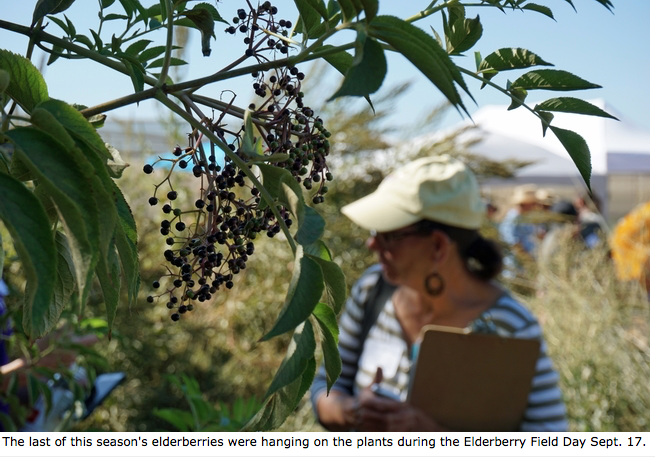 Native California elderberries can be found at the intersection of sustainable farming, super nutrition and economic viability. Naturally drought tolerant, flavorful and packed with nutrients, they are capturing the interest of farmers, health-conscious consumers and scientists.
Elderberries were the focus of a field day offered by UC Agriculture and Natural Resources Sustainable Agriculture Research and Education Program (SAREP) in September at Cloverleaf Farm, an organic berry and tree fruit operation in Dixon.
The last of this season’s elderberries were hanging on the plants during the Elderberry Field Day Sept. 17.
Elderberries occur naturally around the world. In California, Native Americans used the tree’s stems for making flutes, berries for food and purple dye, and bark, leaves and flowers for their purported anti-inflammatory, diuretic and laxative properties.
“They had a relationship with the plant for food, medicine and music,” said SAREP academic coordinator Sonja Brodt. “We wish to honor the elderberry’s history here and thousands of years of management by California native tribes.”
UC Cooperative Extension advisor Rachael Long said elderberries are her favorite native plant.
“They’re pretty in the spring and summer. The flowers smell like cloves. It’s a wonderful fragrance,” she said.
But perhaps the best attribute of elderberries for Long, a proponent of planting hedgerows on the edges of farmland, is the tree’s ecological benefits. Elderberries can be among the rows of trees, shrubs, grasses and sedges in hedgerows that attract beneficial insects and pollinators to farms to help with biocontrol of pests and pollination of plants in adjacent crops.
“Flowering native plants like elderberries, toyon, Christmas berry, coffee berry, manzanita and coyote brush provide nectar and pollen for native bees, honey bees and other insects,” Long said. “I see a lot of green lace wings (predators of aphids, spider mites and other pests) in elderberry.”
Long reported that a tomato farm didn’t have to spray as much for aphids because of the beneficial insects attracted by the hedgerow. “They saved $300 per acre each year,” she said.