
-January 2019-
Citrus Mutual CEO stepping down
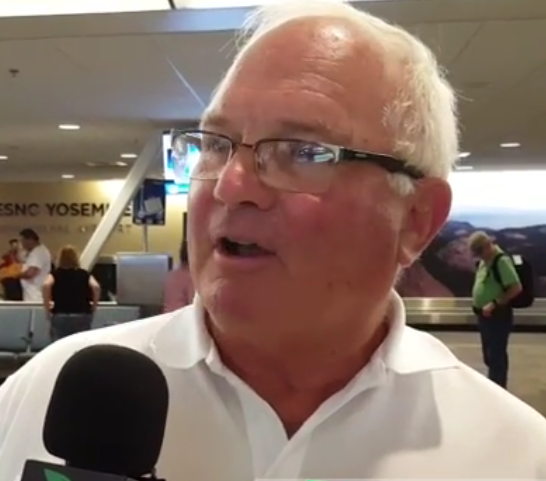 Joel Nelsen, CEO of Exeter-based Citrus Mutual says he will step down from his position in February to be replaced by Casey Creamer, the citrus advisory group’s current Executive Vice President. Nelsen has been president since February 1982 after moving his family from Orange County.
In a note to the membership this month Nelsen wrote he ”will focus on challenges and opportunities at the federal level, provide technical guidance in the regulatory arena, and help with the internal issues of our industry. I will back up this team in Sacramento when and where appropriate.
And rather than spending all my time at the desk, or on a plane, or driving 99, 126, and 10, I will be out and about with you reminiscing and listening. I have two goals now. One is to slow down somewhat and the second is to support the efforts of your board and staff to carry CCM to a higher level than ever before on your behalf.”
Nelsen is stepping down in a tough year for citrus farmers who’ve been hammered by the trade war and the large crop of smaller oranges this year.
Simply too much cheese
Dairy farmers are getting record low prices for their cheese as cheddar inventories bulge according to industry reports. This week the price of of 500 lb barrel cheese was $1.16 a lb compared to $1.50 lb in January 2018. The price in Jan 2014 was $2.22. Todays’ prices are on a par with depression level prices farmers were getting in 2009 after the worldwide economic collapse.
“The cheese markets have suffered a punishing four- month decline, and this week they were bloodied and bruised once again says the Daily Dairy Report.”The recent selloff is hopefully the last gasp of a bear market that has gone a bit too far. But the fact remains: there is simply too much cheese. Although milk production has slowed noticeably in the entire Eastern half of the United States, cheese output continues to outpace demand.”
Bad News for Harley Davidson?
 A CNBC report highest a survey of millennials that may be bad news for Harley Davidson profit margins.
The survey’s most significant finding is that” 21- to 34-year-olds consider buying a bike for “ease of transportation,” whereas older buyers purchase bikes “as a hobby” or because “motorcycles are cool.”
This distinction is important, since the average Harley-Davidson customer is a married man in his early 50s, with a household income at or above $90,000. These are the customers buying motorcycles out of a passion for the product or lifestyle.
Younger buyers appear to be more motivated to consider motorcycles for practical reasons, which means it is likely they will be more interested in less expensive bikes that bring in lower margins for manufacturers.”