
Wonderful sues Kings County pistachio producer
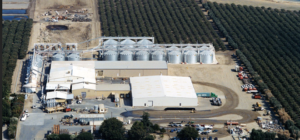 The Wonderful Co has sued another Valley-based pistachio producer. Wonderful sued Fresno’s Assemi family and Tulare County’s ARO Pistachios. Now Wonderful has sued Kings County’s Keenan Farms this September.The suit claims Keenan, based in Kettleman City, infringed on the look of packaging – so called “trade dress” of Wonderful’s consumer packaging and point of sale materials. Attorneys for Keenan say the company did not design their packages – that Ahold Grocery designed the look of it – also denying the allegations.
Kings County to get $1.5 million from solar transmission line
Westlands Transmission will carry electric power across county right-of-way as it builds more solar plants along the Avenal Cutoff. Now the company has agreed to pay the county $1.5 million as a one-time franchise fee to use the right-of-way for its Aquamarine solar project.The Board of Supervisors approved the agreement this month.
Solar projects add to county General Fund
To incentivize widespread construction of solar projects in the state the original owner of the project is exempt from property taxes until the property is sold to a new owner. In Kings County’s case, 4 large utility-scale solar farms have been sold valued at around $115 million says Destiny Borba, Auditor-Accountant. That brings in $1.15 million to the county each year.On top of that, there is growth in the number and size of battery storage projects being built in the county that are not exempt from property taxes providing a new and growing source of revenue to the county along with solar farms.
Commercial solar installations have been exempted from increases in property taxes as a way of stimulating solar development. SB 364 defines commercial solar projects as personal property rather than a real estate improvement. This change in definition would apply to any solar project installed prior to January 2025 and would protect such projects from a sudden increase in property taxes until there is a subsequent change in ownership.
What’s killing Coho salmon? Where the rubber meets the road
This time you can’t blame the farmer.A new study published this month in Science has found a link between coho salmon deaths in the Pacific Northwest and a chemical found in automobile tires The study says urban watersheds contain a chemical called 6PPD-quinone, which is a derivative of tire rubber and toxic to coho salmon. Small particles from the tires wash into the region’s watersheds.
Farmers want Supreme Court to rule against union organizers
Valley farmers are asking the US Supreme Court to rule against union organizers who are currently allowed on the employer property to contact workers.It is common practice allowed by the California Agricultural Labor Relations Board to offer workers the choice to join a union.
The Court is expected to decide next year whether a 1975 California regulation allowing union organizers to visit a farmer’s private property to encourage employees to join the union is constitutional or not.
Two California companies are plaintiffs -Cedar Point Nursery in Siskiyou County and Fowler Packing Company in Fresno County who sued the ALRB in 2016. They claim the regulation allowing a“access”is an easement on their private property without compensation.The California Farm Bureau filed three friend-of-the-court briefs supporting the farmer.
“Flying the foothills” to map water
Stanford researchers are reporting that Central Valley ag groups have hired a company to “fly the foothills” to map locations for water recharge to improve chances for success under the Sustainable Groundwater Management Act (SGMA) rules that require groundwater sustainability by 2040.
A team of researchers are conducting a airborne electromagnetic (AEM) survey of the Sierra foothills and edge of the Central Valley in order to image the rocks and sediments that control how water moves underground. Water managers are looking for the best places for recharge- considered key to reducing the steady decline in the water table in the Valley.
The results will help the North King’s GSA (NKGSA) and others in the Central Valley identify areas where the subsurface geology transitions from fractured granite where recharge is difficult to sand and gravel where water can more easily move through to deeper areas underground, explained Kassy Chauhan, executive officer of the NKGSA.
This is key to determining sites where there is natural recharge and also which sites will be most strategic for managed aquifer recharge where excess surface water is moved to locations where it can go further below ground and make up for the water lost from groundwater pumping. The NKGSA provided data on monitoring wells in the area that the researchers can use to ensure the AEM survey results are validated with on-the-ground information.