-January 15,2022-
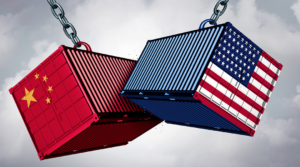 In 2018, the United States imposed Section 232 tariffs on steel and aluminum imports from major trading partners and separately Section 301 tari s on a broad range imports from China. In response, Canada, China, the European Union (EU), India, Mexico, and Turkey imposed retaliatory tari s on many U.S. exports, including a wide range of agricultural and food products. Individual product lines experienced tari increases ranging from 2 to 140 percent. Retaliatory tariffs increased the price of U.S. agricultural exports in these markets relative to alternatives that were either domestically produced or imported from other international sources. Despite opportunities for U.S. producers to sell their products to non-retaliating trade partners, the overall
effect was a reduction in U.S. agricultural exports. Given that agricultural production for certain commodities is concentrated in certain States, retaliatory tariffs a effected the United States differently. As of October 2021, many retaliatory tarif s were still in effect with
the following exceptions—Canada and Mexico’s tari s were removed in May 2019,
China announced tariff exemptions for some products after the U.S.-China Phase One Economic and Trade Agreement (Phase One Agreement) was signed on January 15, 2020, and in October 2021 the United States and EU reached arrangements to address global steel and aluminum excess capacity which include replacement of Section 232 tariff s with a tariff-rate quota and lifting of the EU’s retaliatory tariffs.
What Did the Study Find?
Retaliatory tariffs led to a significant cant reduction in U.S. agricultural exports to retaliating partners. Nationally, direct U.S. agricultural export losses due to retaliatory tari s totaled more than $27 billion during 2018 through the end of 2019. Across retaliatory partners, China accounted for approximately 95 percent of the losses ($25.7 billion), followed by the EU ($0.6 billion), and Mexico ($0.5 billion), with Canada, Turkey, and India having smaller shares. We estimated annualized losses for selected commodities from retaliatory tari s were $13.2 billion from mid-2018 to the end of 2019
