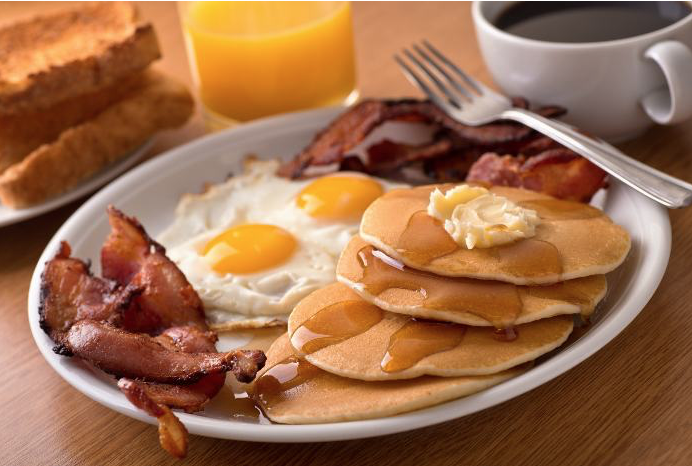
People have been crying in their expreso about inflation over the past year and rightly so. But now, maybe it’s time to look on the sunnyside. Prices for a number of key commodities are heading down including that important breakfast item – eggs!
If you want to fight inflation – breakfast is a good way to start.
Egg Anxiety
Consumers were complaining just a few months ago about $12 a carton for cage-free, with a typical but elevated price at stores a month ago of around $8 a dozen. That is enough to put a crimp in your omelette.
The culprit has been bird flu that has decimated the flock of egg laying chickens although some observers are putting the blame on California’s Prop 12 which gives the birds a chance to spread their wings
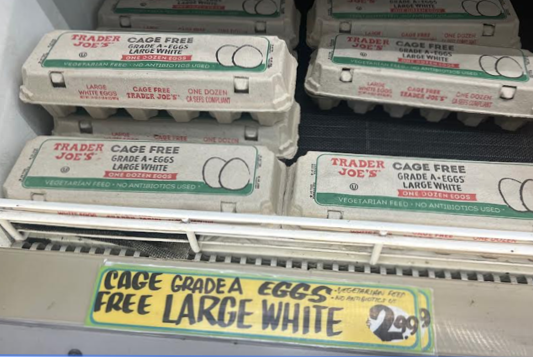
This last week USDA reported California egg prices dropped another 21 cents in a week with large eggs selling for $4.40 a dozen. Then check out Trader Joe’s this week, selling California cage-free eggs for $2.99 a dozen – just like the good ol’ days!
In the past month there has been a steady drop in price on the wholesale level across the country as the egg market returns to a more normal level.
In 2023, wholesale egg prices will fall 26.8%, USDA Chief Economist Seth Meyer said in a presentation at the annual USDA Agricultural Outlook Forum in Virginia last week.
The agency has attributed high egg prices to historic outbreaks of avian flu, which have killed more than 58 million backyard and commercial chickens and turkeys since February 2022.
The bottom line -eggs are cheaper and getting more so ( see USDA egg price chart as of March 3) It’s getting there.
Jitters over Coffee
How about that cup of java- no decent breakfast would be complete without it.
The price of wholesale coffee, mostly from South America, has been sky high at $2.40 a pound last summer. Today the wholesale price is down to $1.86/lb based on better rainfall in Brazil .The price fell from last summer but climbed since October based on, can you believe it, too much rain.
At the store a good buy on a gourmet coffee at Trader Joe’s is $8.99 for 14 ounces of “Wake Up Blend”.
Milk & Butter
Essential breakfast staples include milk and butter- not just on toast and in your cereal but in all baked items and as ingredients in other foods.
The year 2022 saw record prices for wholesale milk and butter but they have also been trending down in the past few months.
Butter has dropped to $2.35/lb in February from $3.20 last summer. CME milk has dropped to $17.86 per cwt in February from $22 in November.
Ahh… bacon!
As for bacon, pork prices are down 30% from last summer. Target is selling a pound of bacon for $4.39 this week and it’s $4.98 at Walmart, although these may be specails. But look for deals and you will find them.
Don’t forget your oats
For you breakfast oatmeal eaters out there – it’s time you catch a break too. Oats are a worldwide commodity too and it is now half the price it was last summer. Your oat cereal maker ought to be passing on the savings.
A case of gas
Perhaps the biggest disinflationary commodity going forward is a product you use every day to make breakfast, heat your home and that utilities use to make electricity – natural gas.
In California natural gas prices skyrocketed in January based on a December spike in the wholesale price delivered by pipeline that pushed your gas and electricity bills higher in January by 2 to 5 times. Regulators are investigating why this happened suspecting market manipulation even as nationwide natural gas prices plunged.
Nationwide natural gas is suddenly a bargain and should help push inflation down going forward due to its importance to the economy.
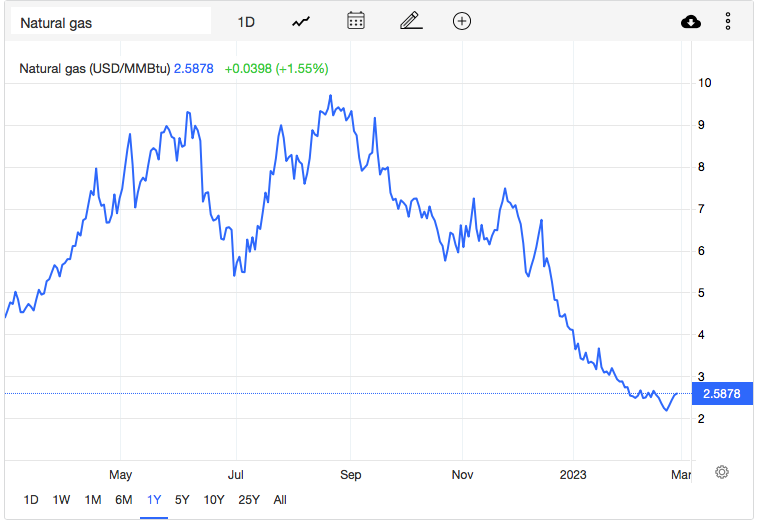
A recent news report notes the futures price for nat gas has dropped five-fold.
“For the first time since September 2020, Henry Hub natural gas futures plunged below $2 per mmBtu this week before bouncing back to a more palatable level of $2.4/mmBtu.The combination of a relatively mild winter in key US consumption hubs and excess domestic volumes on the back of the Freeport LNG outage depressed gas futures that only six months ago were trading above $10/mmBtu.”
SoCalGas says that its customers can expect February bills to be about 68% lower compared with January, as there has been a decrease in the wholesale price that SoCalGas pays for natural gas.
If the price of breakfast is heading lower- can dinner be far behind?

 People have been crying in their expreso about inflation over the past year and rightly so. But now, maybe it’s time to look on the sunnyside. Prices for a number of key commodities are heading down including that important breakfast item – eggs!
 The culprit has been bird flu that has decimated the flock of egg laying chickens although some observers are putting the blame on California’s Prop 12 which gives the birds a chance to spread their wings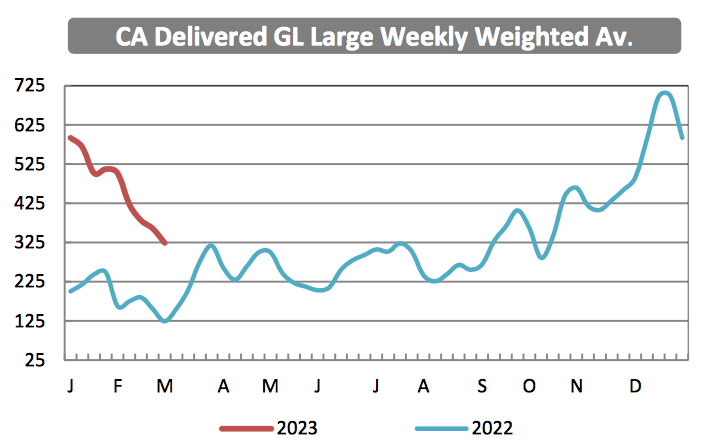
 “For the first time since September 2020, Henry Hub natural gas futures plunged below $2 per mmBtu this week before bouncing back to a more palatable level of $2.4/mmBtu.The combination of a relatively mild winter in key US consumption hubs and excess domestic volumes on the back of the Freeport LNG outage depressed gas futures that only six months ago were trading above $10/mmBtu.”