
Prices easing
Friday March 31:
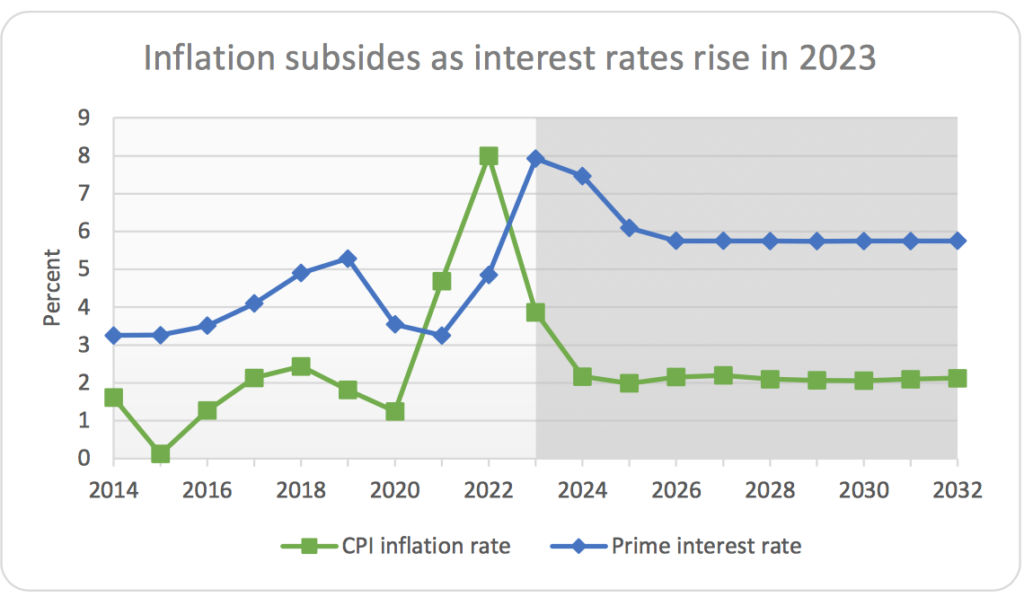
An inflation gauge the Federal Reserve follows closely rose slightly less than anticipated in February, providing some hope that interest rate hikes are helping ease price increases.
The personal consumption expenditures price index excluding food and energy increased 0.3% for the month, the Commerce Department reported Friday. That was below the 0.4% Dow Jones estimate and lower than the 0.5% January increase.
Ag outlook report
 How do abnormal weather conditions, animal health outbreaks and global conflict impact U.S. agricultural markets? The Food and Agricultural Policy Research Institute at the University of Missouri (FAPRI-MU) has just released its annual U.S. Baseline Outlook report. The report includes projections for agricultural and biofuel markets, and serves as a point of reference for evaluating alternative scenarios for agricultural policy.
“What goes up, generally comes back down in agricultural markets,” FAPRI-MU director Pat Westhoff said. “Projected prices for most crops, poultry and dairy products all retreat in 2023 from recent peaks, and so do some production expenses.”
Based on projections from the report, Westhoff believes that after atypical conditions, a return to normalcy will impact producers and consumers alike.
“Net farm income is likely to fall back from the record levels of 2022 and consumer food price inflation is also likely to slow in 2023,” Westhoff said.
The below findings are included in the report:
If weather conditions allow crop yields to return to trend-line levels in 2023, prices for corn, soybeans, wheat, cotton and many other crops are likely to fall. Over the next ten years, average nominal crop prices are much lower than they have been in 2022/23, but they remain above the average of 2017/18 to 2021/22.
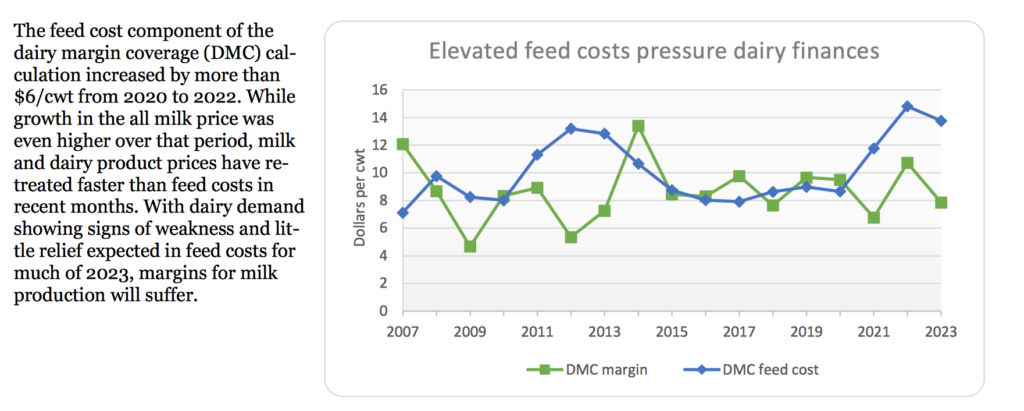
Higher fertilizer, fuel and feed costs contributed to a very sharp increase in farm production expenses in 2022. A smaller increase is projected in 2023, and lower prices for some inputs result in a reduction in production costs in 2024 and 2025.

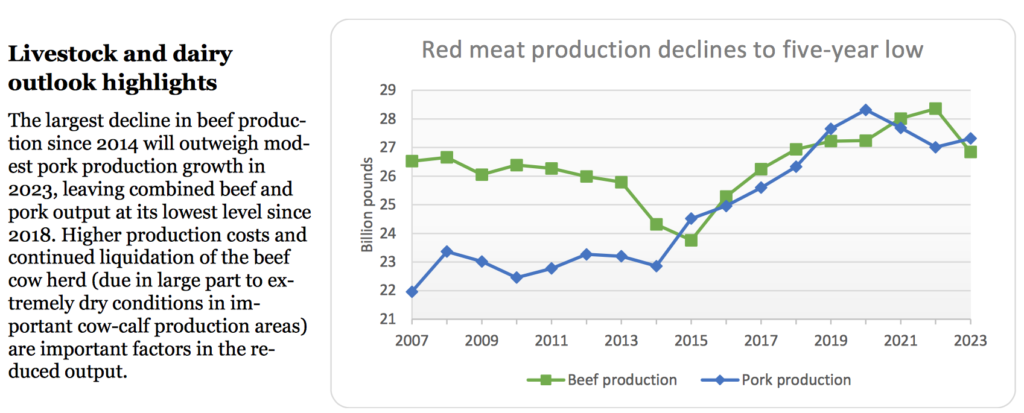
Cattle, hog, poultry and milk prices all increased in 2022. High feed costs, drought and avian influenza limited supplies, and consumer demand generally continued to be strong. In 2023, most projected livestock sector prices fall as supplies rebound and demand growth slows. The one major exception is cattle, where drought-reduced inventories reduce the number of animals available for slaughter.
 Federal spending on farm-related programs was above the historical norm between 2019 and 2022, largely because of short-term, ad hoc programs. Crop insurance accounts for 45% of projected spending on major farm-related programs over the next decade. Commodity program spending associated with Title I of the farm bill is relatively low in FY 2023 and 2024, but rebound in later years given projected changes in commodity prices and program payment triggers under the price loss coverage (PLC) and agriculture risk coverage (ARC) programs.
Farm asset values have increased with land prices in recent years, and another increase is projected for 2023. Given assumptions of the outlook, lower farm income and high interest rates restrict further increases in farm real estate values in subsequent years.
Consumer food price inflation jumped to 9.9% in 2022 as farm commodity prices rose, labor and other costs increased, supply chain problems continued, and consumer demand was strong. Price increases have slowed in recent months, and the projected annual increase in consumer food prices is 4.4% in 2023 and under 2% in 2024.