
April 4,2018-
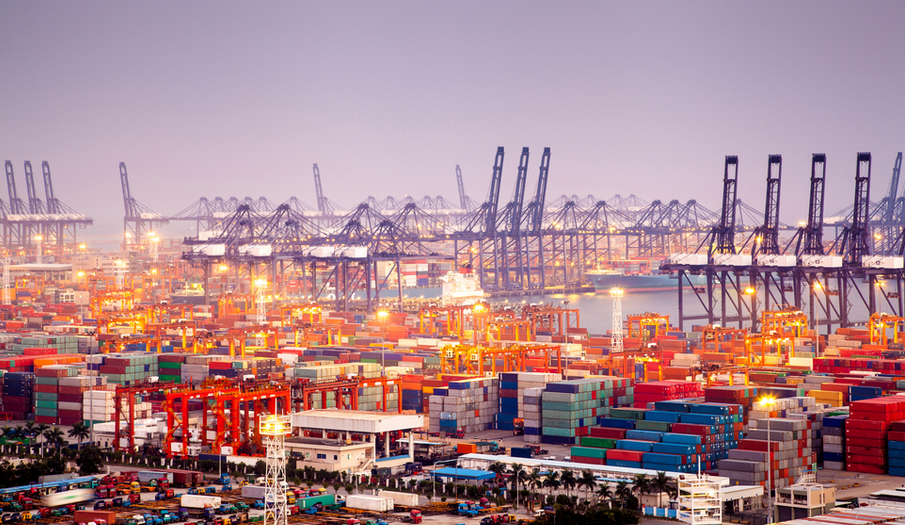 Don’t tell hog farmers there is no trade war. Pork futures are down 30% since the first of the year when President Trump has been talking about tariffs on Chinese steel, now in affect.
China responded last week announcing an increase in the tariff rate on eight imported U.S. products, including pork, by 25 percent and a 15 percent tariff on 120 imported U.S. commodities like fruit and nuts grown in California.
This week China ratcheted up what is turning into a real trade war with new 25% duties on soybeans, beef, corn, wheat and sorghum among other farm and non-farm products. Despite pleas by an administration official that the impact amounts to “small potatoes” regards the US economy, the market has not been happy with news.
Exports of ag products have a huge effect on farm product acorss the US and right here in Kings County.
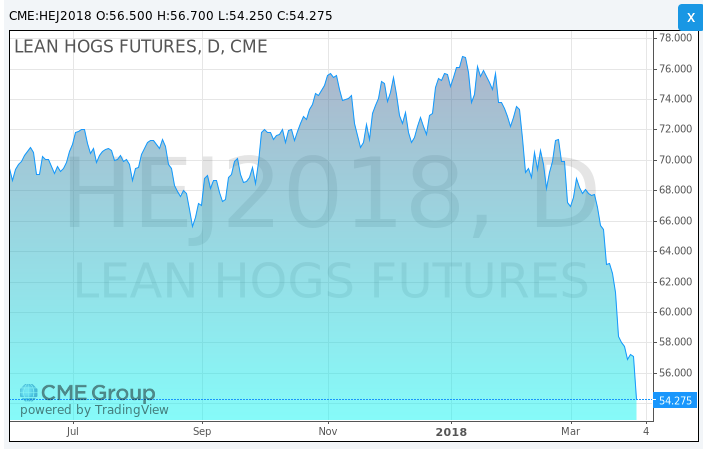
The Chinese market alone purchased about $1.1 billion in U.S. pork last year, according to the U.S. Meat Export Federation.
Lower hog prices are affecting beef prices (now also targeted by China) seeing a price drop as well. At the CME, cattle prices have been down around 12% from January, before this Wednesday’s second round of bad trade news.
One Iowa hog farmer was quoted on NPR radio recently saying that fear of tariffs alone are affecting the entire economy. “And when farmers are not making money either raising grains or livestock, they don’t go and buy new machinery. And the people that build the machinery – they don’t go out and buy a new car.”
It is not just the Midwest that is feeling the pain.
Some 20% of ag export shipments from Kings County were purchased by China or Hong Kong as of 2016 according to the Ag Commissioner.
That includes walnuts, pistachios, almonds ,cherries, pomegranates and grapes -, all big ag products grown in Kings County. It also includes citrus, peaches and raisins – and wine
The ag press reports this week that China is one of the fastest growing wine markets in the world and will soon be second only to the U.S. in value, according to the Wine Institute, which said China’s proposed tariffs on U.S. wine “could have a significant negative impact on the future growth of wine exports to China.”
The Wall Street Journal quoted a California wine maker \ on the affect of the tariff on the end user – the Chinese consumer. ”An extra 15 percent charge would be brutal. “No one wants to overpay,” Mr. Honig said. “If all they’re looking at is two different bottles side by side, and we are competing with Australia and Chile, that’s a big competitive disadvantage.”
Richard Matoian of Fresno who heads up the American Pistachio Growers – echos that sentimet.
“No farmer wants to see a tariff imposed on their product” Matoian says, adding that 55% of US pistachio exports, mostly grown in California, go to China. The farm-gate value stands at $300 million annually he estimates.
“We go head to head with Iran for pistachio sales and this action makes us less competitive.”
Pistachios were the number-four crop in Kings County in 2016, bringing in more than $178 million.Top local crops also affected include beef (number 2 crop) almonds (number 5) as well as peaches and grapes.
One of the biggest Central Valley commodities affected is citrus and here too, the industry is concerned. Joel Nelsen of Exeter represents Citrus Mutual – worried that shippments are being affected now.
Family farmers in our industry will suffer from the economic fallout unless we can find alternative markets for California’s navel and Valencia oranges and lemons.”
Some California citrus is already on ships bound for China and arriving on docks If the Chinese importers down want the oranges exporters must scramble to find another Asian destination for the perishable products before they rot.
“We still have about 35 percent of the (orange) crop on the trees” awaiting harvest, Nelson said, and the lemon harvest will begin in the coming weeks.
Another group, the Agriculture Transportation Coalition said in a statement that new tariffs will make U.S. products more expensive and cause Chinese buyers to look to other suppliers.
“To say that this will disrupt the U.S. agriculture and forest products export shipping supply chain is a gross understatement,” the group said. “And the threat of more retaliation by China looms large, as additional U.S. measures against China exports to the U.S. (to combat China’s intellectual property violations) are still to be announced.”
Fruit and nut exporters have voiced concern over a trade war’s effects on their ability to export to China, which has increasingly become a popular market for U.S. agricultural products.
China is the third largest market for U.S. cherries with the season beginning in the Central Valley in a matter of weeks.
With news that soybeans from the Midwest are now part of ‘tit for tat’ trade dispute, Bloomberg reported April 4” while about a third of U.S. production goes to the Asian country annually, China last year bought more of the oilseed from Brazil. “This will obviously benefit Brazilian exporters,” said Warren Patterson, a commodity strategist at Dutch bank ING Groep NV. “They will be licking their lips right now.”
Soybeans on the Chicago Board of Trade dropped as much as 5.3 percent, while wheat and corn futures also slid.
Short term interest rates on the rise