
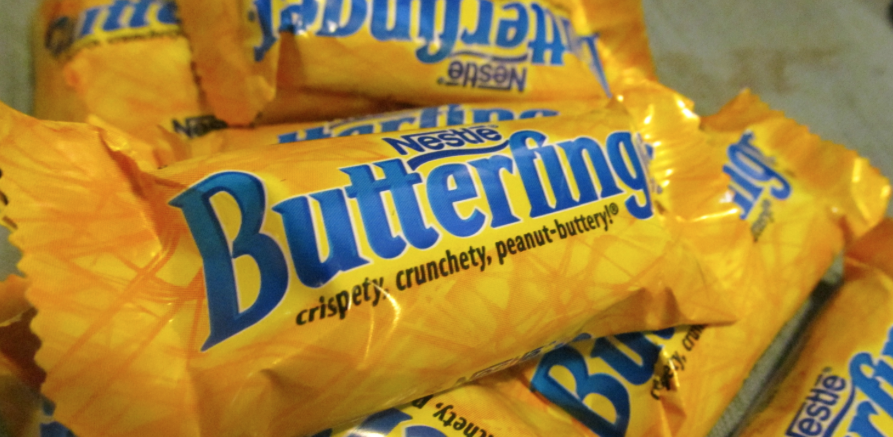
 : No one’s going to lay a finger on your Butterfinger — but it may soon have 30 or even 40 percent less sugar without tasting any different, thanks to a breakthrough by Nestlé. The world’s largest food company on Wednesday announced that it has pioneered a new way to restructure sugar crystals to maximize the sweetness detected on the tongue before a person swallows that bite of chocolate (along with all of its calories). The innovation means the company can use less sugar, with no need for artificial sweeteners to make up the difference — a crucial innovation as global pressure mounts to reduce sugar in diets.
How Nestlé — which has pledged to cut sugar by 10 percent across its portfolio — was able to re-engineer the shape and structure of crystals is covered by some 10 patents, according to Stefan Catsicas, Nestlé’s chief technology officer, who was in Washington this week.
“It is quite a complicated process,” Catsicas said, noting that the technology is a result of transdisciplinary research. Nestlé has roughly 6,000 employees and nearly $2 billion dedicated to R&D each year. “It’s really the science of food materials. What has led us to do this is the decision to go back to fundamentals.”
What about cost? “The research that goes into it is expensive, but at the end it’s the same sugar,” Catsicas explains. “It’s not a different molecule that’s more or less expensive. Basically what happens here is that we replace sugar with less sugar.” The company says it expects to have the new sugar rolled out across confectionary products starting in 2018.