
August 18,2015-
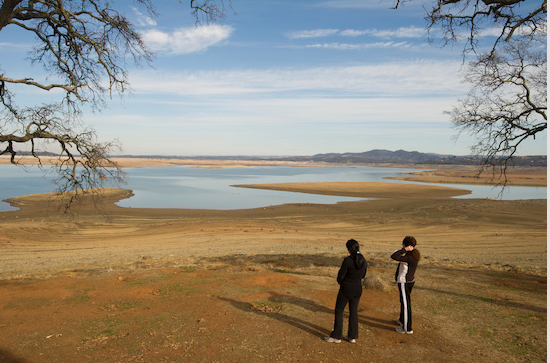
The drought is tightening its grip on California agriculture,
squeezing about 30 percent more workers and cropland out of
production than in 2014, according to the latest drought impact
report by the UC Davis Center for Watershed Sciences.
In 2015, the state’s agricultural economy will lose about $1.84
billion and 10,100 seasonal jobs because of the drought, the report
estimated, with the Central Valley hardest hit.
The analysis also forecasts how the industry will fare if the drought
persists through 2017.
‘NOT A FREE LUNCH’
Currently, the industry overall remains robust. The agricultural
economy continues to grow in this fourth year of severe drought,
thanks mostly to the state’s vast but declining reserves of
groundwater, which will offset about 70 percent of the surface water
shortage this year, the researchers said.
California is the world’s richest food-producing region. Continued
strong global demand and prices for many of its fruits, nuts and
vegetables has helped sustain the farm economy along with intrastate
water transfers and shifts in growing locations.
“We’re getting by remarkably well this year — much better than many
had predicted — but it’s not a free lunch,” said lead author Richard
Howitt, a UC Davis professor emeritus of agricultural and resource
economics.
The heavy reliance on groundwater comes at ever-increasing energy
costs as farmers pump deeper and drill more wells. Some of the heavy
pumping is in basins already in severe overdraft — where groundwater
use greatly exceeds replenishment of aquifers — inviting further
land subsidence, water quality problems and diminishing reserves
needed for future droughts.
Further, several small rural communities continue to suffer from high
unemployment and drying up of domestic wells because of the drought,
particularly in the Tulare Basin.
“If a drought of this intensity persists beyond 2015, California’s
agricultural production and employment will continue to erode,” said
co-author Josue Medellin-Azuara, a water economist with the UC Davis
Center for Watershed Sciences.
MAJOR CONCLUSIONS
The UC Davis team used computer models and the latest estimates of
surface water availability from state and federal water projects and
local water districts. They forecast several drought-related impacts
in the state’s major agricultural regions for the current growing
season, including:
• The direct costs of drought to agriculture will be $1.84 billion
for 2015. The total impact to all economic sectors is an estimated
$2.74 billion, compared with $2.2 billion in 2014. The state’s
farmers and ranchers currently receive more than $46 billion annually
in gross revenues, a small fraction of California’s $1.9
trillion-a-year economy.
• The loss of about 10,100 seasonal jobs directly related to farm
production, compared with the researchers’ 2014 drought estimate of
7,500 jobs. When considering the spillover effects of the farm losses
on all other economic sectors, the employment impact of the 2015
drought more than doubles to 21,000 lost jobs.
• Surface water shortages will reach nearly 8.7 million acre-feet,
which will be offset mostly by increased groundwater pumping of 6
million acre-feet.
• Net water shortages of 2.7 million acre-feet will cause roughly
542,000 acres to be idled — 114,000 more acres than the researchers’
2014 drought estimate. Most idled land is in the Tulare Basin.
• The effects of continued drought through 2017 (assuming continued
2014 water supplies) will likely be 6 percent worse than in 2015,
with the net water shortage increasing to 2.9 million acre-feet a
year. Gradual decline in groundwater pumping capacity and water
elevations will add to the incremental costs of a prolonged drought.
GROUNDWATER LAWS COULD HELP
The scientists noted that new state groundwater laws requiring local
agencies to attain sustainable yields could eventually reverse the
depletion of underground reserves.
“The transition will cause some increased fallowing of cropland or
longer crop rotations but will help preserve California’s ability to
support more profitable permanent and vegetable crops during
drought,” said co-author Jay Lund, director of the UC Davis Center
for Watershed Sciences.
The report was primarily funded by the California Department of Food
and Agriculture.
Other authors on the report include Daniel Sumner, a UC Davis
professor of agricultural and resource economics and director of the
UC Agricultural Issues Center, and Duncan MacEwan of the ERA
Economics consulting firm in Davis.
ADDITIONAL INFORMATION
• Read the full report. <http://bit.ly/