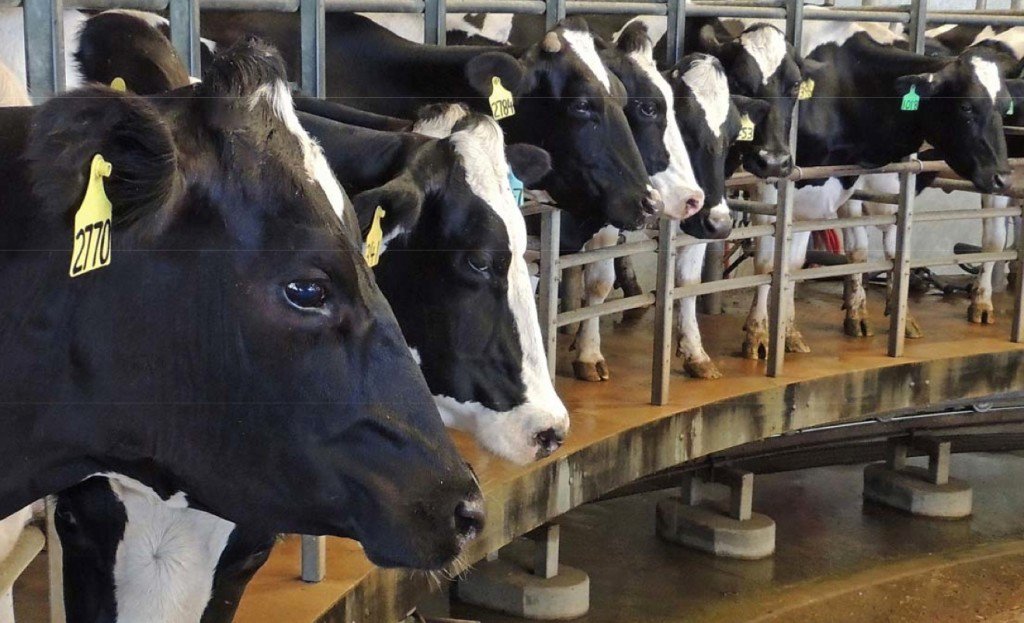
Birds flu hits dairies again
Milk Powder prices double the average
Dairy farmers can cheer Nonfat Dry Milk prices this fall.The Milk Producers Council reports this week that the NFDM market finished the week at $2.1625/lb., down 10.5¢ from last month but almost double the average price seen in 2025 and up from $1.16/lb in January of this year.
All about protein
The news report suggests at these price levels, U.S. product is “woefully uncompetitive with other international suppliers” and additional price convergence will be necessary to restore export viability.
“But with insatiable protein demand still diverting skim solids away from the dryer and into alternative products, milk powder supplies are likely to remain tight.”
Visalia-based California Diaries Inc (CDI) is the largest member-owned milk marketing and processing cooperative in the state, producing around 900 million pounds of milk powder annually (accounting for roughly 40% of U.S. production). Its marketing arm, DairyAmerica, handles roughly 50% of U.S. milk powder distribution globally, according to CDI.
The U.S. exports roughly 70% of its total domestic production of skim and nonfat dry milk solids with Mexico a key market for North American milk powder. California doesn’t want to lose that market. But in the past few years, U.S. milk powder export volumes have declined by 3% to 6% due to high US demand for fresh milk proteins like cottage cheese, yogurt and protein beverages that pulls skim solids away from processing dryers.
Bird Flu is back with fall season hitting dairy cows in Washington, Texas & Kansas
As wild birds migrate they can introduce new cases of bird flu to US regions. Since 2022, the virus has impacted over 1,000 domestic flocks across 48 states. Each fall including this season, as migratory birds arrive, the risk of bird flu entering our environment increases. The spread poses serious health threats to all domestic birds, including chickens, ducks, turkeys, peacocks, guinea fowl, geese and dairy herds. Now put marine mammals on the list too.
USDA’s Animal and Plant Health Inspection Service (APHIS) has as of Oct 8 confirmed highly pathogenic avian influenza (HPAI in dairy cattle herds in Kansas and Texas, according to information posted on the APHIS website.In Washington State, bird flu has just been been confirmed in 2 dairy herds around Yakima. The state says bird flu has been also found in one human dairy worker.
Since March 2024 dairy cattle herds in 19 states have documented H5N1 infections, including neighboring Idaho. “The two farms are under quarantine and have employed strict biosecurity measures. Veterinarians are working to treat sick cows.
In the past month, four dairy herds have had H5N1 detections, including herds in Kansas and Texas. So far in 2026, US officials have confirmed avian flu in 93 dairy herds, compared to 917 in 2024 and 171 last year.
California in 2025 was hit hard by bird flu impacting both the poultry and egg industries as well as dairies that suffered a temporary decline in production as a result.
Sea Lion gets bird flu
Bird flu has also been found in aquatic animals including a find in late March 2026 when a deceased sea lion was found along Morro Strand State Beach and that tested positive for H5N1 (avian influenza or bird flu), marking the first confirmed case in a marine mammal in the county.While the risk of H5N1 to the public remains low, officials from San Luis Obispo County Public Health Department, the California Department of Fish & Wildlife, and the Central California Marine Animal Response Team urge community members and visitors to avoid approaching marine mammals and seabirds. This is especially important for animals that appear sick, injured, or deceased.
“Staying 150 yards away from all marine mammals and seabirds; keeping children and pets away from sick, injured or dead wildlife; and not approaching, touching or attempting to assist marine mammals or seabirds,” states guidance from the California Department of Public Health.
Poultry update
Bird flu hit California poultry operations hard in 2024 with millions of birds killed to prevent further spread. But in the past year the egg industry has not been impacted dropping egg prices down. But this fall the industry is watching for any new finds.
Watt Poultry publication says” So far this fall, Manitoba and Alberta are the only Canadian provinces with commercial poultry operations affected by HPAI. Manitoba has had 10 commercial poultry flocks struck since Sept. 10. Before that, poultry in the province had been free of HPAI since December 2025. Alberta has had five commercial flocks struck by the virus since September, and it also had three flock infections in May, bringing its year-to-date tally to eight affected flocks.
The United States, meanwhile, has not reported any cases of HPAI in commercial poultry since Oct. 9, when a case was confirmed in Kandiyohi County, Minnesota, according to the U.S. Department of Agriculture’s Animal and Plant Health Inspection Service.”