
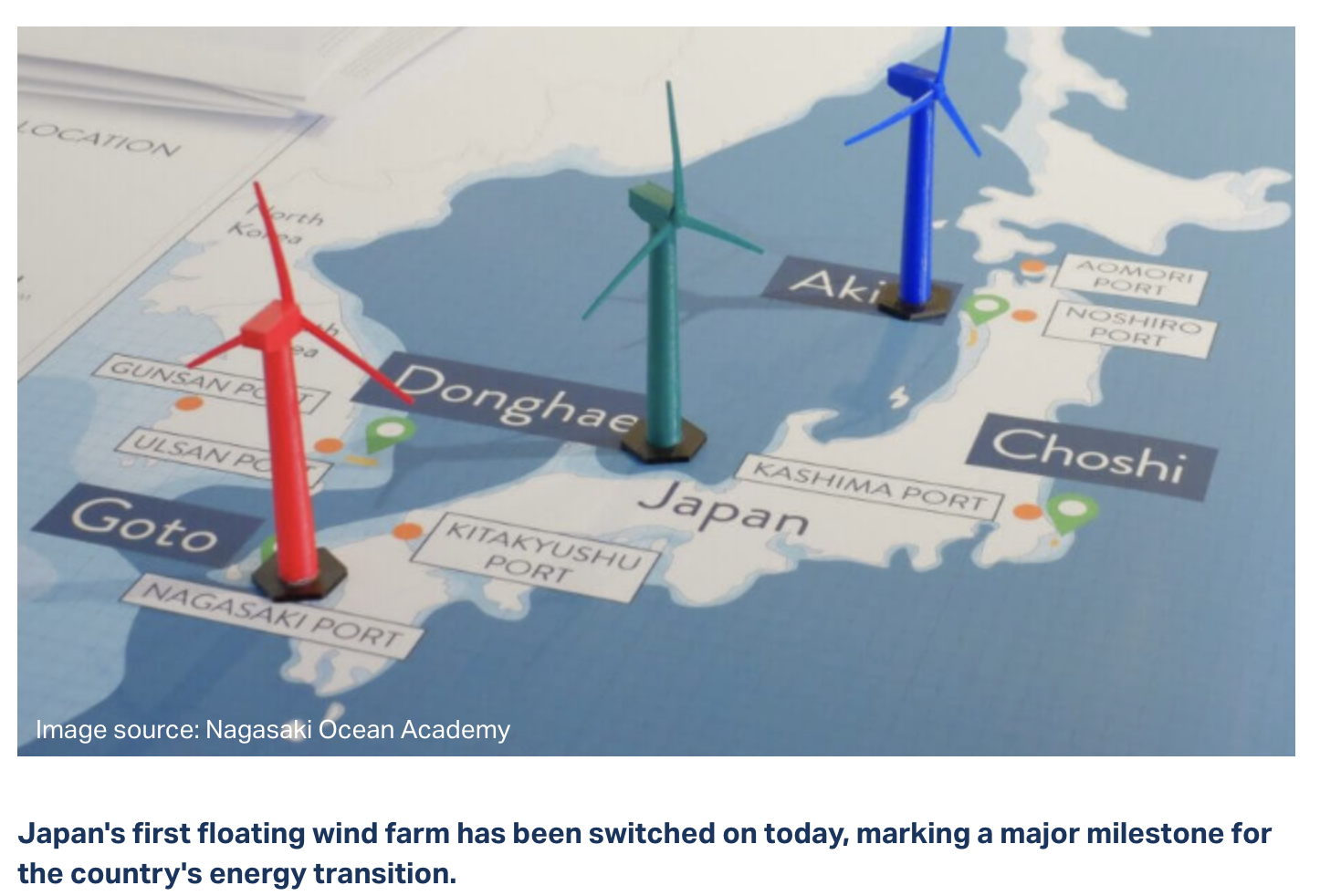
Floating Wind powers up in Japan / Trump U.S. ban struck down
News reports say that off the coast of Japan the Goto Floating Wind Farm that employs floating technology under consideration on the U.S. West Coast, announced the start of commercial operations this week, pumping nearly 17 megawatts of power onto the Japanese grid. Japanese officials last year raised the country’s goal for installed capacity of offshore wind to 10 gigawatts by 2030 and 45 gigawatts by 2040.
Last month US Groups that promote offshore wind power are hopeful that a big win in court will convince the federal government to consider permitting new projects.
In December a federal judge struck down President Donald Trump’s day-one executive order that halted all offshore wind approvals and argued that the Biden administration unfairly favored renewable energy over oil and gas.
“Now each individual project is still going to have to continue the route it’s on,” said Benjamin Collings, offshore wind advisor for the nonprofit Elected Officials to Protect America. “For example, projects like in the Port of Humboldt, they can continue without being permanently stopped, which the White House was trying to do.”
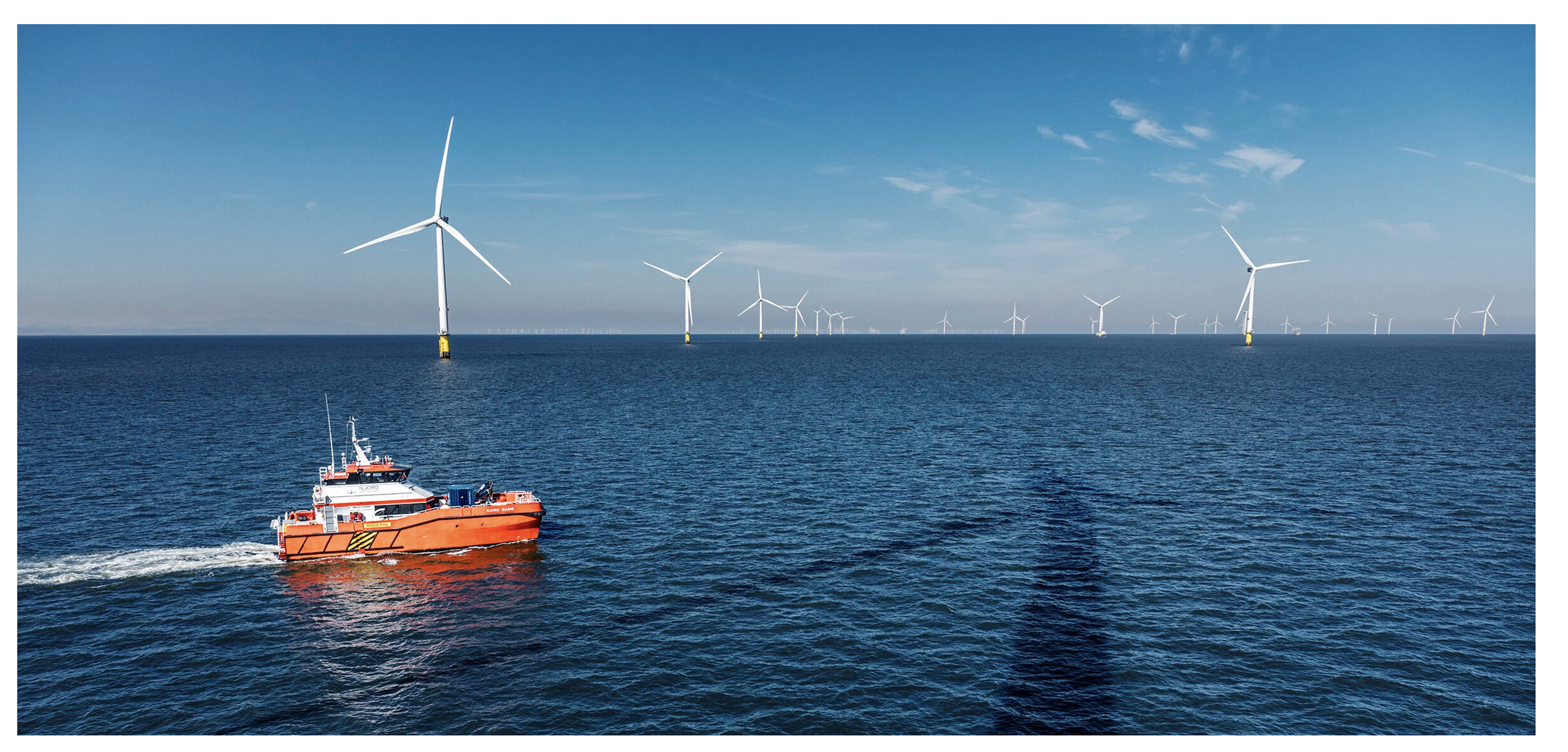
California has five offshore wind projects in development: two off of Humboldt Bay and three off the coast of Morro Bay. Companies are doing environmental studies as they prepare to apply for state permits.
US manufacturing contracted in December 10th month in a row
The Institute for Supply Management reported this week that the Manufacturing PMI® registered 47.9 percent in December, a 0.3-percentage point decrease compared to the reading of 48.2 percent in November and the lowest reading of 2025.
The overall economy continued in expansion for the 68th month after one month of contraction in April 2020. (A Manufacturing PMI® above 42.3 percent, over a period of time, generally indicates an expansion of the overall economy.)
The New Orders Index contracted for a fourth straight month in December following one month of growth; the figure of 47.7 percent is 0.3 percentage point higher than the 47.4 percent recorded in November.
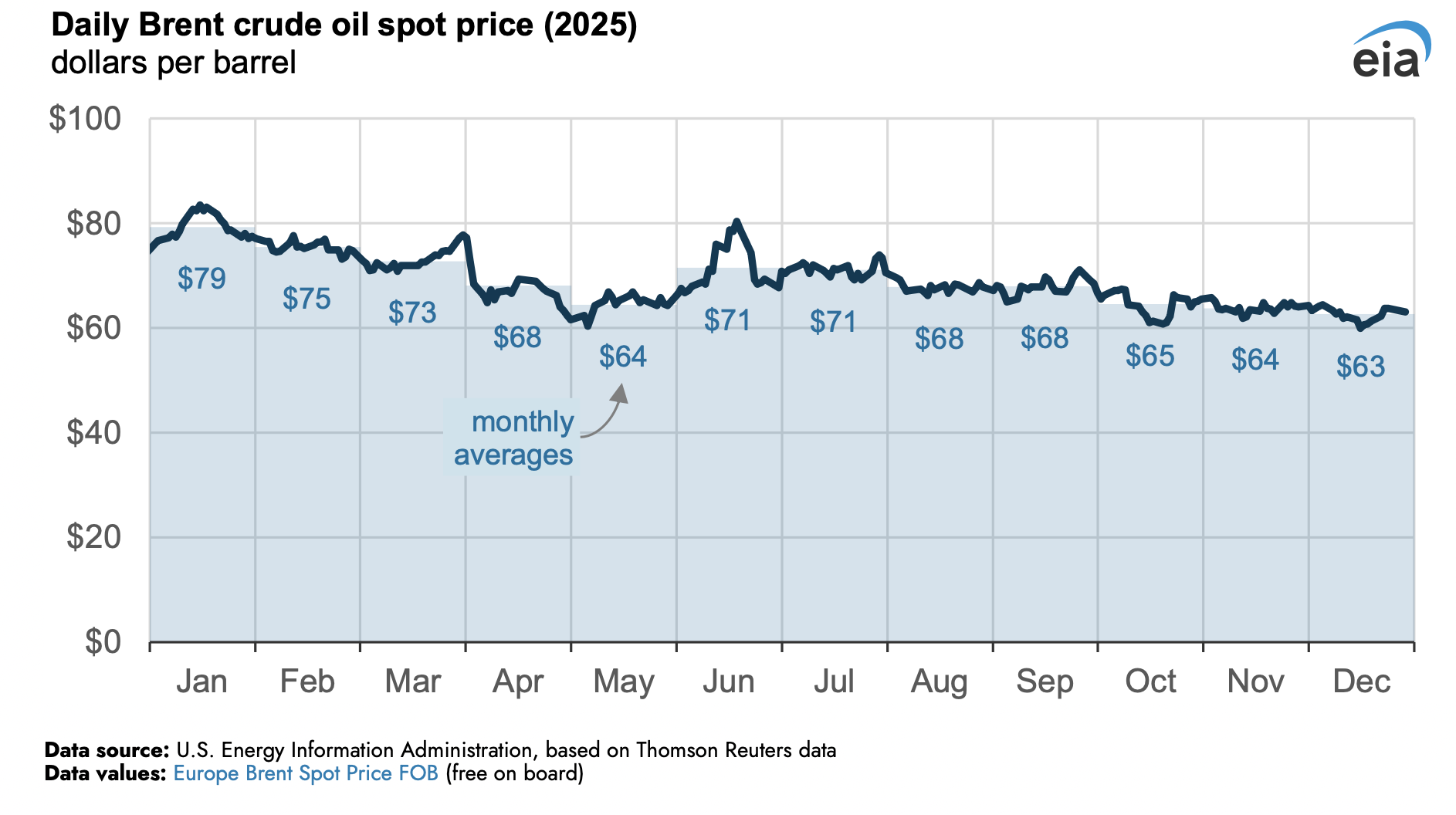
EIA: Crude oil prices fell in 2025 amid oversupply
Crude oil prices generally declined in 2025 with supplies in the global crude oil market exceeding demand. Crude oil inventory builds in China muted some of the price decline. Events such as Israel’s June 13 strikes on Iran and attacks between Russia and Ukraine targeting oil infrastructure periodically supported prices.
On a monthly average basis, the price of Brent crude oil declined from a high of $79 per barrel (b) in January to a low of $63/b in December, which was the lowest monthly average price since early 2021. The annual average price was $69/b, the lowest since 2020, even when adjusting for inflation.
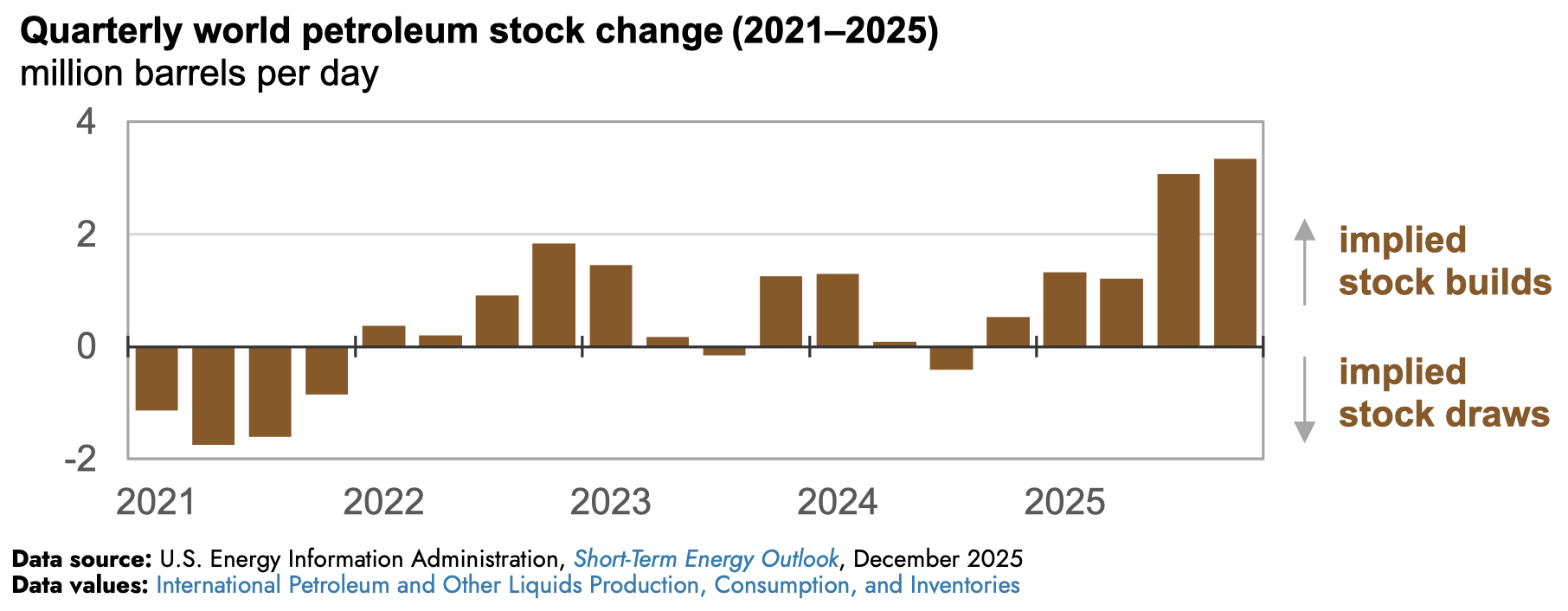
World supply of oil continues to build in 2026. EIA forecasts that global crude oil production will increase by 0.8 million barrels per day (b/d) in 2026, with supply from Brazil, Guyana (next to Venezuela), and Argentina accounting for 0.4 million b/d of the expected global growth forecast in our December Short-Term Energy Outlook (STEO). Global crude oil production growth since 2023 has been driven by countries outside of OPEC+.
The price drop bodes poorly for reviving Venezuela’s oil industry in the wake of the U.S. raid on Caracas and arrest of the South American country’s President Nicolás Maduro. At such low levels, investments in new infrastructure may be difficult to justify. say some analysts.