Fossil Fuels and Fossilized Minds
PAUL KRUGMAN
Donald Trump, as everyone knows, hates wind power and loves coal. Both passions are deeply irrational. Yet they are shaping policy.
Trump is doing his best to kill wind power, going so far as to order work halted on a mostly completed wind farm off the coast of Rhode Island. (Orsted, the Danish company behind the project, has sued and gotten the stop-work order lifted.)
And the administration is trying to revive coal, opening federal land for mining, removing pollution limits and providing hundreds of millions of dollars in subsidies. But why?
Administration officials would have you believe that coal mining is an economically viable industry that has been sabotaged by liberals. On Monday Chris Wright, the energy secretary, declared — in a weirdly dated culture war cliché — that coal is “out of fashion with the chardonnay set in San Francisco, Boulder, Colo., and New York City.”
The truth, however, is that coal is a dying industry for very good reasons, and anti-wokeism is unlikely to revive it.
Coal stopped being a significant source of jobs decades ago:
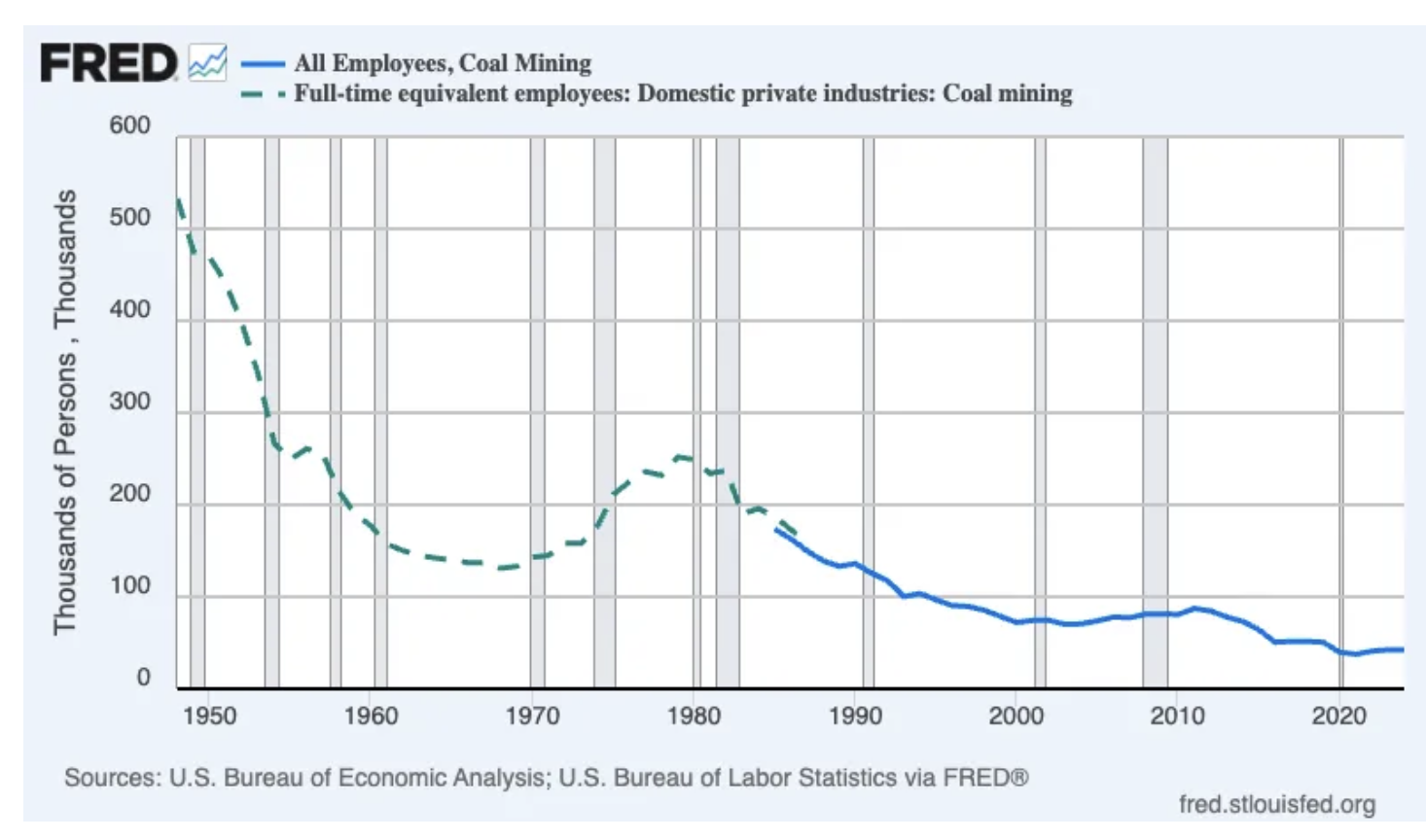
At this point there are only around 40,000 coal miners left. In case you’re wondering, vineyards and wineries employ around 130,000 people, three times as many as the coal industry.
Where did all the coal jobs go? The answers may surprise you.
As you can see in the chart above, there was an epic decline in coal employment between 1950 and the 2000s, from half a million miners to around 80,000. But this employment decline didn’t reflect an economy turning away from coal. In fact, use of coal to generate electricity rose steadily over the whole period, peaking in 2008:
So what happened to all the coal jobs? Basically, workers were displaced first by giant power shovels (strip mining), then by explosives used to blow the tops off mountains, exposing the coal beneath. By using these techniques, in 2008 coal companies were able to produce twice as much coal as they did in 1950, while employing 80 percent fewer workers.
Don’t blame renewables
Coal consumption finally did start declining after 2008. But if you look at the chart above, you can see that until recently coal was mainly replaced, not by renewable energy, but by natural gas — which became cheap and abundant thanks to the rise of fracking.
Solar and wind power have finally become important sources of energy in recent years. But the reason they have grown rapidly while coal has declined isn’t that the chardonnay set considers coal unfashionable. It’s the simple fact that coal is no longer cost-competitive, while wind and solar are.
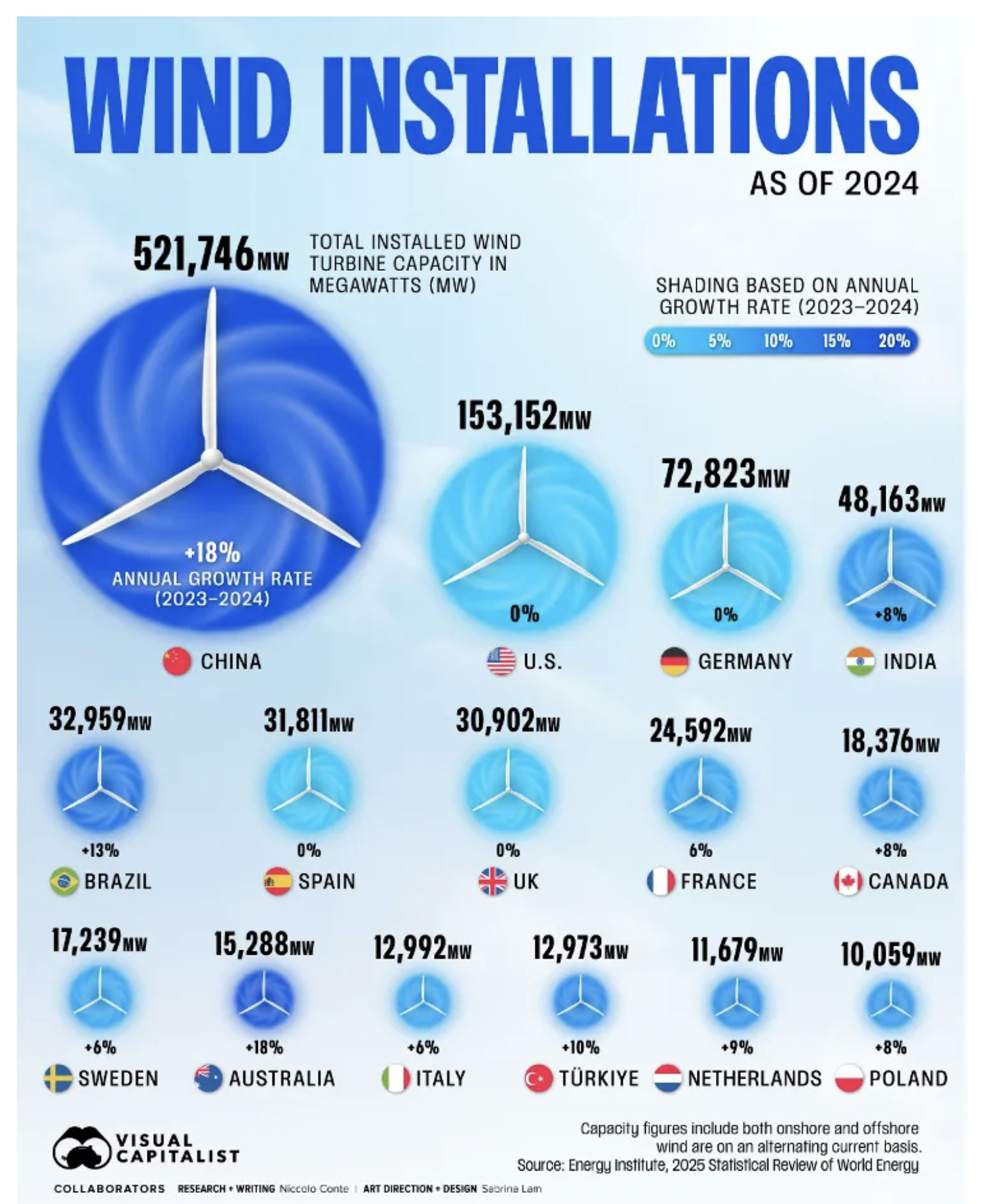
Needless to say, Trump and company aren’t going to acknowledge these facts. They may not even be aware of them. In his speech at the U.N. General Assembly, Trump declared that the Chinese sell a lot of wind turbines to the rest of the world, “but they barely use them.”
Chinese sell a lot of wind turbines to the rest of the world, “but they barely use them – Donald Trump
Take a look at this chart and know the facts.