
 Appears to be another drought year and water is top of the mind. A statewide call for water conservation is prompting some Valley cities to enter a growing market to sell treated wastewater or in this case trade it.
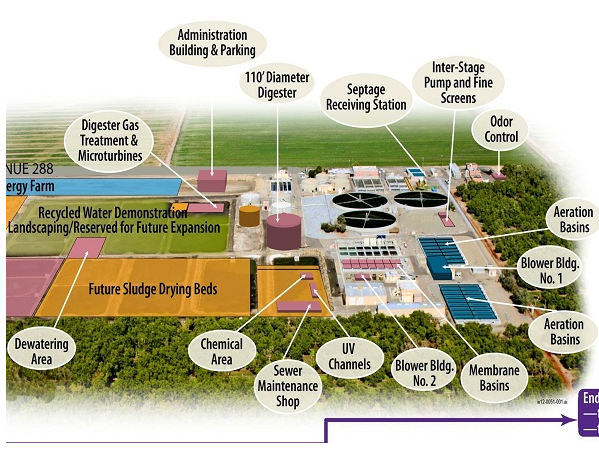
In Visalia, the big news is that the city council recently voted to support the biggest public project in Visalia history. The main project is the upgrade of its Water Conservation Plant valued at $142 million. But now comes the water trade part that like construction of the treatment plant,is also expected to move forward this year.
The coupled project’s two main objectives are to provide for the City’s wastewater treatment needs and to help mitigate the groundwater overdraft condition within the city. To achieve these objectives, the plant will be upgraded to produce recycled water that is California Title 22-compliant, the highest standard for recycled water in the world.
Once completed, the plant will produce recycled water unrestricted in its use, except for drinking water purposes.
In addition, the bulk of this water, about 12,000 acre ft, will be traded – delivered by gravity to the Tulare Irrigation District (TID) where it can be used for crop irrigation. In exchange, the TID will deliver surface water – placed in the City’s waterways and basins to recharge the groundwater. The city will regularly deliver 2 acre ft of reclaimed water for 1 acre ft of federal canal water delivered in wet years upstream from Visalia. The city and TID began conversations about the exchange in 2010 and now the $14.5 million recycled water pipeline project too will break ground this summer. The pipeline would extend south some two miles to a TID basin.
Construction on both big projects could last 3 years.
Fresno Study Assures Growers
Before any final deal is done however,farmers in the TID district need to know the reclaimed water is safe to use on crops and for animals. The city and TID commissioned a California Water Institute at Fresno State (CWI) to provide an independent third party evaluation and to look a the issues.
TID general manager Paul Hendrix says the report that will be released at two grower meetings in Tulare March 6 and 7 “pretty well assures there will be no problem” with use of the water on crops.”It’s very favorable” adds the city’s wastewater plant chief Jim Ross.
Tulare May Be Next
Now Hendrix notes that TID would be interested in a potential sale of tertiary treated WWT plant water from the City of Tulare since that city too may be interested in selling its supply of 14,000 acre/ft of water to farmers says city public works director Lew Nelson.
The very purpose of TID is to enhance groundwater supplies for the district’s rich cropland using a combination of federal contracts and rights to Kaweah water suppled through 330 mile of canals and some 1100 acres of recharge basins.TID serves some 230 farms with a boundary that includes the City of Tulare – totaling 77,000 acres.
In wet years when there is a surplus of water, TID would essentially pay back the City of Visalia and fill up 80-acre ponding basins east of Visalia within city limits and replenish the city’s sinking water table. Final Bureau of Reclamation approval is needed to seal this deal and is expected in the next few weeks.
Besides this exchange – Visalia will put some of its recycled wastewater to use east of the wastewater plant – back across Hwy 99 – delivered by other pipelines to the city golf course, parks and airport as well as Hwy 99 and 198 landscaped areas.
In support of this agreement, the City and TID have secured grant funding from two separate sources: approximately $700,000 in Water Smart Grant from the US Bureau of Reclamation and approximately $2.2 million of Integrated Regional Water Management Grant from Proposition 84 funds from the Department of Water Resources. These funds will be used to offset the cost to construct the recycled water pipeline to TID.
The value of recycled wastewater continues to rise with some companies approaching cities to see if they would be interested in brokering their water for resale to firms looking to use treated effluent for oil and gas production, thermo electric power generation, nuclear power generation as well as agricultural production and mining.