
 This month the US government auctioned 5 leases off the California coast to companies who will build floating wind turbines some 25 miles offshore. The abundant blowing wind is expected to light up 1.5 million homes a decade from now or sooner. The five leases, final as of Dec 7, are valued at $757 million.
The Morro Bay coastal waters will see three of these projects connected by undersea cables to power substations in Morro Bay and Diablo Canyon. Humboldt will see two more.
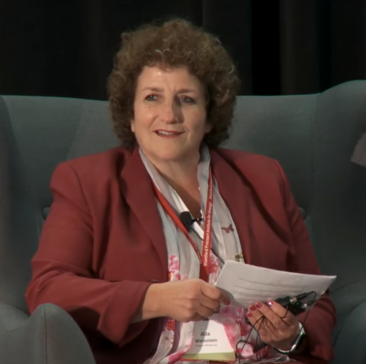
This just didn’t happen here by chance. There was a prime mover to launch this huge project, a company called Trident Winds and its founder Russian-born engineer Alla Weinstein who pioneered the Morro Bay-specific effort 8 years ago. They have been lobbying at the city, county, state and federal levels and meeting with local stakeholders. That includes negotiating with a skeptical local fishing industry to allow deep water wind turbines in their fishing grounds to help meet demand for non-carbon renewable energy that advocates feel could help save the planet.
Shore infrastructure in place
After researching the idea, Weinstein found that there is indeed abundant wind off Central Coast shores and critically pointed out that there was existing unused transmission infrastructure onshore that could be tapped to connect thousands of offshore megawatts to the California grid. That included multi- millions of dollars of existing transmission lines connected to the mothballed Morro Bay gas powered power plant and the Diablo Canyon nuclear power facility, set to be mothballed by time the wind turbines might be operating.
In 2016 Weinstein and her new company Trident Winds (later Castle Wind) submitted an unsolicited lease request to a federal agency to put 100 floating offshore wind platforms in US waters – some 33 miles north of Morro Bay. That started the ball rolling.
In 2015, the Tribune wrote ” In a generation or two, offshore wind farms could be as common along the California coast as off-shore oil rigs are today. And Morro Bay could be the community where the offshore wind industry gets its start in the Golden State.”
This month that same Bureau of Ocean Energy Management (BOEM) auctioned the leases allowing nearly 40 bidders – many from Europe -who expressed interest in the competitive bidding process off Morro Bay that Mrs Weinstein set in motion back in 2016.
Ironically and sadly for Weinstein and partners, the winners of the bidding did not include their company, the firm that proposed the ambitious effort and that has lobbied at all levels of the government to make it happen.
Weinstein became a familiar face around San Luis Obispo building support for new industry and an idea – tap the wind – not oil- off our shores to fight global warming. Support built for the plan bubbling up right to the top to the President of the US and the State of California who now vows to permit 5,000MW once built out.
A bummer
Among those who feel badly for Weinstein and hailed her efforts is the president of the Morro Bay Fishermen, Tom Hafer, who worked closely with her and their team for years telling this reporter that their loss was “just a bummer” given all the time Weinstein spent in Morro Bay working on details with city and the fishing community to avoid a local war over this new ocean venture.
As a part of lengthy negotiations,the city,Weinstein and the fishermen agreed to form the Morro Bay Lease Areas Mutual Benefits Corporation that will be open to all developers and qualified fishermen; it was announced in October of this year. The pact is modeled after an agreement between international cable companies and the local fishing industry some years back. The new agreement includes the California Coastal Commission that hopefully will ensure followthrough by the winning wind companies even though Castle Wind was not one of them.
In a news release in October, Weinstein explained the need for mitigation for the fishing industry, Morro Bay’s claim to fame.
“With any energy project of this magnitude, there are likely to be impacts. Our approach has been to acknowledge, as early as possible, that impacts may occur, which is why we have been working directly with the Central Coast fishermen since the inception of Castle Wind. By establishing the Morro Bay MBC at this early stage in the process, Castle Wind has created a platform for the developers to mitigate anticipated impacts of offshore wind to the commercial fishing industry…”
In an email to this reporter Weinstein said she and her company are of course “disappointed that Castle Wind, our joint venture partnership with TotalEnergies, did not win a lease in the BOEM auction.” Still she and her company were the first advocates for “a multi-factor auction format that helps ensure local affected communities share in the benefits of offshore wind and that any impacts of offshore wind development are mitigated.” So the auction included credit for working with local stakeholders besides the dollar amount of the bid.
“Trident Winds is proud of the work we did to initiate development of the offshore wind market in California, beginning with the submittal of its unsolicited lease request in January 2016. From those early days, Trident Winds established itself as a leader in the development of a new offshore wind industry that recognizes all voices must have a seat at the table and ensures an equitable distribution of benefits to affected stakeholders. This led to the establishment of a Community Benefits Agreement with the City of Morro Bay, the creation of a Mutual Benefits Corporation with the Central Coast fishing community. The move should ” incentivize other developers to make the same commitments.”
A BOEM release Dec 7 says “The lease sale included a 20-percent credit for bidders who committed to a monetary contribution to programs or initiatives that support workforce training programs for the floating offshore wind industry, the development of a U.S. domestic supply chain for the floating offshore wind energy industry, or both. This credit will result in over $117 million in investments for these critical programs or initiatives.
The auction also included 5% credits for bidders who committed to entering community benefit agreements (CBAs). The first type of agreement is a Lease Area Use CBA with communities, stakeholder groups, or Tribal entities whose use of the lease areas or use of the resources harvested from the lease areas is expected to be impacted by offshore wind development. The second type of agreement is a General CBA with communities, Tribes, or stakeholder groups that are expected to be affected by the potential impacts on the marine, coastal or human environment from lease development.”
Moving on themselves, Weinstein vows to continue working on offshore wind projects elsewhere in the US including in the state of Washington where they are launching a new project.
So who were the winners of the Central Coast auction?
Ocean Winds – a partnership between French and Portuguese-based firms – and the Canada Pension Plan Investment Board have formed a joint venture called Golden State Wind.The JV was awarded an 80,418-acre lease area by the U.S. Bureau of Ocean Energy Management this month off Morro Bay.
When fully built out the lease area could accommodate about 2,000MW of offshore wind energy, generating enough energy to power the equivalent of 900,000 homes. This will bring the U.S. and California closer to meeting their clean energy goals of 15 GW of floating offshore wind generation by 2035 in the U.S. and 5 GW by 2030 in California.
Another Morro Bay lease was won by Equinor Wind US LLC who made the winning $130 million bid for a similar size 80,062-acre lease in the Morro Bay area. Equinor Wind is an arm of Equinor, based in Norway.
The last Morro Bay lease was won by Invenergy-California Offshore LLC, based in Chicago, a similar size.
If all three produce 2 GW- that is 6GW of power!
Two important points
Two more points to conclude with. Despite appreciating the efforts to mitigate the effects on the local fishing industry Hafer is still skeptical about the potential harmful effect of this new industry on their livelihoods including fears that this new technology – floating wind -may not work as promised.
Secondly readers should appreciate that bringing in 5,000MW will depend on Diablo Canyon infrastructure and transmission lines that will be needed, requiring the nuclear power plant to go offline before offshore wind comes online.