
-July 8,2022-
from Ag Alert
Fritz Durst is a Yolo County farmer and chairman of the Sites Joint Power Authority
 California’s current water infrastructure was not designed with current or future climate conditions in mind. In recent years, the West Coast experienced a series of atmospheric river events. These storms produced powerful runoff in the Sacramento River that overtopped the flood control system, causing tremendous flooding and significant damage throughout Northern California.
It is these periods of large rainfall and runoff that we need to better capture. This is where Sites Reservoir comes in.
There is no existing infrastructure in place to capture and store excess water flows from the Sacramento River when they happen. Had Sites been in place during storm events since 2017, many flood impacts could have been avoided, and the reservoir would have stored nearly 1 million acre-feet of water to help mitigate impacts of today’s difficult drought.
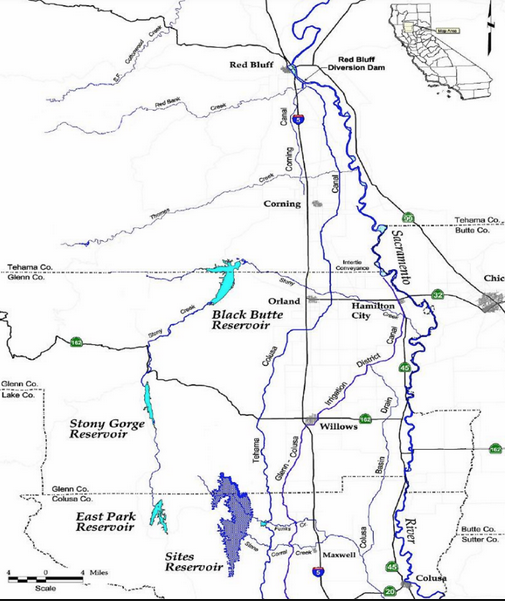
Sites Reservoir will be a multi-benefit, off-stream water storage facility located north of Sacramento in rural Colusa and Glenn counties. The reservoir will serve to capture and store stormwater and flood flows in the Sacramento River after all other water rights and regulatory requirements are met.
With a capacity of approximately 1.5 million acre-feet, Sites can store the excess stormwater without the need to dam any major rivers. Extensive modeling indicated Sites performs best and provides even greater water supply benefits to farms, people and the environment of California, under even the most challenging climate change scenarios.
Water storage flexibility is the reason Sites works well for so many varied participants. The water reserved for the environment will be managed by the state through its investment under Proposition 1, the 2014 water bond approved by California voters. The water can then be used for environmental purposes when it is needed.
The reservoir’s storage flexibility, working in concert with our existing water management systems, could also help us respond more rapidly and in an adaptive fashion to the changing hydrologic conditions and the changing needs. This becomes a win-win for the environment and statewide water operations.
The Sites Project team has made considerable progress over the past several years. We achieved critical funding objectives, including an invitation to apply for a $2.2 billion Water Infrastructure Finance and Innovation Act loan. This low-interest loan will cover half of the project’s cost. This is in addition to $875 million in Proposition 1 funding and a $449 million U.S. Department of Agriculture loan.
Our goal is to begin construction in 2024, and we are closer than ever to final approval on the project.