
In praise of atmospheric rivers
-June 19,2022-
Unlike much of the state, reservoirs in the middle of California around Sacramento are near 100% of capacity this month despite California’s extreme drought.
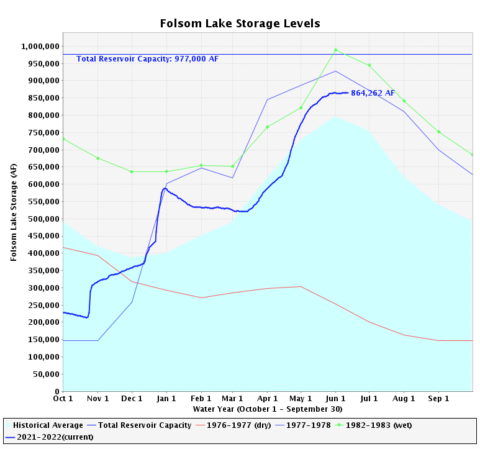 Case in point is the million-acre Folsom Reservoir that thanks to a few soaking storms went from 550,000AF in late March to 864,000AF by mid-May.That is 88% of capacity. Last year at this time Folsom held just 364,000AF.
This spring’s boost was based on a couple of Atmospheric River (AR) storms that blew into the state targeting the Tahoe area in a limited band ranging from the Feather River north of Sacramento to the Stanislaus just north of Modesto. An AR is a narrow corridor of concentrated moisture in the atmosphere – in our case coming off the Pacific.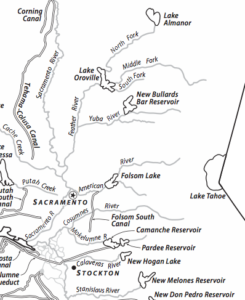
The ribbonlike storms did not help storage to the north at giant Shasta reservoir (40% of capacity today) or south of Modesto at dams like Pine Flat (62% capacity) near Fresno. Lucky the Central Valley Project (CVP), designed in 1933, can store and move water from 20 dams from north to south along the 400-mile conveyance system.
Boaters who frequent Folsom Lake are happy this year. Drew Lessard – area manager for the Bureau of Reclamation stated to local media “Things were looking pretty bleak on the American River and for Folsom up until April when we ended up having an above-average precipitation month.”
Turns out the cold storms will benefit more than weekend warriors around Sacramento. Since the Central Valley Project is tied together under Bureau of Reclamation management, farms in Tulare and Kern counties will see benefits for their water supply this summer. It’s just how the CVP system is supposed to work.
“Some spots got 9 inches in 24 hrs along the American River” says Tulare County water expert Dennis Keller, a Friant Water consulting engineer.The additional supply has helped the Bureau make a call this month that will allow Friant Water Authority to halt releases down the San Joaquin River that benefit the Exchange Contractors, ending the draining of the snowpack fed supply behind Friant Dam.
When the federal government built the Central Valley Project in the 30s, it took San Joaquin River water from the current users around Los Banos, relocating the supply south, using the 1950 built Friant-Kern Canal to water a million acres of farms from Fresno down to Arvin in Kern County. This 150 mile canal boosted the farm economy along the east side of the Valley that otherwise faced a bleak future without this reclamation project that altered the course of rivers.
But to keep the farmers along the San Joaquin River north of Fresno whole, the Bureau promised to deliver water from north of the Delta to the so-called ‘Exchange Contractors’ who gave up their San Joaquin River supply in exchange for water from the Bureau typically delivered over the course of the summer from Shasta.
More latitude
But in some years there isn’t enough water in the Bureau’s CVP system to do a 100% exchange and there have been times, like 2014, that the Friant Kern Canal has carried zero supply from the snowpack in Friant’s own backyard due to a Bureau allocation decision. That 2014 decision was supported by a court ruling this month.
But this water year the Bureau has more latitude.
“The Folsom supply should firm up our already declared 15% supply” says Keller and possibly increase it so the region’s farms and cities can count on at least 120,000 acre/ft for their water supply and irrigation plans this hot summer. Some 15,000 farms south of Fresno can exhale just a little.