
Mitigation litigation
-September 9,2021-
Less than a month after the City threw out their adopted Ag Mitigation Policy (AMP) the Sierra Club has sued Visalia over the change. The brief was filed August 31 in Tulare County Superior Court.Included in their request – an injunction against implementation of the new City policy – before a full-on court battle takes place.
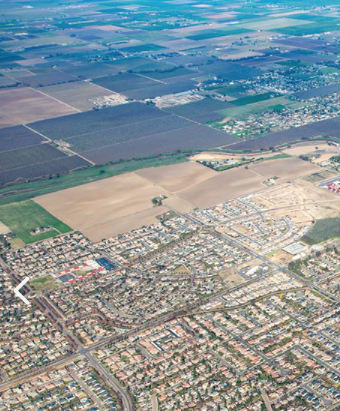 Home builders don’t like AMPs. Farm Bureau says they don’t need it. The backstory here is that the Visalia City Council has been watching the boom in residential construction- up 40% in the past year – and worries the city is running out of space to build new homes.
The way the city set up the AMP program, builders within the city’s Tier 1 boundary do not have to pay a ag mitigation fee. Now after almost 8 years since the adoption of the 2030 General Plan, Tier 1 has just 1444 acres out of 10,460 acres of residential land left – it is 86% developed. Development within Tiers II and III can only occur after certain building permit thresholds are met.In this case, the threshold is 5800 residential permits.We are close to spilling over into Tier II if not already there. And builders have already filed applications.
Even though the plan was adopted in 2014, no one has had to pay the AMP fee yet.But now their plan called for payments to start. So they changed the plan.
The Visalia City Council in early August opened the door to another 7500 acres that could be developed in both Tier II and later Tier III. That includes 1500 acres in the next threshold – Tier II. But before they opened the door – they threw out the Ag Mitigation fee that had been part of the General Plan, adopted in 2014.
Uncertain future
Without a challenge, Tier II land could soon be subdivided and parceled out – no waiting required. To make this policy change legal, the General Plan could be ” modified” the Visalia City Attorney advised the Council. California case law has changed since 2014, the City Attorney said.
The only holdout on the City Council who voted to end the AMP by a 4 to 1 vote – Greg Collins who has championed the program and wants it retained.He has long favored more infill of the city with higher density residential units. Collins and Mayor Steve Nelsen (the later opposed keeping the AMP) were part of the 5-member Council when that plan was originally adopted.
Several environmental and farm groups support retention of the program saying it will save farmland and cut urban sprawl. They fear our cities will grow together like Fresno/Clovis.
A few days ago, the Kern-Kaweah chapter of the Sierra Club filed a lawsuit joined by a group called Central Valley Partnership. The complaint alleges the city erred by not doing a full environmental study of the change in policy.
“Petitioners request this relief because Visalia abused its discretion in approving the elimination of the 1:1 agricultural mitigation requirement and violated the California Environmental Quality Act (“CEQA”) by certifying an Addendum.”
The City calls the Addendum a feasibility study on the Ag Mitigation Policy specified in the original General Plan and found the plan infeasible in its latest analysis in part because it drives up the cost of housing.
Allies of this view include the Building Industry Association who see the ag mitigation program as “forced purchase” of farmland and bad public policy.
One member of the Tulare County Farm Bureau expressed disdain for the approach suggesting “The best conservation strategies for keeping farmland protected is to let farmers farm. Private ownership of land will guide wise decisions about its use.”
The City made their Addendum available for a 10-day public review and comment period from May 19, 2021 to May 28, 2021.
But this Addendum was not a full environmental study of what the Sierra Club suggests are “substantial changes” that include the “elimination of the requirement for 1:1 mitigation of loss of prime farmland by acquisition of agricultural easements. The change requires major revisions of the 2030 General Plan” they argue-not a 10-day review. They assert the City did not follow the California Environmental Quality Act (CEQA).
City staff say the AMP fee could drive up the cost of a new single-family home by another $3,000 for a large lot development and $1400 for an average house. But Sequoia Riverlands Trust argues that if you amortized this over a 30-year mortgage with a 3.5% interest rate, it amounts to $1.60 a month for the high density home and $13.16 per month for the very low density home.
By contrast, the value of homes in Visalia has skyrocketed in the past few years from around $200,000 to $300,000 due to surging demand, but not due to ag mitigation fees. Visalia still enjoys among the lowest average single-family home price in the state.
Now the big question is how will the judge rule? The judge could halt new land permit approvals within Tier 11, holding up new construction until the legal dispute is settled. Consider that construction could have moved forward immediately if the ag mitigation program had been left in place and they would have simply opened the boundary.
If the Tulare Co judge rules in favor of a need for a new environmental study – that wait could be lengthy. Of course the judge could just toss the lawsuit out but the Sierra Club is likely to appeal; the upshot is more waiting for home builders.
If the judge does not grant an injunction-building activity goes on in Tier II as the case is litigated.
Sierra Club battled in court over dairy policy with Tulare County for years regards methane issues resulting in a major digester program that is cutting emissions to fight climate change. Many of the county’s dairies are now part of a California-backed program to sell their methane for renewable transportation fuel instead of letting the gas go airborne.
At issue – does a AMP save farm land?
The City now argues that “Entering into a binding agricultural conservation easement does not create new agricultural land to replace the agricultural land being converted to other uses. Instead, an agricultural conservation easement merely prevents the future conversion of the agricultural land subject to the easement. Because the easement does not offset the loss of agricultural land (in whole or in part), the easement does not reduce a project’s impact on agricultural land.” They point out that it is likely that only a “patchwork” of easements may be acquired.
But the Sequoia Riverlands Land Trust who does easements all over Tulare County – counters that the City has already identified land between Tulare and Visalia as a location where easements “could make the greatest impact.” Funding from the sale of easements may benefit the property owner as an alternative to selling out to a developer, they say.