Strawberry fields may not be forever after all
-October 16,2020-
 Watsonville-based Driscoll’s – the nations largest berry grower – sees the future of strawberry farming indoors, and maybe not along the Central Coast.The company has a large growing and packing presence in Santa Maria.
This month Driscoll’s, and indoor vertical-farming company Plenty Unlimited Inc. announced a joint development agreement to grow Driscoll’s proprietary flavorful strawberries year-round in Plenty’s vertical indoor farms. Their first venue is not somewhere in the Golden State where about 90% of strawberries are produced but in chilly Laramie Wyoming.
The news comes as California strawberry fields have been suffering this year from record heat and smoke-filled skies.None of that is a problem when you go indoors. The future of farming berries in Santa Barbara and San Luis Obispo counties may be cloudy where the the multi-million dollar crop in both counties has been the region’s biggest money maker.
Farm woes
The latest crop report (2019) from San Luis Obispo shows a value of over $271 million, overtaking wine grapes at the top spot. In Santa Barbara County it is a $571 million crop accounting for 36% of all receipts from local ag products.
But recently there were reports that consumers were having trouble finding strawberries this year.”Drought, heat, and wildfires have hit California, and the strawberry growing regions are trying very hard to recover from the perfect storm of extreme weather-related events,” the company US Foods said.
Just this week a heat advisory was sent out saying that outdoor temperatures “above 80 degrees are forecast for the strawberry production region from Santa Cruz and Monterey into Ventura County for the next several days. Employers are being advised to exercise appropriate precautions and monitor heat index information. Strawberry-growing operations may also be affected by the impacts of region-wide power outages. The state is advising employers to monitor conditions for employees.
Then there is COVID 19. “Employees working outdoors during high temperatures will frequent water coolers and shade areas, employers may consider more frequent sanitation of shared high-touch surfaces and attention to social distancing measures to prevent Coronavirus.” Hispanic Californians ,many working in the fields, have been disproportionately hit by COVID. Already the state has suffered a worker shortage anyway.
With all this Driscoll’s CEO is apparently ready to try something new looking to the future.“It’s clear that Plenty’s vision and capabilities of pioneering the potential of indoor farming technology makes them the leader in this space,” said J. Miles Reiter, Driscoll’s Chairman and CEO.
“As one of the few berry companies with a dedicated global R&D program, we believe our proprietary berries, which are focused on flavor, combined with Plenty’s technology leadership will create a competitive market edge as we expand to more effectively meet the future consumer.”
Plenty will incorporate Driscoll’s proprietary genetics and berry expertise into its advanced, indoor farming technology using its plant science expertise. Through this controlled environment, Plenty can consistently deliver great flavors from Driscoll’s varieties, while also optimizing for texture and size says a joint release.
Removing Mother Nature
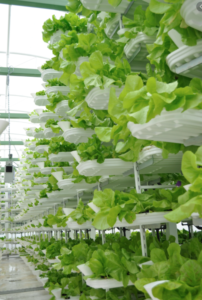 Driscoll’s says” the indoor environment will remove the unpredictability of Mother Nature”, allowing both companies to meet the future needs of consumers worldwide, including geographical locations that are not hospitable to growing strawberries says the release.
Plenty already farms crops indoor and maintains their advanced agri-food platform has allowed Plenty to show over 700% yield improvement in leafy greens in the last 24 months, while preserving its unique flavor and quality. Plenty’s South San Francisco leafy greens farm uses 100% renewable energy, powered by a combination of wind and solar energy.
“For over 100 years, Driscoll’s has been innovating in search of the best-tasting berries,” said Nate Storey, co-founder and Chief Science Officer of Plenty.
Driscoll’s strawberries will initially be grown and developed in Plenty’s Laramie, Wyoming farm, the largest privately-owned vertical farm research and development center in the world.
The two companies were introduced through John Hartnett of SVG Ventures, which focuses on agriculture and technology. He helped facilitate the discussions as both companies sought ways to grow the most flavorful strawberries.
Plenty describes themselves as an American farming technology company that frees agriculture from the constraints of weather, seasons, time, distance, pests, natural disasters, and climate. The company’s plant scientists, engineers and farmers have developed its indoor vertical farming technology to manufacture nutrient-rich plants at scale with extraordinary flavor and industry-leading yields. Plenty farms deliver produce with zero pesticides, and are designed to use less than one percent the space of conventional agriculture. Plenty grows leafy greens at its flagship farm and headquarters in South San Francisco, and is currently building the world’s highest-output, vertical, indoor farm in Compton, California.
Plenty believes indoor farming saves on California farmers biggest headache – water.The company claims vertical farming uses about 5% of the water as traditional agriculture.
Vertical farming supporters believes at least for high-margin produce, vertical farming works. Heading indoors greatly reduces the volume of fossil fuels, fertilizer use and waste water issues. Recalls from pest incursion won’t be an issue anymore either they claim.
Other vertical farming companies are looking to start up this year including Revol Green and AppHarvest each raising millions to build giant greenhouses across the country to replace conventional field agriculture where California and Florida have been the dominant players.
It’s not just farmers watching all this wonder if they have future, With much of the vertical produce being planned to be picked by robots, California farmworkers had better be thinking about looking for a new place to work in the future.