
USDA and Tulare County are announcing a scaled back version of a proposed 20 mile quarantine after three recent finds of an Asian Citrus Psyllid in traps in Tulare County’s orange belt production area.
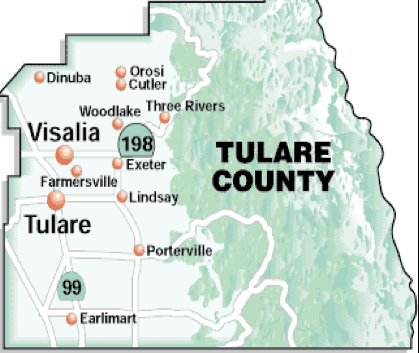
Dept. Ag commissioner Gavin Iacone says the new restrictions will go into effect soon to limit the movement of citrus plant material to a five mile radius of the finds. One zone is near Strathmore ( where there were two finds) that would take in the Lindsay/Strathmore packing houses and the other find – near Terra Bella – would cover packing houses in the Ducor /Terra Bella area.
The finds last month of the feared pest pushed ag authorities to consider a larger 20 mile quarantine that would have covered much of the citrus belt in the county except for the northern area – Woodlake to Dinuba
The restrictions would not hinder the movement of fruit itself but packinghouses and nurseries will have to ensure no plant material, leaves for example, left the zone.
Growers will have to roll their fruit within the zones to remove leaves and nurseries could ship only trees that have been grown under screen. A number of the nurseries in the Exeter area will be spared as well the big Tipton juice plant and the Ventura Coastal plant north of Visalia.
“We consider the plan to be more restrictive than the 20 mile plan” says Iacone,rather than moving plant around within a larger area. No finding of the disease called citrus greening or HLB carried by the pest has been found in the county. The pests have been spreading from Mexico north and now southern California all the way now into Santa Barbara county with a find recently near Santa Maria.But there has bern only one find of the disease in a tree in backyard inLA.
Florida has been particularly hard hit by the citrus pest and citrus greening disease that has cost them an estimated $3.6 billion and the loss of 6600 jobs according to the University Of Florida study. First detected in Florida in 2005 grower costs are as much as 40% higher with the disease that kills the trees within five years