
– May 6,2019-
California citrus growers face new competition from imports- now from China
 California Citrus Mutual officials were back in Washington last week when they heard unexpected news. USDA would allow imports from one of the worlds largest citrus producers – China.” It caught us by surprise” admits CCM’s Joel Nelsen.
Little US citrus is going into China right now with the high tariff imposed on our produce. In January 2018 U.S. citrus exports to China and Hong Kong were 19,687 metric tons. For January 2019 the amount exported totaled 10,740 metric tons.
Under the proposed rule, China would be able to ship mandarin oranges, pomelos, sweet oranges, Satsuma mandarin and ponkan if there were no pests or plant disease. USDA says the competition would be limited.
But US farmers have heard that one before.
CCM has complained that increasingly low labor cost countries are targeting the US consumer even offering product just when US production is coming on.
Florida orange growers complain abut Brazil’s flood of imported orange juice produced by workers who get paid very little in areas where pesticide use is far more unregulated than the US industry is.
Similarly California Citrus Mutual has complained to our representatives that South American countries continue to import significantly more product noting “Chile, Mexico, Peru, and South Africa allow for sales at levels below what the California grower needs for a net per acre return that puts a few dollars in the pocket.”
Nelsen told his membership in a newsletter that there has been an “explosion of citrus imports from Chile and other producing nations and the cost differential that allows domestic market share for the California industry to be undercut.” Chilean citrus imports are up about 30%.
Overall, more produce eaten by US consumers is imported.More than half of the fresh fruit in the U.S. and almost a third of our vegetables, come from other countries. This past week the Georgia Fruit and Vegetable Growers Association noted a study from the University of Georgia that forecast the state would lose nearly $1 billion in annual economic output and over 8,000 jobs unless action is taken “to slow down the increase in low-priced Mexican imports of blueberries and vegetables.” It’s not just farms in the Central Valley of California.
Us farmers farmers face yet another hurdle – their labor supply is drying up up due the Trump administration campaign against immigration.
Chinese poultry next?
The loosening trade in citrus comes as the U.S. is still trying to win access for American rice and beef. China is lobbying the U.S. to allow for fresh poultry exports, a move that has triggered concern among food safety advocates remembering what chine producers did to baby formula tainting it with a plastic by-product.
 Less is more as milk prices rise
From Milk Producers Council
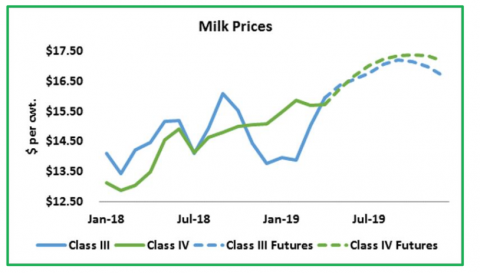
“New highs! For dairy producers, those words are like the first glimpse of an oasis after four years wandering in the desert. And, with some better pricing in upcoming milk checks to wet their whistle, dairy producers can have some confidence that it’s not a mirage. USDA announced the April Class III price at $15.96 per cwt., up 92ȼ from March and up $1.49 from April 2018. At $15.72, the April Class IV price was up, just a penny from March, but it was
$2.24 higher than the paltry level of one year ago.
At long last, lower milk production is translating to higher prices. USDA reinforced this trend with yesterday’s Dairy Products report. The March milk production deficit, coupled with strong demand for cream and other Class II products, left less milk available for driers, butter churns, and even cheese vats.”
Increase in refiner waivers anger corn growers
EPA’s increase in waivers to save refineries millions of dollars in regulatory costs and have become the center of a bitter dispute between the rival oil and corn industries.
The U.S. Renewable Fuel Standard (RFS) is designed to help American farmers by requiring oil refiners to blend certain volumes of biofuels into their fuel each year or purchase credits from those that do. But small refineries with a production capacity of 75,000 barrels per day or less can secure waivers if they prove that compliance would cause them financial harm.
Under President Donald Trump, the EPA has vastly expanded the number of waivers granted to refineries, angering Midwest farmers and their legislative backers who say the policy destroys demand for corn-based ethanol and other biofuels at a time they are already struggling.Corn princess thugs week new down onus $3.50 bushel.
The Renewable Fuels Association says the waivers are costing growers and processors big bucks. “Every gallon produced and sold by the U.S. ethanol industry has been priced lower than would have been the case in the absence of the exemptions. There were 9.4 billion gallons of ethanol produced between February and August (the latest month for which comprehensive supply/demand data are available). By multiplying production by the price impact in each month, it can be determined that the industry’s revenues were reduced by $2.3 billion during that time period.”
Cattle ranchers want country-of-origin labeling in implementing legislation for the new North American trade pact says Politico, The Washington Post reports. Without mandatory labeling for steaks, burgers and other meat products, some ranchers say the trade pact will favor multinational corporations that dominate the meatpacking industry.