
Tulare County Public Health Confirms Case of Measles


On July 24,2025, the Tulare County Public Health has confirmed two cases of measles, both children who were not vaccinated.They contracted the virus while traveling outside California.
These are the first confirmed cases of measles in the county for 2025. But cases are rising in California and nationally, particularly among unvaccinated people.With this case, California had already recorded 18 confirmed measles cases, more than in all of 2024 combined. This is a trend nationwide and is the largest U.S. measles outbreak in decades. Some blame the anti-vaccine movement or vaccine hesitancy for the increase including current Secretary of Health and Human Services Robert F Kenday Jr.
Why are cases up?

Declining vaccination rates: California kindergartner MMR coverage fell slightly—from 96.5% to 96.2%—but remains above the 95% threshold needed for herd immunity. However, regional pockets (e.g., Sutter County at 75.8%) fall below safe levels.Kern County’s vaccination rate is lower than the average but Tulare County and Kings County still have a 95% vaccination rate for kindergartners, as do most counties in the state.

International travel: Many cases originated overseas and were brought back by unvaccinated travelers.
Public Health officials are actively working to identify and trace potential exposures, determine if those exposed have been vaccinated for the disease, and evaluate their potential for developing and spreading measles. Anyone who has not been infected with measles in the past and has not been vaccinated for measles is at risk of contracting the disease.
About Measles
Measles spreads easily through the air when an infected person breathes, talks, coughs, or sneezes. Thevirus can stay in the air and on surfaces for many hours, even after the infected person has left. Theinfected person can spread the disease up to four days before a measles rash appears and up to four days after the rash appears.

If other people breathe the contaminated air or touch the infected surface, then touch their eyes, noses, or mouths, they can become infected. Common symptoms for measles include:

  • High fever (higher than 101° F)
  • Cough
  • Runny nose
  • Red and watery eyes
  • Tiny white spots that may appear inside the mouth 2-3 days after symptoms begin.
  • Rash 3-5 days after other signs of illness. The “measles rash” typically starts at the face and then spreads down to the rest of the body.
    Complications from measles are more common in children younger than 5 and adults 20 years and older. These can include diarrhea, ear infections, and pneumonia. Death can occur from severe complications, and the risk is higher among younger children and adults.
    Important Guidance for Potential Exposures and Symptoms
    There is no specific treatment for measles; prevention through vaccination is the only effective way to protect yourself and the community.
    If you believe you have been exposed to measles or may be experiencing symptoms, call a healthcare
    provider immediately. Do not go directly to a healthcare facility before calling and making them aware of your measles exposure and symptoms. Please isolate yourself at home to prevent further potential spread until you have spoken with a healthcare professional.

Measles can be prevented with a measles, mumps, and rubella vaccine (MMR or MMRV). The MMRvaccine protects against three diseases: measles, mumps and rubella. The MMRV vaccine protects against four diseases: measles, mumps, rubella, and varicella (chickenpox). They are administered in two doses and are highly effective: two doses are 97% effective against measles and one dose is 93% effective. The spread of measles can be prevented if 2-dose coverage of the vaccine remains at 95% or
above in the community.
The measles-mumps-rubella (MMR) vaccine is effective. Two doses provide 97% protection against measles. 
Measles is very contagious. Measles spreads when someone infected speaks, coughs, sneezes or breathes. It can linger in the air up to two hours after the infected person has left.  
Unvaccinated people are at high risk. Roughly 90% of those unvaccinated and exposed to measles will contract the disease. 
Measles Activity in California, 2025
California Dept of Public Health says as of July 21, 2025, 18 confirmed measles cases have been reported with Tulare’s find the latest. The affected jurisdictions are:Fresno,Long Beach,Los Angeles,Orange, Placer, Riverside,Sacramento,San Mateo Santa Clara, Tulare (in July) Tuolumne, and Yolo.
Measles Outbreaks in California
In California in 2024, 15 cases were confirmed. In 2023, four cases were confirmed. In 2019, there were 73 confirmed measles cases in California. This included 41 cases linked to six outbreaks; defined as three or more cases. Of the six outbreaks, five were linked to patients with international travel. One had an unknown source. The largest outbreak had 21 cases and occurred in a health care setting.

From December 2014–April 2015, roughly 131 Californians got infected from an outbreak in Disneyland. The outbreak also infected residents of six other states, Mexico and Canada.
Nationwide cases
The U.S. Center for Disease Control says as of December 31, 2024, a total of 285 measles cases were reported by 33 jurisdictions.
U.S. cases way up in 2025
As of July 22, 2025, a total of 1,319 confirmed measles cases were reported by 40 jurisdictions: Alaska, Arkansas, Arizona, California, Colorado, Florida, Georgia, Hawaii, Illinois, Indiana, Iowa, Kansas, Kentucky, Louisiana, Maryland, Michigan, Minnesota, Missouri, Montana, Nebraska, New Jersey, New Mexico, New York City, New York State, North Carolina, North Dakota, Ohio, Oklahoma, Oregon, Pennsylvania, Rhode Island, South Carolina, South Dakota, Tennessee, Texas, Utah, Vermont, Virginia, Washington, and Wyoming.
Three people have died as a result of the disease this year. The last time the country saw a significant case spike was in 1992, when 2,126 people contracted measles, the CDC says.
If you are planning to travel internationally, it’s essential to get vaccinated against measles before you go.

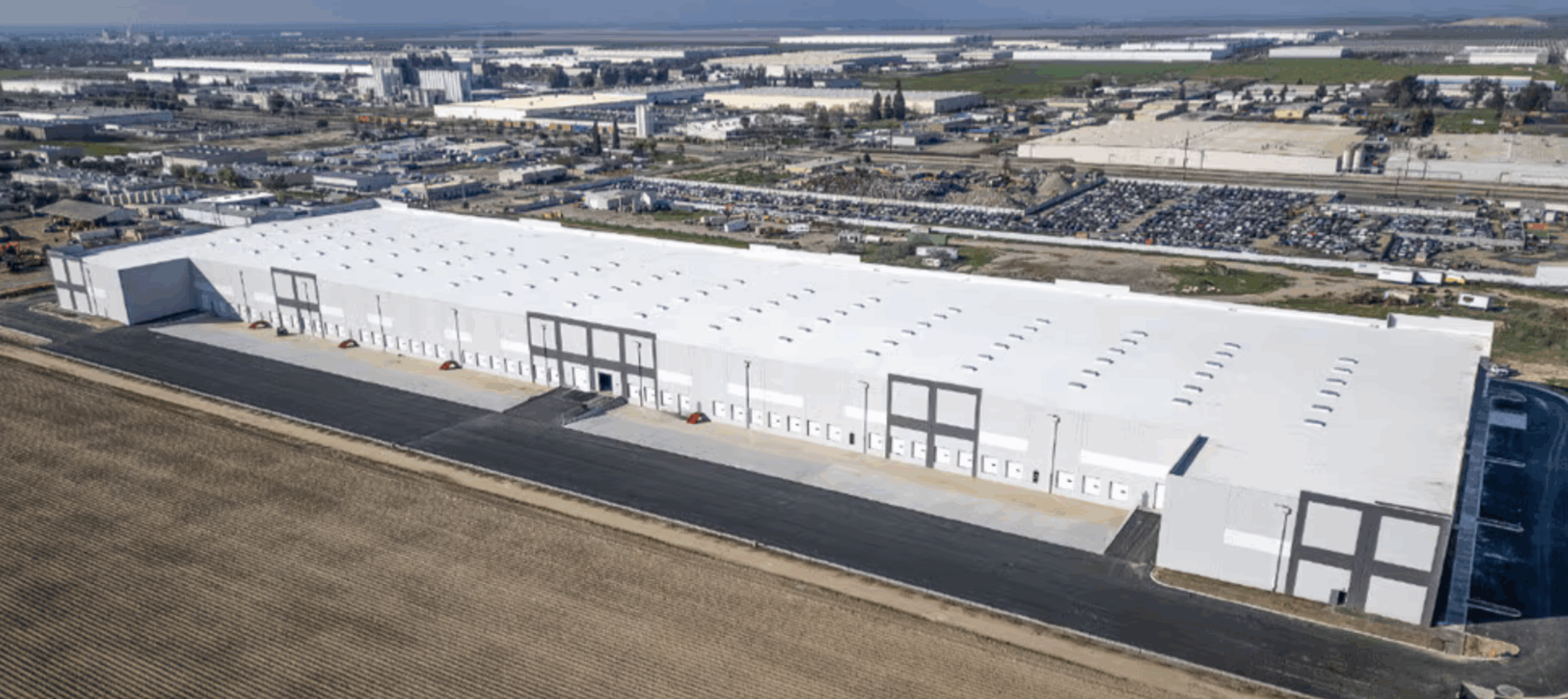
Visalia Industrial Park’s new big building

Fowler-based G3 has completed construction on a new 310,000sf tilt-up warehouse that has been built “on spec” in the Visalia Industrial Park. The big building was just recently finished, says broker Ethan Smith.”The phone has been ringing but we have no one under contract yet” says Smith. The complex with 380 parking places and 46 loading docks is located at 30152 Road 84, Kelsey, between Hurley Ave and Goshen Ave.

The new shell building adds to the inventory of several other large industrial buildings here.. There are several available in the Visalia industrial Park, but this offers more opportunity to snag new companies who want to choose which size works for them in what has become more of a buyers market.

Smith says activity in the industrial park started out more active at the first of the year, but has since slowed due to uncertainty in the economy.

Tulare Supervisors approve Swap Meet north of Visalia

Tulare County Board of Supervisors recently approved a zone change for the old Elbow Creek Gin at 12021 Avenue 328 to be repurposed for a swap meet two days a week.

The zone change from the AE-40 (Exclusive Agriculture – 40 Acre Minimum) Zone was approved to the C-2-MU (General Commercial with a Mixed Use Overlay) Zone. Special Use Permit No. PSP 24-074 requests to establish a swap meet with parking, food trucks, & a beer garden as an adaptive reuse of an equipment/storage yard.The property is owned by the Ritchie family who have been searching for a new use. The existing buildings would be retained. Supervisors agreed that they did not want the property to be available for use as a “party barn.”

Visalia Chick-fil-A and Sam’s Club Fueling Station move forward

June 2,2025

Two high profile Visalia commercial projects in the same shopping center first announced last fall are moving forward this summer including the sought-after Chick-fil-A restaurant at the SWC of Visalia Pkwy & Mooney as well as a 28-pump Sam’s Club gas station. The big Sam’s Club warehouse is expected to follow soon.

According to a filing for the coming Site Plan Review meeting the first week of June, the Atlanta fast food chain is buying 2.15 acres from the shopping center developer right on the corner. They plan to build a 5,035-square-foot building featuring a dual-lane around the entire building from the drive-through entry to the exit. The project includes a trash enclosure and two canopies over the drive-through lanes. The building will include 92 indoor seats and 24 outdoor seats. The hours of operation for the new restaurant are from 5:30 a.m. to 11:30 p.m. on Monday through Saturday and closed on Sundays,says the filing.

This is the first direct public request for approval by Chick-fil-A, in this case from a consultant representing the firm.Visalians have pressed on social media for the food company to locate here. Tulare also has a planned location that has yet to break ground.

The Visalia and Tulare stores are expected to be franchised as many locations are and likely employ 80 to 100 workers. As you might guess, chicken is on the menu including their signature chicken sandwich with wedge fries.

The company says Chick-fil-A, Inc. is the third largest quick-service restaurant company in the United States, known for its freshly-prepared food, signature hospitality and unique franchise model. More than 200,000 Team Members are employed by local Owner-Operators in more than 3,000 restaurants across the United States, Canada and Puerto Rico.
A Chick-fil-A media representative is expected to advise us when the restaurant might open with some sources, expecting it to be open by the first of the year..

Gas station awaits construction permit

Also, this week Sam’s Club has filed a permit request to begin construction on their 28-pump fueling station now located somewhat closer to Mooney than originally planned at the request of adjacent home owners. The station will be adjacent to the big 172,000 square-foot Sam’s Club warehouse. Prior to this submittal, all contact on this project as well as the Chick-fil-A, has been through the Fresno developer.But Sam’s Club themselves now own their land and are in charge of all approvals.

The $4.1 million station will be 9200sf according to the permit now being reviewed by the city.

Paralleling the construction schedule is rival Costco on the north side of town, already underway with construction of their gas station next to their own big club warehouse that has yet to break around. Sources expect this project to open in 2026. On the south side of town across Mooney from the new Sam Club, the original Visalia Costco will go head to head for fuel, groceries and goods.

Tulare County to lose GreenPower Motors electric bus assembly plant

About nine years ago Tulare County officials were excited to announce that Canada-based GreenPower Motors would open a California electric bus manufacturing plant in Porterville bringing potentially hundreds of jobs to the area.

Fast forward to late February 2025 and you can mark the end of that dream as the publicly-traded company announced some news on their quarterly conference call.

“On the West Coast, GreenPower finalized plans to expand its California manufacturing footprint in one facility located in the Inland Empire. “Consolidating our operations from three separate locations and five different facilities spread out through California to one larger facility will allow for more cost savings and increased efficiency,” Riley stated.”

The consolidated site is in Riverside.So Porterville will close.

GreenPower’s assembly facility in Porterville is located at 90 West Poplar.They lease the facility after promising to build and own a state of the art manufacturing plant years ago but never following through.In 2017 they announced “GreenPower owns 9.3 acres of land across from the Porterville Municipal Airport. The Company is in the process of constructing a two-story office building and a manufacturing facility comprising a total of 144,000 square feet.” They never closed on the land purchase.

A 2016 editorial in the local paper welcomed the company to Porterville and laid out a rosy scenario.

“City officials said the company will employ as many as 60 workers at the start, but could grow to more than 1,000 employees. The jobs are factory jobs with good pay and benefits.

City manager John “Lollis said the company plans to grow in phases with more than $10 million being invested locally over the next two years.”

Instead of expanding in Porterville, the company has opted multiple times to build manufacturing plants in other parts of the country, including West Virginia and in Charleston. One report says the company had 116 employees as of March 2024, company wide. The number that works in Porterville is thought to be around 20.

The firm has faced financial problems in recent years, dependent on key components of their buses and vans supplied from China now in an active trade war with the United States facing tariffs.

Yet another problem: the Trump administration is no fan of subsidies for electric vehicles which is a key factor in GreenPower’s business strategy.

Still over the years GreenPower has sold electric school buses and vans to a number of California school districts, municipalities and airports including in Porterville, in Cutler Orosi,Terra Bella and recently to Los Banos.

As of April, GreenPower Motors has problems with its listing on the NASDAQ stock exchange with its stock today down to $0.42, well below the one dollar threshold needed to keep their NASDAQ market listing.

The company announced “Pursuant to the Nasdaq Rules, the Company announces that is has received a notification letter from Nasdaq on April 1, 2025, citing non-compliance with Listing Rule 5620(a) for failing to hold its annual general meeting of shareholders within twelve months of the fiscal year ended March 31, 2024. The Company anticipates that it will regain compliance by holding its annual general meeting on May 23, 2025.”

SGMA may worsen dust storms

1930s Dust Bowl photo

A new study published in the journal Communications, earth and environment says the Central Valley accounts for about 77% of total fallowed (unplanted) land in California and is associated with about 88% of major anthropogenic dust events,caused by people’s actions.Local residents are well familiar with blowing dust and this paper says it’s getting worse.

Dust can carry infectious soil-dwelling fungal spores, which cause coccidioidomycosis (Valley fever) when inhaled. The Central Valley is a hotspot for coccidioidomycosis in California, where incidences have increased by 800% between 2000 and 2018, and dust exposures have been linked to increased infection risk.Previous studies showed that substantial fractions of dust deposited on Sierra Nevada snow are from the Central Valley and that the deposited dust can change snowmelt timing over the Sierra Nevada and substantially impact California’s vulnerability to water resources.

Among sources of dust emission, agricultural lands remain a key contributor, where poor management and practices can result in a substantial wind-blown dust event or even a major dust storm. For example, farming techniques and practices to conserve water over idle and dry agricultural lands were linked to increased soil erodibility and, eventually, the “Dust Bowl” of the 1930s.

Furthermore, substantial wind-blown dust from agricultural lands can cause fatal highway accidents by impairing visibility, such as in California’s San Joaquin Valley in late November 1991.

Now scientists are noticing another factor that seems could lead to more dust problems. California’s Sustainable Groundwater Management Act (SGMA), instituted in 2014 to bring groundwater basins into balance in the next two decades, would require between 0.5 and 1 million acres of irrigated agricultural land to be fallowed. During dry conditions, these fallowed lands may have loose top-layer soil that, under strong surface winds, is susceptible to wind erosion, resulting in dust particles in the atmosphere An example of this connection between fallowed lands and dust activities occurred on 11 October 2021, across Stanislaus and Merced Counties, California.

” If up to 1 million acres of additional agricultural land were to be fallowed under SGMA and not transitioned to land uses that inhibit windborne soil erodibility, it could substantially increase the number of dust storms across California’s Central Valley.”

The study found that the percentage of these cropland areas fallowed between 2008 and 2022 is substantially higher in the Central Valley region than in any other region in California. This fallowed land coverage peaks at about 50% in some parts of San Joaquin Valley and Sacramento Valley, with the largest fallowed areas occurring in Kern (918 km2), Fresno (790 km2), and Kings (663 km2) counties in San Joaquin Valley.

Overall, about 77% of all fallowed land areas in California are in the Central Valley region. Fallowed land tends to to have a higher surface temperature and particularly during drought months, has drier conditions more susceptible to wind erosion.

The Californian dust burden has a double-peak seasonal cycle, with one in the Spring (April/May) and the other in the Fall (August/September.

Between 2008 and 2022, the dust burden increased about 36% per decade of the climatological mean when averaged over the Central Valley region.

Aerosol events measured at Fresno often precede aerosol events at the other stations east of Fresno, with a higher correlation with the measurements at the Sequoia station, which is southeast of the Fresno station where dust particles build up against the Sierra.

SGMA concerns

The study found that California’s implementation of the Sustainable Groundwater Management Act (SGMA), could lead to increased land fallowing and exacerbate dust emissions in a region with poor air quality. Hence, while SGMA, which is crucial for long-term water security for the Central Valley, may ameliorate groundwater issues, maladaptive solutions such as widespread land fallowing and increased airborne dust may result in negative impacts on public health—including disadvantaged communities such as farmworkers.

Balancing groundwater and agricultural sustainability, as well as the well-being of both communities and ecosystem benefits, has been part of the proposed implementation central to SGMA81. Our study suggests that the potential secondary SGMA impacts of land transitions on air quality should also be considered in ongoing discussions of multi-benefit land transitions.

“While SMGA land transitions are likely to take on several forms, including the use of land for habitat and renewable energy, intentional efforts to reduce anthropogenic dust emissions (e.g., landscape restoration and cover cropping) may be needed to reduce anthropogenic dust emissions.”

Perhaps offering incentives to restore fallowed lands could benefit everyone.

Dairy industry cuts artificial colors from School Lunch products

The International Dairy Foods Association (IDFA) has announced a new voluntary initiative to eliminate artificial colors from dairy products sold in K-12 schools. Under the “IDFA Healthy Dairy in Schools Commitment,” milk, cheese, and yogurt provided through the National School Lunch and Breakfast Programs will no longer contain synthetic dyes such as Red 3, Red 40, Green 3, Blue 1, Blue 2, Yellow 5, and Yellow 6 starting in the 2026–2027 school year.

Agriculture Secretary Brooke Rollins praised the move, calling it a proactive step that aligns with what consumers want. Rollins also reiterated her support for reintroducing whole milk in schools, calling this latest effort another positive step toward improving children’s nutrition.

The Environmental Working Group says three colors in particular – Red Dye No. 40, Yellow Dye No. 5 and Yellow Dye No. 6 – make up 90 percent of food dye used in the U.S. More than 36,000 food products sold in the U.S. contain Red 40, according to the Department of Agriculture.

Parents love to ply their kids with “healthy” snack options, and yogurt seems to fit the bill.

Artificial color is sometimes an ingredient in these snacks, though, especially in berry-flavored yogurts. But it may lurk in more unusual flavors, too, such as guava and key lime pie. Flavored low-fat yogurts can also contain as much sugar as the same volume of ice cream, sometimes more.

Other snack standbys are chips and fruit cups. But individual containers of Mott’s Applesauce Strawberry Cups are often made with artificial coloring. So are packaged items made with cherries, such as pies and cheesecake. And make sure to check ingredient labels for chips with “flaming” or “BBQ” or “hot” flavor, since these typically use dye.

Visalia General Fund again in good shape

Budget Surplus

April 25,2025

While other cities including Fresno and Los Angeles see a big drop off in their all important general fund budgets, Visalia is again projecting a healthy surplus in the current fiscal year and next.

Visalia Dept of Finance staff has long backed a conservative approach to revenue projections but the latest estimate surprises to the upside as it has on multiple occasions in the past.

The latest projection announced at an April City Council study session, the Mid-Year Budget projections for the 24/25 budget had anticipated revenues of $101.2 million. But now Finance is expecting revenue of $107.6 million – $6.4 million more than had been expected.

Finance is suggesting council add more to the emergency reserve fund at the city from $22.7mil to $25.8mil as the city has expanded the fund from 25% to 30% of operating expenditures

This latest upside projection is based not so much on higher expectations for sales tax but on other revenue, primarily property tax -up $3.7 million more than anticipated.
.
Finance is projecting sales tax to be $46.4 million by June- only $300,000 more than expected. The report says to expect, actually “no sales tax growth.” By comparison city sales tax surged in the Covid years including 21/22′ x 29%, A more modest 15-year trendline at the city shows sales tax growth on average of 5.5%. The latest city projection for sales tax growth in 25/26′ is just one percent and 2% in years after that.

Sales tax and property tax revenue make up 78% of Visalia’s General Fund.

Council members generally back the city’s conservative approach to these estimates, noting that uncertainty in the economy right now is at a high-level. While the April report mentions some of these factors, tariffs is not included, even though it’s at the top of the list right now, One major factor is the slowdown in homebuilding across the nation and including in Visalia on the other hand, a large pipeline of new homes is awaiting permits by multiple national and local builders after a number of annexations opened more land for development.

Tulare County commercial construction at five-year low

Commercial construction in Tulare County is at a five-year low through mid-April 2025 when compared to the same period in the past few years.So far about $58 million in commercial construction has been permitted through April 15 of this year; that compares to $100 million in the same period in 2024, $79million in 2023, $244 million in 2022 and $85 million in 2021.

The slowdown reflects reduced construction in the Visalia Industrial Park as well as on Mooney Boulevard in Visalia in comparison to past years.

Regarding home building the pace so far this year is similar to the pace in the past five years with 349 single family homes permitted so far in the county this year compared to 357 in 2024, 240 in 2023, 367 in 2022 and 339 during the same period in 2021. All figures are from Construction Monitor.

Australian food container company plans manufacturing plant in Visalia

April 20,2025

Established in 2000, Multisteps Industries is a family-owned packing company based in Australia. Now the company has leased 250,000 square-foot on Riggin in the Visalia Industrial Park and plans to retool the building into a manufacturing plant making retail food containers starting this fall. The plastic food containers popular in your produce aisle at the store include packaging for meat, seafood, fresh produce, and more products.The company states they have the ability to offer packaging with up to 100% recycled content.The packaging protects and extends the shelf life of fresh produce and meats.

In a statement to the city, the company says their operation will hire between 60 to 100 employees as they ramp up what will be a 24-hour day, seven day a week operation.The building address is 7825 W Riggin.

The firm has chosen Visalia over a site in Fresno to locate.

Property owner Freddie Molina says the lease covers about three quarters of the new Clancy and Riggin – Building 3 of the YS Industries developments that is 356,000sf. He says Multisteps plans to be open in October in a multiphase development.

The company will have a site plan hearing next Wednesday, August 16 at the city planning department.

Automated assembly line fills plastic containers with produce,fish or meat

China Peak: Here comes “March Miracle”

China Peak announced on their website today:”The sun is out, 12-16 inches of fresh powder and the skiing and riding is fantastic. Another storm is heading our way Wednesday, calling for 12-18 inches, then clearing Thursday through the weekend. Here comes Miracle March!”

Here is the latest Feather River forecast for the northern Sacramento Valley – a good measuring cup for rain and snow expected in the next 10 days for much of the state.They suggest 288% of normal.

Several inches of rain are expected in Middle and Southern California well over the next six days as a wet first half of March appears likely.

Around the region: F21 / Costco / Visalia industry

Forever 21 stores in Bakersfield, Fresno & Tulare closing – but not Visalia

Going-out-of-business sale signs are up at the Forever 21 stores in Fresno and Bakersfield. Employees at the Visalia Mall location say their store is remaining open, a story confirmed by Visalia Mall manager Rick Feder.

But the Tulare Outlet Mall location will be closing, says an employee at the store, where signs are posted.

The parent company is going through a tough time and may go through a second bankruptcy process since 2019. Visalia Mall owner Brookfield Properties owns a stake in the LA-based discount fashion retailer.

Visalia Mall manager Rick Feder says the Forever 21 store in Visalia is “right size” at 12,500sf. By contrast the Fresno Forever 21 location is a former Gottschalks space at around 150,000 sf – what is an anchor-size space. He says that’s the case in lots of the stores that are closing- “not practical in today’s retail market.”

Reports say the company plans to close some 200 stores across the nation.

Costco gets a permit for Riggin Ave fueling station

Costco Wholesale is ready to break ground on their northside warehouse project at Riggin and Shirk starting with a 16-island fueling station. The city issued the permit February 11. The new service station will have 32 gas pumps compared to 24 pumps at the existing Costco in town. Hanford’s Costco has 16 pumps.

The 12,684 sf construction project is valued at $4 million. Building permits for the warehouse itself are expected soon.

Hearing March 3 on big industrial project

The Visalia City Council will consider a new industrial park on Monday, March 3, 2025, at 7:00 p.m.The big project is called the Shirk-Riggin Industrial Project, with a total building footprint of approximately 3,720,149 square feet on 284 acres.The largest industrial project in Visalia history, the development is being proposed by Seefried Industries.The land is owned by the Ritchie family.

The public hearing will consider the Certification of a Final Environmental Impact Report (EIR), development agreement, general plan amendment, conditional use permit, and tentative parcel map. The EIR has determined that all project impacts were either less than significant or could be mitigated to a less than significant level except for the following impacts that are considered significant and unavoidable: Agriculture and Forest Resources (project and cumulative level); Air Quality (project and cumulative level); and Noise (project and cumulative level).

The Final EIR follows a Notice of Availability period wherein the Draft EIR was duly noticed and conducted for the Project from April 11 to May 28, 2024.

If approved there will be an initiation of proceedings for annexation of three parcels totaling approximately 284 acres into the City limits of Visalia. Upon annexation the area will be zoned Industrial (I) and I-L (Light Industrial) consistent with the land use designations of the Visalia General Plan Land Use Map.

The proposed Project is located on approximately 284 acres, on the north side of Riggin Avenue between Shirk Street and Kelsey Street.

Storm boosts runoff


Giant Forest weather station gets 13in of precip

Rain and snow totals this week are heartening to Kaweah watershed watchers, including farmers and downstream communities.

At the 6400ft level, the weather station at the famed big tree grouping called Giant Forest drains to the Kaweah River.

Giant Forest is famous because John Muir himself named it as the largest gathering of giant Sequoias in the world.But it is also a key weather station watched by state water users.

Before the latest storm, the weather station had been underperforming receiving just 9.6 inches so far this water year that launched in October. That 9.6 inches number is as of February 5. The station on average gets over 42 inches of precip annually.

Fast forward to February 15 – ten days later and we have 22.5 inches of water in the bucket or another 13 inches from a couple of days of vigorous and cold storms brought about by an atmospheric river that hit middle California.

This time last year there was under 15 inches of precip measured at Giant Forest as of Feb 15, 2024.

The Tulare Basin Index that includes Giant Forest is now 88% of average for Feb 15 – up from 60% on Feb 5.

Expected runoff this year has gone from around 22% ten days ago to around 55% of April 1 average. Impressively, the 6-station Tulare Basin Index that includes Giant Forest is now 88% of average for Feb 15 – up from 60% on Feb 5.

Trump intervention

It was just a few weeks ago that Kaweah water made the national news when President Trump ordered impounded Kaweah irrigation water, about 4000af, to be released suddenly downstream when no release was needed to widespread criticism in the local farm community.

Now mother nature seems to have backfilled the loss.

Snow totals were impressive up and down the Sierra too as you can see from this NWS satellite photo of the snowpack up and down the mountain range.This time the snowman did not leave out the southern Sierra range.

In the Tahoe region one account says the” Sierra Nevada finally got a big snowfall this week in a winter that has so far been marked by warm storms that have brought more rain and slush than snow to the mountain range. Snowfall totals for Wednesday night to Friday morning ranged from four and a half feet on Mount Rose in Nevada to three feet at Donner Pass in California.”

“So far this has been the largest snow maker that we’ve seen in the Sierra this season,” Colin McKellar, a forecaster with the National Weather Service office in Reno, Nev., said on Friday.”

Back in the southern Sierra, ski resort China Peak – uphill from Fresno- saw about 40 inches of new snow and Mammoth reported 52 inches over three days.

It wasn’t just the Kaweah watershed that saw good rain and snowfall. At Charlotte Lake, a 10,440ft peak in the Kings drainage, the station got 9 inches of precip between mid January to today.

Snowfall was strong as well, building from 46 inches to 77 inches- six and one half feet on the ground.

Before you get too excited, note that the forecast for the second half of February looks dry in middle California.

Statewide precip 111% of average