-Nove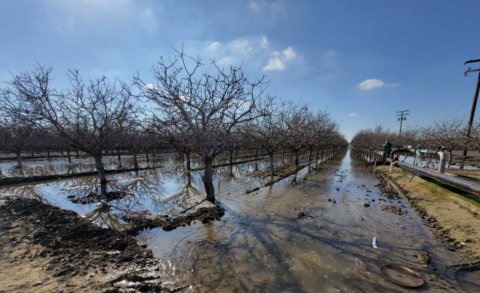 mber 7,2023-
Orchard floods in Tulare Irrigation District
– San Joaquin River runoff was 4.5 million acre-feet in 2023
– Tulare Basin rivers total runoff nearly rivals 1983 runoff at 8.7 million af with 8.69 million acre feet in 2023 (my estimate). The average Basin runoff is about 3 million af.
Central Sierra runoff delivered over 13.19 million acre/ft of snowmelt this past water year ending in September. That’s the arithmetic counting the snowmelt from the five major rivers from north to south-from the San Joaquin River down to the Kern near Bakersfield.
For some of these watersheds like the Kings River it was the wettest year ever at 4.5 mil af. The Tulare Basin’s four rivers – Kings / Kaweah /Tule /Kern are just a few drops short of the 1983 record number with a combined runoff of a gushing 8.69 million acre/ feet.
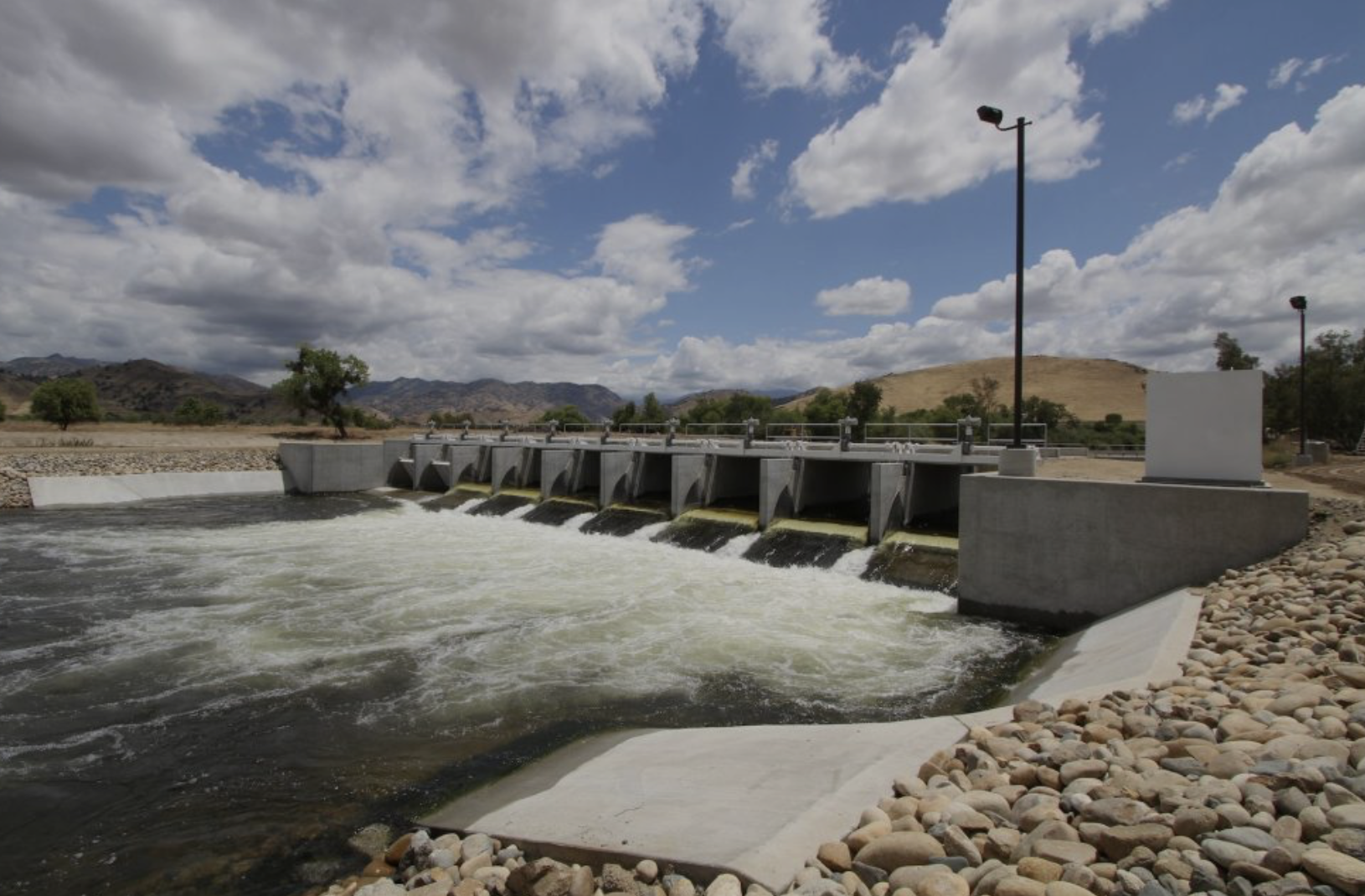 That’s what 31 atmospheric rivers that drenched California will do.
“What makes this record all the more remarkable is that a quarter of the way through Water Year 2022-23, Central California appeared certain to be headed for a fourth consecutive drought year,” says Steve Haugen, the Kings River Water Association manager. “Then, after the many atmospheric river storm events in January, February and March dumped snow by the hundreds of inches above the 5,000-foot elevation, April and May provided surprisingly little precipitation.”
A huge volume from the storms came down the mountain too late for farmers to put it to use on crops this summer. Lake Kaweah filled and drained three times and emptied most recently from August to now from 180,000af down to a puddle today.
Watermaster on the Kaweah Victor Hernandez says they needed to drain the lake to prepare for a possible second wet winter in part because the Kaweah is a small reservoir comparatively.
“Coming off a 321% water year and prospects for another wet El Niño, we are on course to draw the water level down to just 12,000 acre-feet in the lake by early November.”
So what happened to all that water knowing you don’t want to send even more to Tulare Lake? In short- it created a windfall opportunity for farmers. ‘Sink it on your land ‘Tulare Irrigation District’s GM told his farmers. They have been.
“It’s all about SGMA “explains Hernandez with Kaweah Delta farmers and water districts motivated like they never have been to show they are managing the future supply that “will give them credit when in the future they want to pump again.” Facing deadlines on a new groundwater sustainability law, farmers are now dealing with a change in how groundwater is being managed in California -no longer simply able to pump all the water they want without anyone looking over their shoulder.
Now like urban water users, farms will be required to install meters to measure and record diversions.
Overly dependent on groundwater in the Kaweah Subbasin, long-term analysis shows groundwater levels declining over the past 20 years and earlier. For the years from 1997 to 2017, the region has experienced average groundwater declines in the range of 100 feet.
Now with a gift of perhaps 4 million acre-feet of additional runoff at their doorsteps, floodwater “is being eagerly sought for additional groundwater recharge and irrigation water wherever possible in this highly overdrafted basin. Managers of irrigation districts, water infrastructure managers, and farms will be diverting as much water as possible from rivers to groundwater recharge basins and some fields to increase groundwater recharge. They know this water, while cheap this year, will become quite valuable in coming years with SGMA and drought.” says Davis water expert Jay Lund’.
This past week the Kings River numbers were released.
“Record water flow this year has propelled the Kings River region closer to groundwater sustainability, recharging 500,000 acre-feet of water into the aquifer during the 2023 Kings River water year. Flood releases from Pine Flat coursed water through Kings River channels and water purveyor headgates for 162 days straight.”
The seven Kings Subbasin Groundwater Sustainability Agencies (GSAs) and their members have been preparing for a water year like this since January 2020, when they submitted their first plans to the state to outline the roadmap to sustainability by 2040 under the Sustainable Groundwater Management Act (SGMA).
Since submitting the plans more than three years ago, the local groundwater sustainability agencies or GSAs and their members have invested over 1,000 acres of prime groundwater recharge land to construct 25 dedicated recharge basins yielding over 24,500 acre-feet of new recharge capacity annually.
The basins are either already constructed, under construction or to be completed over the course of several years. The agencies filled their newly constructed basins with flood waters for the first time during this historic 2023 water year.
It is not just local flows that are being recharged this year. Surplus water from the Central Valley Project (CVP) has been made available making the combined effect of multiple water sources doubly impactful.
Lower Tule River watermaster Eric Limas says their district has been sinking surplus Tule River water (runoff of 556,636 acre feet – second wettest ever) but also surplus Friant Kern Canal water delivered along the 150 mile east side canal from Friant Dam on the San Joaquin River.
“ I estimate we are using about half Friant Kern Canal water with Tule water to recharge our aquifers” figures Limas .
And it appears to be having a beneficial effect, he suggests.
”We are up about 17 feet on average“ says Limas with “our groundwater levels having recovered about 10 years worth to levels seen in 2013.”
Limas says the spring measurements in February are expected to show an even more dramatic increase in groundwater rising.”I am optimistic about our efforts under SGMA” concludes Limas.
Back on the Kaweah watermaster Hernandez notes that they had enough to offer Kaweah water to all those with riparian rights spreading the beneficial effect across the local delta.
Wet year coupled with SGMA having beneficial effect
At Tulare Irrigation District (TID) farmers are sinking all the water they can, says GM Aaron Fukuda.The district’s supply of surface water comes from both the Kaweah River and the Friant Kern Canal where they have Class 1 and Class 2 (surplus) water contracts. On average they are lucky to bring in 164,000 acre feet annually to supplement the local groundwater.But this year they brought in 414,000 acre feet-” a modern day record “says Fukuda. More than half of that was recharged.
“It used to be that we had only one recharger – TID. Now we have 210 rechargers- the farmers in the district who are each heavily engaged in groundwater recharge.”
“SGMA has changed the mindset of our farmers” suggests Fukuda.
“It used to be that we had only one recharger – TID. Now we have 210 rechargers- the farmers in the district who are each heavily engaged in groundwater recharge.”
“SGMA has changed the mindset of our farmers” suggests Fukuda
“It’s happening all over the Valley including up in the Fresno area where Fresno ID has been building more recharge basins than ever.
”
Fukuda notes TID took plenty of floodwater from the Kaweah without overflowing any of their canal banks or flooding the city.
.
While it may be too early to take a victory lap Fukuda says he expects the latest measure of groundwater to be up 20 to 25 feet.Tulare city reports that in September 2023, the average standing water level depth was 213 feet, representing a 23- foot rise from a year ago (236 feet).
Still Fukuda says despite optimism that SGMA is working and on a path to water sustainability, he worries about the fate of ag.”People say new industries will come. But I lived here long enough to see industries come and go and agriculture remains.”
Reaping the benefits of a wet winter
Floodwater managed by the federal government is having its impact.Central Valley Project contractors accessed hundreds of thousands of acre-feet of floodwater provided by Reclamation in 2023, recharging groundwater basins that are a critical part of California’s water supply, says a CVP report.
The influx of water has been a welcome respite after the driest three-year stretch ever recorded in California. The winter months saw a series of atmospheric rivers rolling through the Sierra Nevada, building a mountain of snow that remained well into the spring and summer.
During the brunt of the storms and afterward, large amounts of runoff had to be safely conveyed through the Sacramento-San Joaquin Valley to alleviate any flood danger. Some of this water, known as “Section 215” was made available to those CVP contractors who had the capability to take it.
Take the water they did, well into the spring and summer. The water went everywhere, from the Sacramento Valley and American River Basin in the north to areas south of the Delta, including wildlife refuges, and the wide stretch of land adjacent to the San Joaquin River. With large, non-storable runoff fading, Section 215 supplies were last made available on July 29, much later than most other wet years.
Significant progress was made this year in recharge groundwater basins. In most years, groundwater accounts for about 40 percent of California’s water supply. That figure increases to 60 percent during dry years. During a time of increasingly wide weather extremes in California, the availability of floodwater for groundwater recharge is crucial.
“Groundwater is a vital component for many of our contractors’ water supply portfolio, and we are pleased that so much of this year’s flood flow was accessed to recharge depleted groundwater basins,” said Reclamation’s California-Great Basin Regional Director Ernest Conant.
Communities that relied on surface water deliveries have struggled under the weight of severe droughts that slashed CVP contract allocations to zero and forced even greater reliance on groundwater.
Now, with the mandates of the state of California’s Sustainable Groundwater Management Act (SGMA) in effect, it’s imperative that water purveyors and landowners pursue as much groundwater recharge as possible when the opportunity exists. “It’s the path to long-term sustainability and SGMA compliance,” said Scott Petersen, water policy director with the San Luis and Delta-Mendota Water Authority. “That’s just fundamentally the reality of what that looks like.”
Authority members are recharging groundwater basins through a variety of means, depending on location and geology, Petersen said, adding that in some cases it’s merely a matter of discing a field, putting water on it, and allowing it to slowly percolate underground. Westlands Water District accessed about 122,000 acre-feet of Section 215 water, more than three times the amount taken in 2019. The combination of a full contract allotment and the availability of Section 215 water meant that lands that otherwise would not have received an allocation had their requests fully satisfied, further reducing groundwater use.
The bonus water in the system eases the reliance on groundwater, according to Elizabeth Jonasson, public affairs representative with Westlands. She noted that in 2017, landowners in the district pumped 54,000 acre-feet of groundwater. This year that figure is expected to be about 10,000 acre-feet.
On the east side of the San Joaquin Valley, hundreds of thousands of acre-feet of floodwaters were released and conveyed through the Friant Dam system for groundwater recharge and other beneficial purposes.
All told, Reclamation’s Friant contractors took about 600,000 acre-feet of floodwater in addition to their contract supplies, most of which was recharged to groundwater aquifers. Also in the mix, more than 20,000 acre-feet of Friant Dam releases were taken by downstream wildlife refuges.
Johnny Amaral, chief operating officer with Friant Water Authority, said his members have seized upon the opportunity presented with the large flows.
“When there is a drop of water, especially flood water, that’s made available, the vast majority of contractors are talking every drop they can get to get it underground, especially when there is no irrigation demand,” he said.
Recharging groundwater basins also benefits the many small communities within the Friant Division that are almost entirely dependent on groundwater for their drinking water supply. “The fact that we have been able to take as much water as we have and get it into the ground – it obviously raises water levels and improves water quality,” said Amaral.
The Friant Kern Canal repair should be ready by February, say sources,with the canal shut down for maintenance now for three months ready for the new season.The repair should restore lost capacity along the big artery which lost 60% of its capacity due to land sinking along its path. This was due to years of vigorous water pumping. It has been a huge wake-up call for farmers who depend on the water, clear down to Arvin. Federal and state funding helped make it happen.
Recharge takes time
Visalia water engineer Dennis Keller says the biggest factor this past year is that farmers did not pump much with all the surface water flows. As for measuring the impact “it takes years to see the results of groundwater recharge” he cautions.
City of Visalia engineer Rhett Amderson agrees, noting Visalia groundwater has dropped continually a few feet a year to a depth of 150 ft. Water levels were just 20 feet in 1987.With all the upstream recharge basins constructed east of Visalia Anderson says he expects the recharge effort will help make a dent in the trend.
Thinking long term
Former Visalia City Council member Greg Collins with Jim Holloway has penned a new book detailing the history of this area called Seven Generations -The past, present and future of the Tulare Lake Basin. Collins says he is glad to see farmers change their approach to saving groundwater but cautions “you need to have a long term plan. We need to be good stewards of the land.” Collins served on a GSA and struggled with farmers to move the SGMA process forward when there was major reluctance to change the paradigm of water use. Now he argues that with metering and restricted allocation of pumping rights and the flexibility of trading water credits – we are on a new path. The title of the book comes from an Arapahoe teaching that you need to plan for 7 generations in the future when making major decisions. He advocates for repurposing some ag lands as part of the process including the return of Tulare Lake.


 Last week Porterville City Manager John Lollis announced he would be leaving the City of Porterville after 15 years at the helm. Lollis will become the new Visalia Assistant City Manager once he starts work after the first of the year.
 The revised plan for the shopping center called Visalia Commons is the same regional shopping center where the City Council turned down a proposed CarMax dealership a few years ago – but the center does have some new existing restaurants and stores along the frontage including Texas Roadhouse, Les Schwab, Panda Express and Dutch Brothers – already in business. City planner Josh Dan says the engineer’s filing does not include an operational statement for the big tenant but the city will require that – so we may learn more on an official basis in the next few weeks. A preliminary hearing will be held this Wednesday.
 Besides this potential big news – a second possible tenant in the same shopping center may cause a big buzz around Visalia.
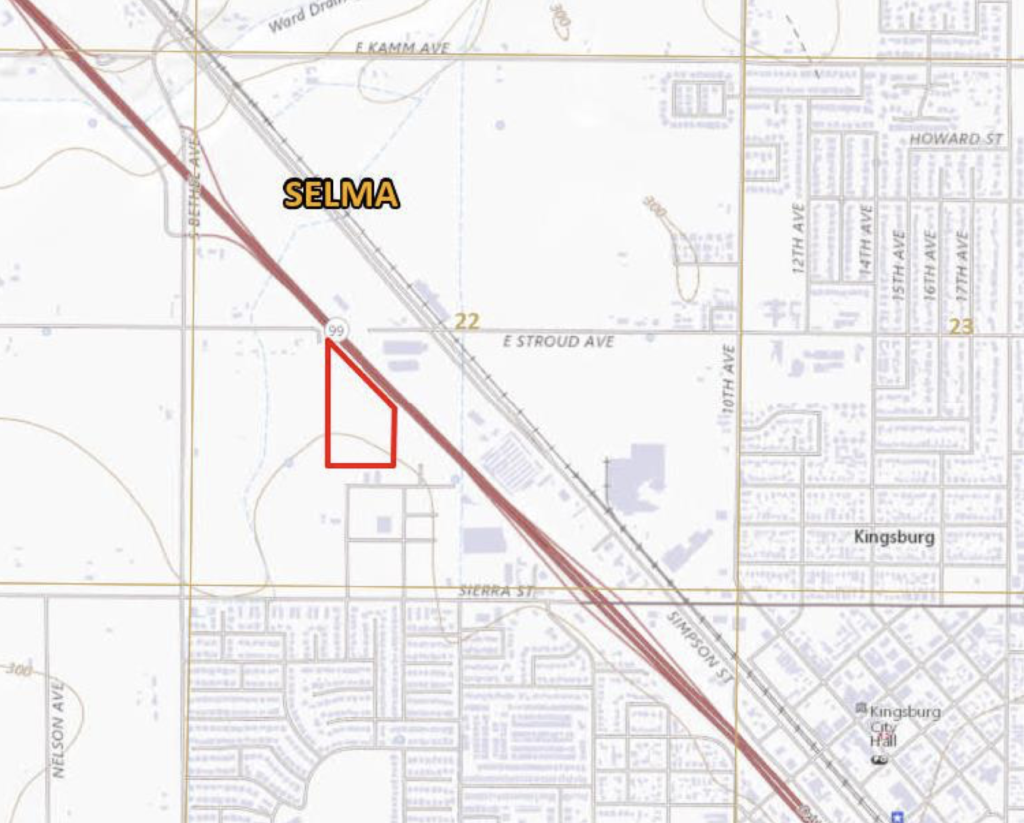
 The City is processing an environmental document on a vacant 13-acre parcel of land along Highway 99 that will need to be annexed to be developed. The parcel is on the west side of 99 and would be the furthest extension of the city’s boundaries to the north on that side of the highway, toward Selma’s city limits.
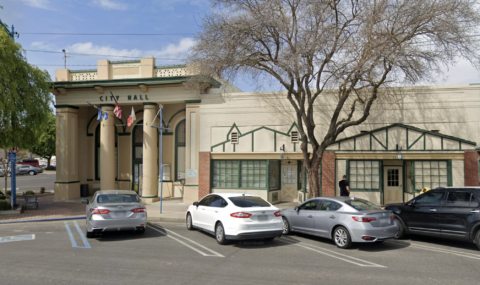
 Kingsburg carries on with its Swedish-themed stores, restaurants and architecture dating from the 1920s when some ninety-four percent of the population in a three-mile radius of Kingsburg were Swedish-American.
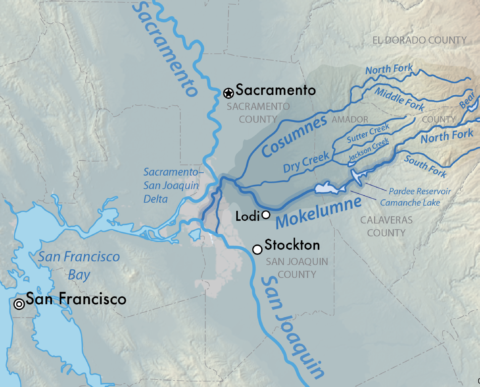 The East Bay Municipal Utility District (EBMUD) reported this week that the 2023-24 fall run of Chinook salmon on the Mokelumne River, a Joaquin River tributary, is now “the most successful return in more than 80 years.” More than 20,000 fish – and counting – have returned from the Pacific Ocean to spawn in the river, the most since record keeping began in 1940.
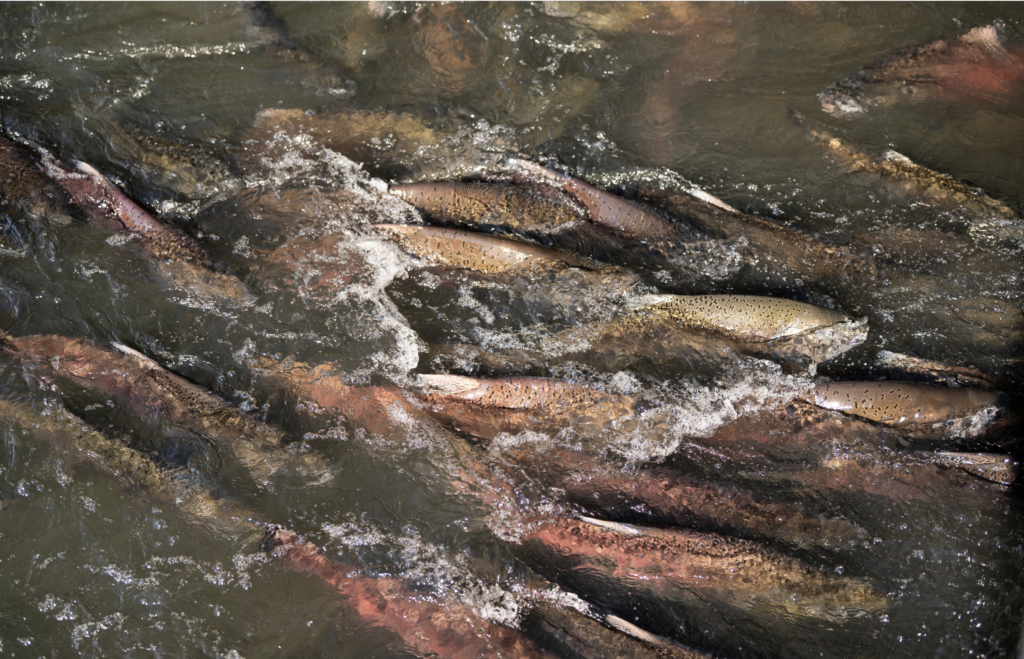 The Mokelumne River contributes only about 3 percent of the freshwater flow into the Sacramento-San Joaquin Delta, yet its salmon population makes up as much as 50 percent of the commercial catch off the coast of California.

 Fresno’s 2022 annual Crop Report will be announced next Tuesday Oct 10. Fresno Kern and Tulare jockey each year over number one status in ag crop production. In 2021 the ranking was Kern,Tulare and Fresno – in that order.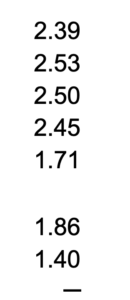


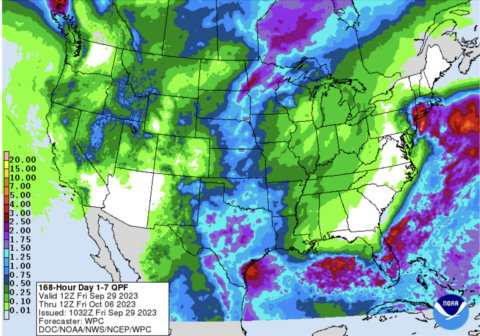

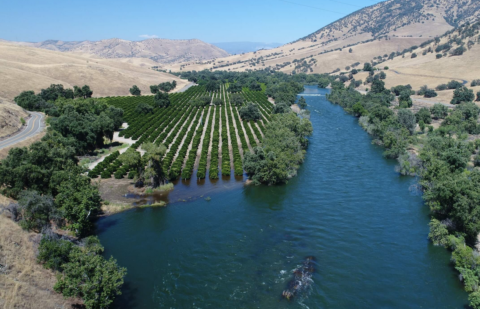 The Kings River is the largest river draining the southern Sierra Nevada with an average annual flow of 1,791,000 acre-feet. We are at more than 2.5% of average this year.
 Company spokesman Matthew Maxson says they are finalizing construction drawings on the 135-acre project that features some 72,000sf of building space.