December 7,2016-
Terra Bella Pistachio Plant Expanding Again
Setton Pistachios is expanding their southern Tulare County plant in Terra Bella adding a 60,000sf warehouse says plant manager Lee Cohen. “We really have no choice but to prepare for larger crops from now on” says Cohen, pointing to this years pistachio crop bin-buster estimated to be 905 million pounds, triple the year before!
“With more trees in the ground and harvest reports like this – it gives us pause.”
The record 905 million pounds estimate compares to 272 million pounds harvested in 2015 and 513 million pounds the year before.So the jump amounts to a quantum leap for this industry that must now gear up its marketing efforts to clear the bulging storage bins.

Record harvests are happening in all three big California nut crops as we speak despite the drought.
Setton is second largest pistachio processor (behind Wonderful Pistachios) handling the crop from 4 million south Valley pistachio trees.With numbers like this “we need to make plans to handle more product permanently.”
That includes hiring more people at their sprawling Terra Bella plant. “We are at 650 permanent employees now- the highest it has ever been.
Improvements at the plant include making the big crop safe to eat.”We are now installing the plant’s third pasteurization systems since 2011” cutting risk of food borne illness that has been a big problem in the past. A 2009 Salmonella outbreak linked to pistachios prompted Setton to recall 2 million pounds of nuts. Salmonella also hit Wonderful brand of pistachios earlier this year.
But Cohen claims “Pasteurization completely eliminates the risk.”
Another key initiative at Setton is the training of their workforce. The family owned company has a Tuition Reinvestment Program to help employees get increased education and training.
“We are fortunate that more colleges locally are gearing up their training efforts” noting that San Joaquin Valley college recently announced they would open in Porterville and Bakersfield college and Porterville College are adding industrial. training programs.
Key for the ag industry is the clear need to automate, claims Cohen.
“Whether you look at the need to modernize, cut labor and medical costs, speed-up production or look at the concerns over changing immigration polices -t hey all point to the logic of more automation”
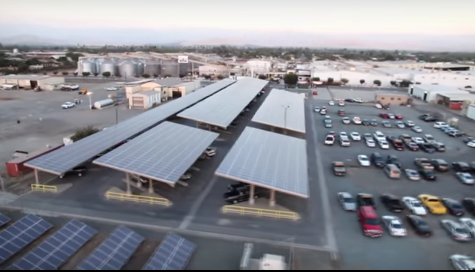 Cohen is proud of the company’s investment five years ago in a 1.7MW solar system that has handled 100% of the non-harvest electrical demand. Harvest time electricity needs soar during harvest but that’s just over 8 weeks.
Cohen admits that with big crops and the fact that much of the crop is exported puts pressure on the company dealing with the rise in the value of dollar. A stronger dollar vs other currencies makes our products more expensive overseas.
The Other Nuts
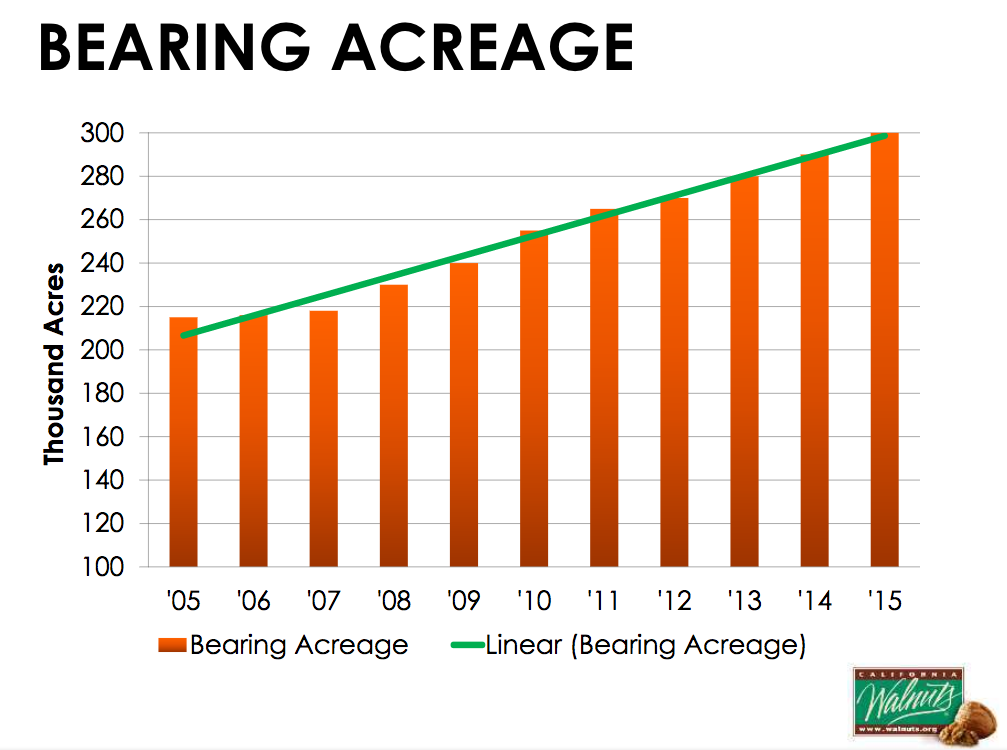
This is a huge hurdle as well for California’s two other big nut crops almonds and walnuts – each with their own record harvest in 2016.
One estimate for walnuts suggests the harvest could yield a total 673,000 tons – some12 percent larger than 2015’s record 603,000 ton crop. Over 60% of walnuts are exported.
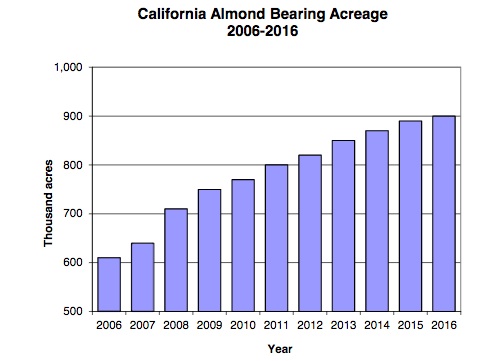
As for almonds the USDA’s National Agricultural Statistics Service forecasts that California will have 900,000 acres of bearing almond trees that will produce 2.05 billion pounds of nuts this year, almost an 8% increase from last year. About two thirds are exported at a dollar value that was $4.5 billion in 2014. Almonds are the top ag export in the state with pistachios third and walnuts the number 5 crop exported.
Dollar & Trade
This month a USDA monthly report said there was uncertainty among our trading partners due to Mr Trump’s views and issues with California’s big trade destinations – Mexico and China.
“A change in the U.S. trade relationship with China and Mexico is of particular concern for agricultural competitiveness. Together, these two countries were the destination for an average of almost one-third of total U.S. agricultural exports from 2013-2015. China alone was the destination for roughly 60 percent of U.S. soybean exports, on average, during this period.
“In contrast to the significant weakening of the British pound in the wake of the Brexit vote, the U.S. dollar strengthened with respect to most of the currencies of its closest trading partners and competitors in the first few days after the election,” USDA
reported.
“The dollar strengthened over 10 percent relative to the Mexican peso in the two days following the election. In general, emerging market currencies lost considerable value against the dollar over expectations that higher U.S. interest rates would trigger capital outflows.
“The agricultural exports-weighted dollar value index is expected to reflect a 2.6-percent appreciation in 2016 and maintain strength with a further 2.1-percent appreciation in 2017. The strong dollar is thus expected to continue to weigh on U.S. agricultural export competitiveness.”