

Fresno Terminal Blends Diesel With Biodiesel
Permit Filed For Local Biodiesel Production Plant
A version of this story first appeared in Fresno Business Journal
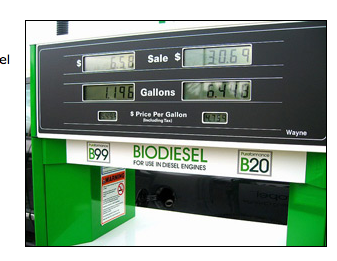 Deserved or not, Fresno is known as the nation’s smog capital.
But our fuel supply has been getting greener with California gasoline blended today with 10% ethanol, up from 5.7% and as of last month Fresno diesel shipments being blended with 5% biodiesel. That’s what one of the nation’s largest fuel pipeline owners and the largest refinery and pipeline operator in California – Kinder Morgan – began doing in August at their key Fresno terminal that connects Bay Area refineries to the mid-state’s downstream users.
Kinder Morgan spokesperson Emily Mir says the company began blending ”in response to strong interest from …customers” investing “several million dollars to allow both its Fresno and Colton terminals to blend up to 20 million gallons per year of B100. In both terminals Kinder Morgan has invested in offloading capabilities” says Mir, and is now blending” the B100 at a 5% ratio into the incoming diesel pipeline manifold” that goes to their customers.
In a Kinder Morgan financial report the company said they are spending $16.2 million to build biodiesel blending facilities in four Western US cities that include Fresno.
Kinder Morgan is not alone.Major players like Chevron and Exxon are helping to push the new fuel standard to 5% biodiesel in response to both federal and state mandates.Kinder Morgan is doing the same in other states, in Arizona and in Nevada. These new rules help the diesel fuel supply to ‘green up’ on both its carbon content to reduce global warming and on the toxicity of its pollutants with vegetable or animal fat-based biodiesel estimated by EPA to be 78% cleaner than petroleum-based diesel when it burns.
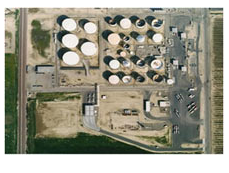
Diesel pollutants like particulates have been implicated in severe air problems in the Central Valley that have a cost us in both community dollars and lives. 100% biodiesel cuts particulate matter emissions compared to traditional diesel by around half. Regards greenhouse gases, biodiesel makes a 57% cut says EPA.
45 Million Gallon Biodiesel Plant Next Door
In a move coordinated with Kinder Morgan, Fresno entrepreneur Jeremy Eslinger has filed for a conditional use permit from the city for a 45 million gallon biodiesel manufacturing facility next to the same Fresno Kinder Morgan terminal on Malaga. Eslinger say his start-up company will lease 15 acres for the project from Kinder Morgan as they will supply biodiesel for blending into California diesel fuel market underway now by Kinder Morgan.” We have a memorandum of understanding“ says Eslinger, suggesting they hope to get the green light on their CUP application around October 1.
The first phase of the project that is expected to be operational next summer is pegged at about a $20 million investment says Eslinger. Construction would start in January.
Plans for the production plant have been in the works for several years says Eslinger,originally slated for a site in Firebaugh. But locating the production plant next to Kinder Morgan is literally a pipeline to the market and Eslinger’s business plan calls for Kinder Morgan to utilize 15,000 gallons a day within 6 months on the way to gearing up to 135,000 gallons a day.There are no hazardous waste or water use associated with the 18,500 sf plant he says.The facility would employ 48.
Eslinger says the biodiesel will be made from various biomass feedstock including algal oils,seed oils,animal fats and waste vegetable oils.Eslinger says they may use soybean,camelina or canola oil grown on Fresno westside’s degraded land for some feedstock.
Eslinger and family are in the custom harvest business in Dos Palos and expect to supply the plant with some Valley grown feedstock, another economic benefit of the project.
Initial production is set at 5 million gallons a year in what will be a three-phase project offering a “continuous supply” of biodiesel for Kinder Morgan to pass on to their customers that include Chevron,Shell,Valero,Conoco Phillips and Tesoro says Eslinger’s application. As with ethanol blends, the industry wants a standard blend that will go to most customers. Sounds like there is good chance this Fresno mix will end up in your pickup’s fuel tank although others in the Valley already make or want to make biodiesel.
Eslinger believes teaming up with Kinder Morgan will help cut transportation costs to customers that will help convince them to buy from his start-up company.Cutting costs will help keep the price of biodiesel – a few cents higher than diesel – from getting out of hand, he expects.
Mandates for cleaner fuel
Incentivising investment in new blending capabilities are two major regulations – one federal and one state – that are mandating a gradual shift of our fuel supply to increasing use of lower carbon sources. The federal Renewable Fuels Standard(RFS) as revised in 2007 expanded the RFS program to include diesel, in addition to gasoline and increased the volume of renewable fuel required to be blended into the nation’s transportation fuel from 9 billion gallons in 2008 to 36 billion gallons by 2022. The amount increases over time.
California Energy Commission staffer Gary Yowell says California’s share of biodiesel to be blended into the diesel supply adds up to 120 million gallons in 2013 under RFS compared to current blending of about 36 million gallons.”That’s the big driver” says Yowell. California biodiesel plants are running under 50% of capacity right now, he says.
“We are at about 1% biodiesel now” with the new 5% standard sweeping into the state this summer. California is using nearly 4 billion gallons of diesel fuel a year now.
Under RFS there is an incentive to do the blending where refiners can also earn more Renewable Identification Numbers (RINs), worth about $1.50 to $2 per gallon of biodiesel,say sources,encouraging self production.
The state mandated Low Carbon Fuel Standard is another driving force despite the fact it faces a court challenge on appeal. The standard enacted by California in 2007, with specific eligibility criteria defined by the California Air Resources Board in April 2009 took effect in January 2011. The law was ruled unconstitutional by a Fresno judge at the encouragement of out of state energy providers.The LCFS requires fuel providers to reduce greenhouse gas emissions to 1990 levels with a 10% reduction in the “carbon intensity” (CI) of transportation fuels in California by 2020. That could further drive up demand for biodiesel produced in the state.Despite the lawsuit. the state ARB is issuing credits for low carbon fuel that are being traded now providing a few cents of profit for advanced biofuel, low in carbon content.
Helping to stimulate interest in buying,government agencies including the Navy and GSA are bidding for advanced biofuels that include biodiesel – this year.
If biofuels live up the promise,it will be a home run for the Valley were virtually all of the experimenting is being done for a simple reason; it’s where the crops grow and the animals feed and the waste material from both pile up – creating a golden opportunity.