
click to enlarge
Ouch!West Texas Intermediate (WTI) oil futures for August climbed to $106.73 per barrel today,a 15 month high. So you would think there is some kind of global or US oil shortage.? Or oil refineries on fire or demand that is going through the roof?
But the answer is ‘no’ to all the above.
Valley oil exec Walt Dwelle says something’s fishy about the run up in the WTI price jumping from around $95 to $106 this past month while Brent – the true global standard that typically has a sizable price premium over WTI climbing about 3 dollars in the past month to $107 per barrel today.
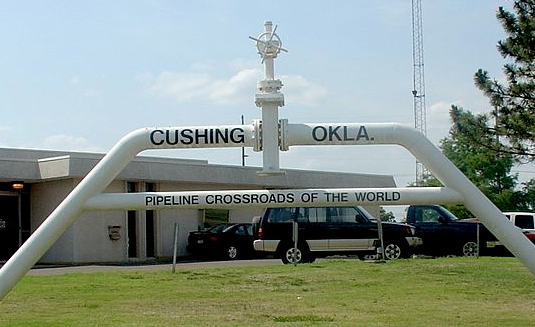
“If they are explaining the rise in oil prices based on what is going on in Egypt you would expect to see more action in the Brent price,not WTI measured in Cushing Oklahoma” says Dwelle whose family owns a small chain of gas stations in California and Nevada.
WTI is a better measure of US oil supply that has been bolstered in part by increasing supply from North Dakota a pipeline that now extends to Texas Gulf Coast refineries.
But Dwelle repeats what has been pointed out by many in the past year – Americans are using far less oil and gasoline than they did just a few years ago. Dwelle says US demand is “anemic – some 7 to 9% lower than it was three years ago.”
And the Egypt crisis has posed no supply disruption issues, certainly not from Cushing Oklahoma where the streets are all quiet.
Big Players Pushing The Price Around?
“Looks like some of those big Wall Street street players might be pushing the (WTI) price around” ie speculators are driving up the price figures Dwelle.
Indeed this week the US Energy Information Agency offered a preview of prices for the rest of 2013.Prices are expected to move lower in large part because the US is producing more oil at home.
A July 9 EIA report offers that (EIA) expects that the Brent crude oil spot price will average $102 per barrel over the second half of 2013, and $100 per barrel in 2014. This forecast assumes there are no disruptions to energy markets arising from the recent unrest in Egypt.
EIA adds that the discount of West Texas Intermediate (WTI) crude oil to Brent crude oil, which averaged $18 per barrel in 2012 and increased to a monthly average of more than $20 per barrel in February 2013, fell to less than $5 per barrel in early July 2013. The narrowing of the WTI-Brent price spread is supported by several factors that have depressed Brent prices or raised WTI prices.
But the EIA expects the WTI discount to widen back to $8 per barrel by the end of 2013 as crude oil production in Alberta, Canada, recovers following the heavy June flooding and as Midcontinent production continues to grow.
Meanwhile all that domestic oil and lack of demand continues to depress gas prices. Nationwide,regular-grade gasoline prices have fallen from an average of $3.66 per gallon on June 10, 2013, to $3.49 per gallon on July 8, 2013
In California motorists are also using less gas.California’s gasoline consumption declined 1.7 percent, while diesel consumption declined 0.4 percent in the fourth quarter of 2012, according to fuel tax data released by the California State Board of Equalization.
BOE Member Betty Yee said “Fourth quarter fuel consumption in California is consistent with trends of more energy efficient habits, helping families cope with higher costs.”
More US Oil On Tap
Not surprisingly US crude production continues to grow.The EIA says North America accounts for most of the projected growth in non-OPEC supply over the next two years because of continued production growth from U.S. tight oil formations and Canadian oil sands.U.S. crude oil production increased to an average of 7.3 million bbl/d in April and May 2013, which is the highest level of production since 1992.
EIA forecasts U.S. total crude oil production will average 7.3 million bbl/d in 2013 and 8.1 million bbl/d in 2014.
So these cross currents are hitting a gas pump near you.Which way will they carry you?
California motorists are now paying an extra 3.5 cents as of July 1 to boot( highest in the nation) but so far the increase is not being felt much.
In California this week gas prices are about where they were a month ago – around $3.95 a gallon on average after going first up and down again. The best prices statewide are in the Salinas area – around $3.55 per gallon. Best price in San Luis Obispo is $3.95 at Costco while in Tulare and Fresno prices are lower – down as low as $3.67.
What are refiners doing with all that gas and diesel if they cant sell it to you? Exporting it to South America in increasing amounts.
Meanwhile more more crude is being shipped in by rail into California to refiners here from North Dakota.
Despite the run up in oil in the past few weeks Dwelle agrees withe EIA and expects gas prices will head lower this year. AAA points out July 4 drivers caught a break this year with prices almost 5 cents lower than a week before.
Last year the US became a net exporter of petroleum products for the first time since 1949. There is still a ban on exporting oil.
But if refiners continue to export more – that could leave less gasoline for domestic customers. Auto Club spokesperson Jeffrey Spring notes that “Wholesale prices have risen again this week by about 20 cents on news of increased exports from local refineries and lower supply in Southern California. We’re not yet sure what impact that will have on retail prices.”
Could be going up here for a while until this oil bubble bursts.