
Feed Manufacturing Operation Likely
Hoping to benefit from discount prices on grain and corn shipped by 100 car unit-trains to California from the Midwest – fast growing poultry farmer Pitman Family Farms is negotiating to buy 110 acres of city-owned land in the Hanford Industrial Park.
“They want to build a giant rail spur and this the largest piece of land they could find next to rail line” says Hanford City Manger Darrel Pyle.
The matter came up at this week’s closed door Hanford City Council meeting but Pyle says his council directed him to go ahead and get an appraisal of the property in order to move forward on a sale.
The land includes three APNs near Iona Ave at the BNSF rail line.
“This land is property we owned through our redevelopment agency and now the successor agency and the state has ordered us to dispose of them as soon as feasible.”
Pitman Family Farms, based-in Sanger, has poultry growing ranches throughout the Central Valley and processes their birds – turkeys, chickens and ducks at a Sanger processing plant that has undergone several expansions including a 25,000sf addition recently.
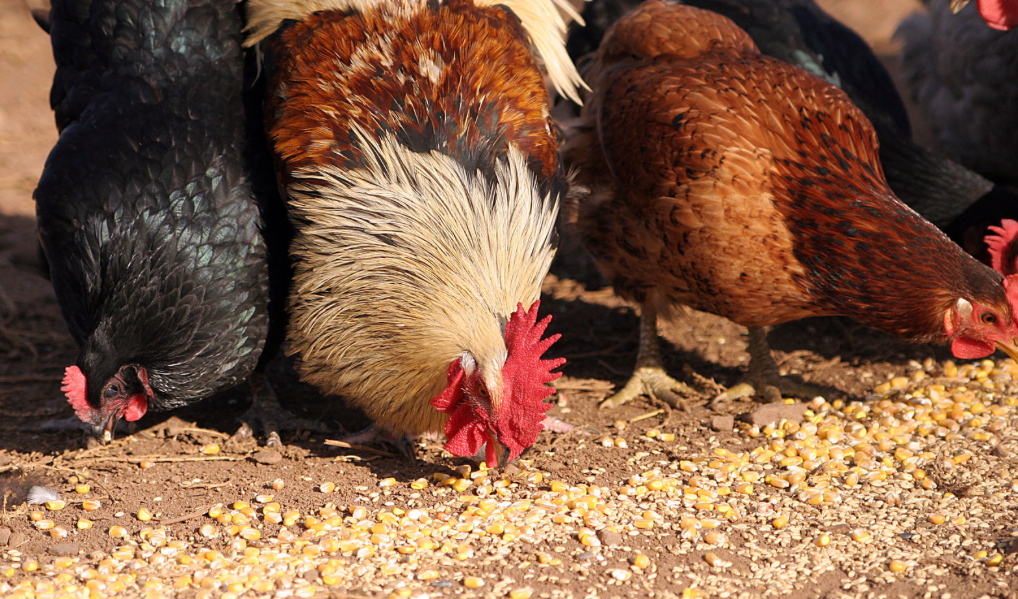 Poultry farmers in California like all animal feeding operations are dependent on Midwest grain and corn for their most expensive input -the feed. The price of feed has hurt the bottom line at all livestock operations in the past year due to the severity of Midwest drought.
Locally Zacky Farms declared bankruptcy in the past year citing feed costs.
Now drought- at least in the corn belt – appears to be behind us and either way unit trains offer an opportunity to save money.
Not Just Chicken Feed
Unit trains already come into the Valley from the Midwest to grain dealers like JD Heiskell,Western Milling and Cargill. Several feed operations run unit trains in Kings County including Penney Newman,now owned by JD Heiskell.
Bringing in feed by unit trains can save big time with one report noting that unit train rates were quoted at half the cost of a single car rates says Cargill who invented the notion in 1967.
Scott Hillman of JD Heiskell feed company says a more reasonable estimate may be a 40% savings ,certainly not chicken feed!
A unit train is a freight train composed of cars carrying a single type of commodity that are all bound for the same destination. By hauling only one kind of freight for one destination, a unit train does not need to switch cars at various intermediate junctions and so can make nonstop runs between two terminals. This reduces not only the shipping time but also the cost. The unit train was introduced by American railroad companies in the 1950s so that they could offer lower shipping rates and thereby make their freight service more marketable.
Initially, unit trains were used primarily to haul coal .Today unit trains are carrying oil from North Dakota and New Mexico in part because pipelines are not available in the right places.
A unit train of 100 to 115 cars can bring in 350,000 to 400,000 bushels of corn from the Midwest offering a better price because the trains do not need switching and can be loaded and unloaded quickly if the right infrastructure is in place.
With quick turn around the rail companies can reduce the cost and still make out just fine.
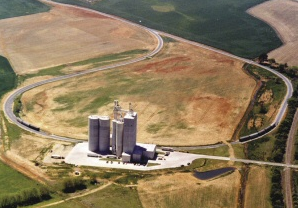
The land in question winds around the 19 acre Cargill grain plant in Hanford creating a complete loop which allows the train not to be split in sections, saving time and limiting foul ups.The loop spur design is in compliance with BNSF protocol.BNSF hauls more grain than any other North American railroad and is major player in the South Valley economy.
Scott Hillman says companies like to have grain mills on both the UP and BNSF lines to keep the competition keen going.”At any one time one rail company is cheaper than the other ” adding Heiskell has feed mils on both lines.
California is already a huge market for corn for the livestock and dairy industry here as well as the ethanol industry.
Growing Niche
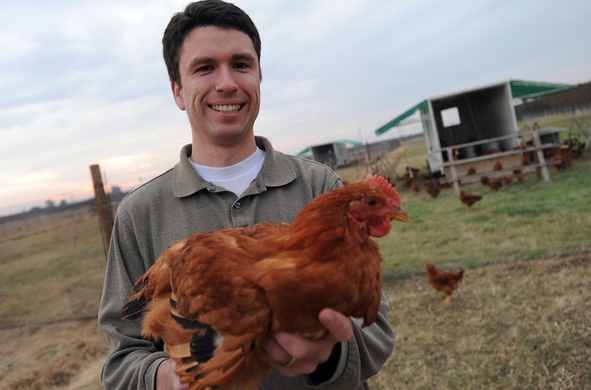
As for Pitman farms who have been on a tear in recent years as their niche organic poultry offerings have taken off in the marketplace in stores like Whole Foods and others across the nation.
The four generation family farmer offers PETA approved techniques allowing poultry to range freely and offering poultry gas before they are slaughtered to reduce the stress for the birds before they give their all.The poultry is sold under the Mary’s Chicken label,named for Mary Pitman founder David Pitman’s wife who still answers the company phone. Son Rick ,a Cal Poly grad, plays a key roll in the firm.
This winter the small company just about gobbled up bankrupt Zacky Farms before they were squeezed out of the deal by a Zacky family contingent.
Still it is possible that the Zacky business could come back on the market and Pitman would be well positioned to take it on with their own greenfield feed mill and manufacturing operation. Zacky gets its grain in Kings County at a facility just to the north in Hanford called Integrated Grain and Milling.
Source say Ptitman seeks control over mixing his own feed he now buys from Western Milling in part because it is organic and the family likes to control all aspects of their business.Especially with all the woryy about GMO crops.
Just what facilities and number of jobs that could come of this new Hanford facility we will have to wait and see . But it make no sense to do an unloading facility without a feed manufacturing site. Put all that together and this could be a big deal for Kings County and Hanford say sources.
This land is the same property where Great Valley Ethanol had planned to build a plant, a deal that is off the table now.