
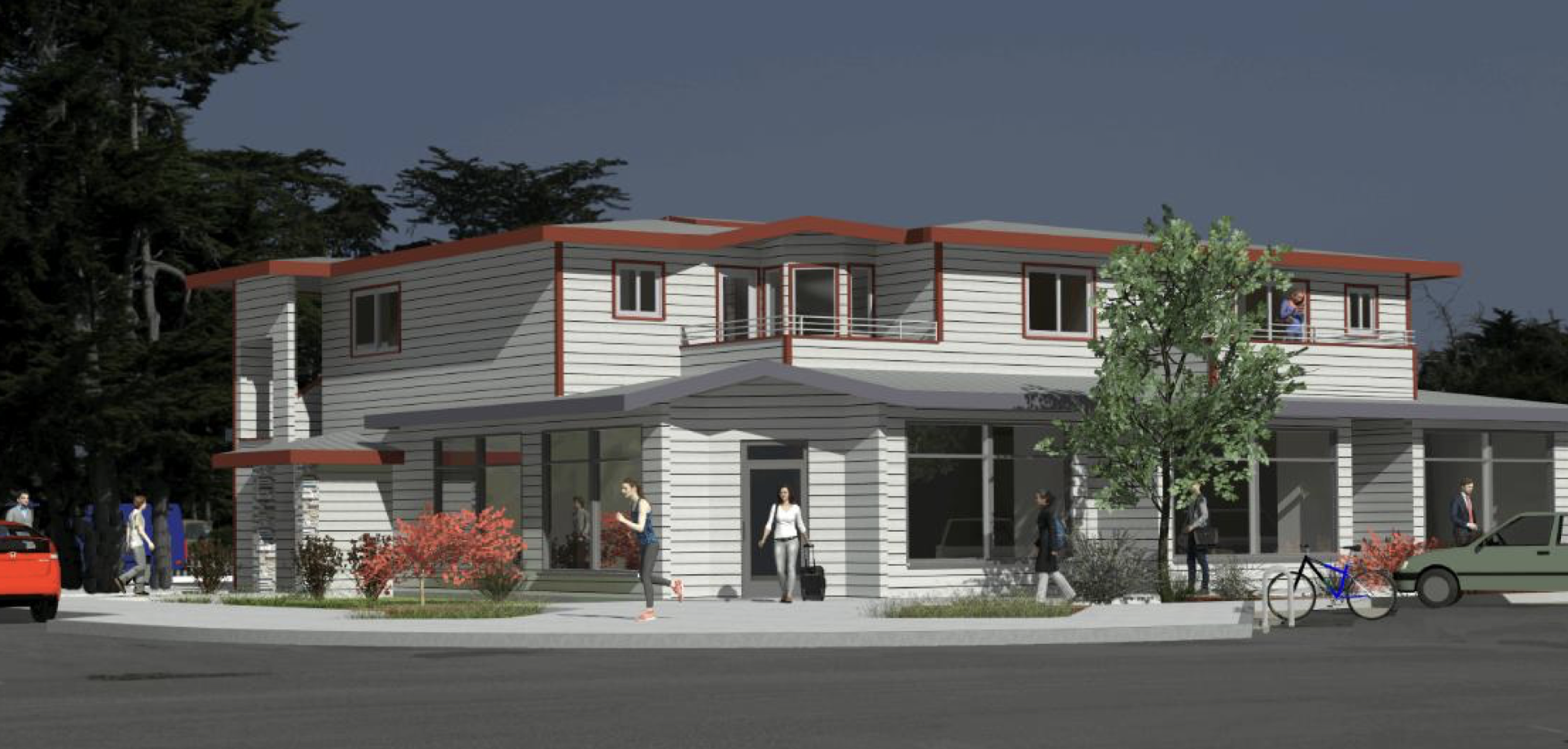
Baywood corner slated for mixed-use development
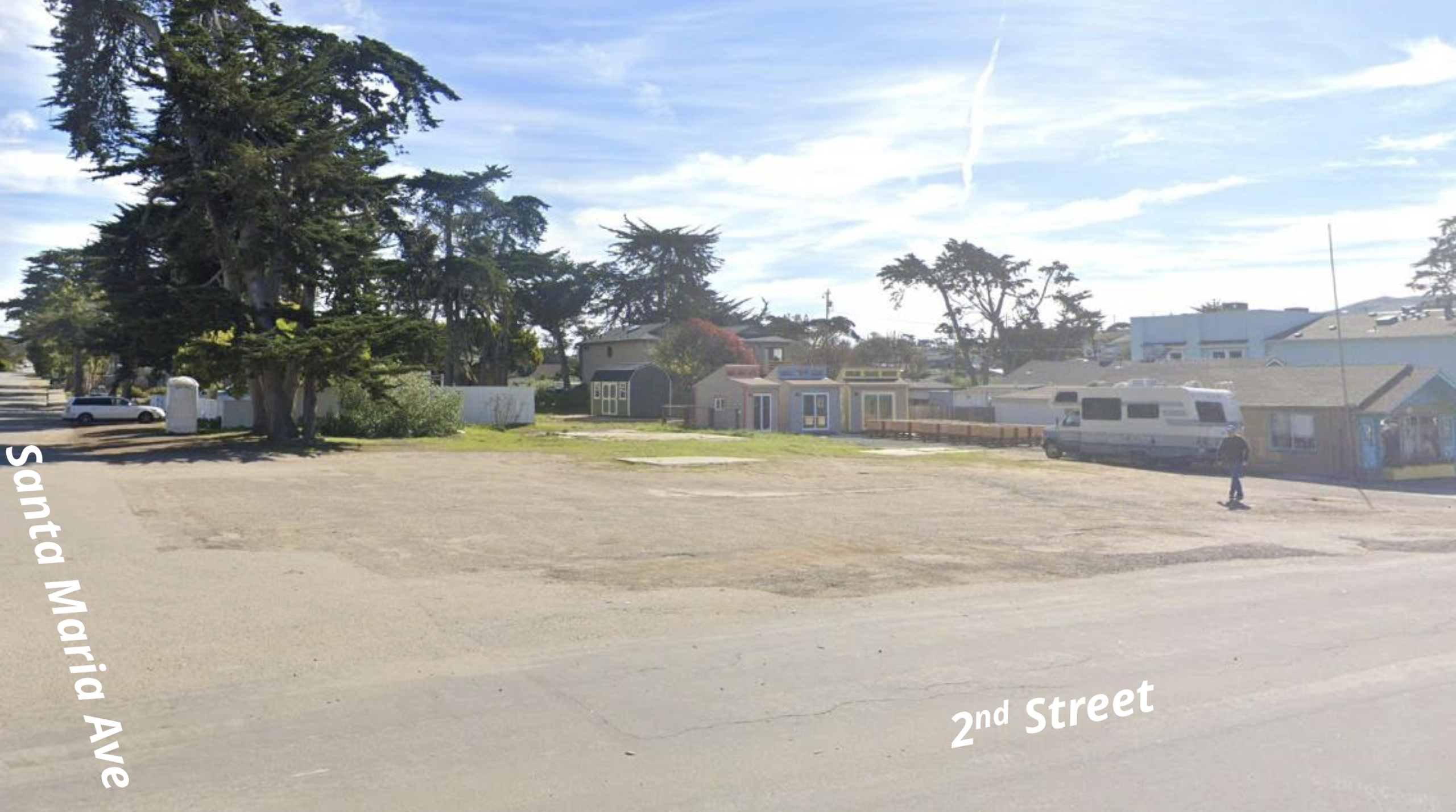
How it looks today
San Luis Obispo planning staff will hear a request by Alex Benson for a Minor Use Permit / Coastal Development Permit (C-DRC2024-00054) to allow phased construction of a new two-story mixed-use project consisting of approximately 3,018 square feet of ground floor commercial retail area and 1,983 square feet of second floor residential area. The residence would have 310 square feet of residential deck area, and associated site improvements.
The hearing is set for April 17 at 9AM.
The construction site would fill in the southeast corner of 2nd St and Santa Maria in the heart of Baywood,across from the Merrimaker bar. The empty property has been used in the past for a concert stage.
The ground floor retail could be divided into 3,2 or 1 space, says staff, but would not be permitted for a restaurant.
The project will provide six on-site parking spaces, four of which are required to serve the three one-bedroom residential units, in addition to seven on-street parking spaces along the project frontages for a total of nine commercial retail parking spaces consistent with the Estero Area Plan. The project will result in disturbance of the entire 9,375 square foot vacant parcel.
The project being developed by Mr Benson is located at 1300 2nd Street (APN: 038-182-001), on the southeast corner of 2nd Street and Santa Maria Avenue, within the Commercial Retail land use category in the community of Los Osos. Mr Benson already owns several other commercial properties including two hotels on the same 2nd St block.The project was recommended for approval by
LOCAC on May 22nd, 2025.
Ralphs has LOVR property in escrow for new gas station
The realtor for the sale of the former gas station on LOVR across from Starbucks says the Ralphs grocery chain has the 1.9 acre property in escrow as it works with the county to get approval to build a new 12-pump gas station after demo of the former station. Ralphs has a half dozen discount gas stations around the state.
Trump admin stiffs Los Osos pipeline funding
Intertie resilience water project still moving forward
Disappointment this month as it appears $8 million in funding approved by the US Congress in 2024 continues to be blocked by the Army Corps of Engineers – one of many water related projects approved under the Biden administration that remain redlined by the Trump administration, particularly in Democratic states like California.
That doesn’t mean the project to run a pipeline to Morro Bay to connect to state water is dead with the Los Osos CSD working on other funding opportunities like Prop 4 state funding that could at least provide some of it, says retiring CSD GM Ron Munds. Either way the so-called intertie project is going forward with plans later this year to install 1000 feet of the 10-inch diameter pipe in the concrete bedding of the new bridge along South Bay Blvd. Munds says another funding option is 40-year term USDA loans that carry a very low interest rate. In the meantime, he is pushing to get the engineering of the 2 1/2 mile pipeline at least to the 30% level by the end of May.
DESAL discussion set for April 20
Munds adds that another strategy to provide some cushion to our dependence on groundwater is to use the same pipeline long term to bring in desalinated water from a possible plant off the Morro Bay coast in the future.Such a plant could offer an alternative drinking supply to a number of nearby communities that could be connected by pipeline.
A hearing on just such an idea will be held April 20 at the Morro Bay Community Center at 6 PM. A County study suggests the Morro Bay location could meter out 6800 to 8,000acre feet per year of drinking water from the ocean that could be shared among a number of local towns (see above). Los Osos uses about 1 thousand acre/ft a year, but a smaller supplement to our groundwater would be welcome.
The meeting wont go into alternate technologies to deliver potable water from the sea including OceanWell, based in LA who has a pilot project off the coast of Malibu and SeaWell, based in Santa Barbara, both new smaller scale but environmentally safe technologies compared to legacy technologies.