
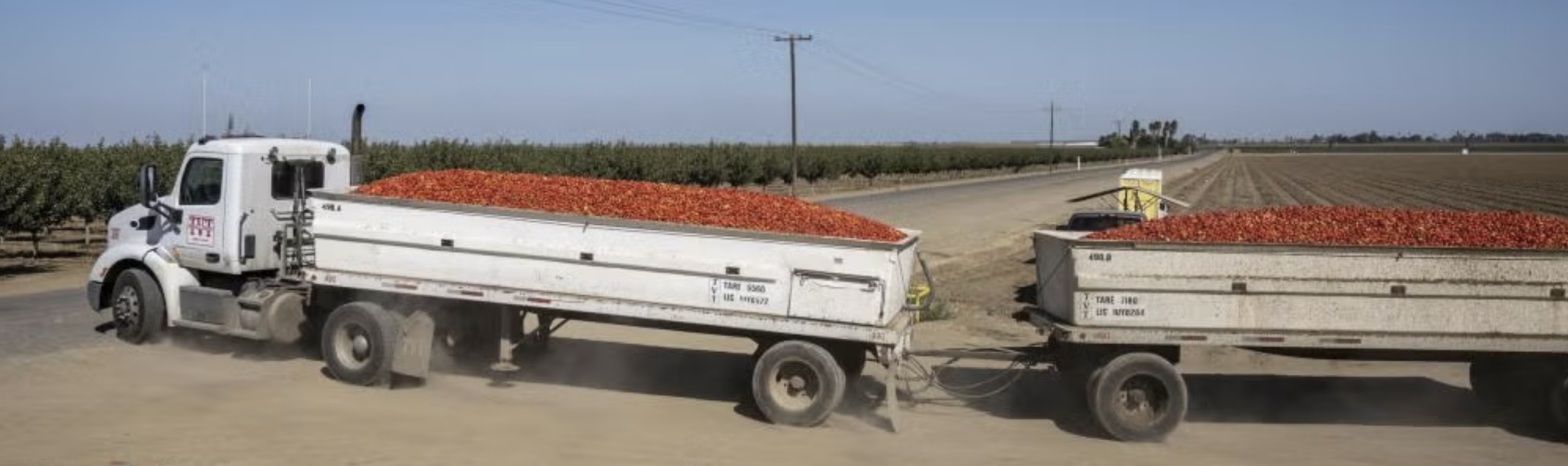
Central Valley tomato growers are producing more per acre in an economy that is facing lower consumer demand.The latest report published January 23 regards 2026 tomato contracts, highlights the dilemma.
Like the wine industry,processing tomato growers face the need to reign in production and not overproduce.
As of January, California’s tomato processors reported they have, or will have, contracts for 9.8 million tons in 2026, a decrease of 11% compared to 11.0 million contracted tons forecast in the August 2025 California Processing Tomato Report.
Tomato grower Don Cameron who serves on the board of the California Tomato Growers Association says “the processors cut their contract by 15% as US consumer demand has dropped.” Eating and drinking habits are changing and some people are eating less and making new food choices as a result of the popularity of weight loss drugs.”It’s happening in the almonds too.” Meanwhile, Cameron worries about the prices paid for contracted tomato product that have been lower recently although the 2026 price has not been agreed-upon yet between growers and processors.
Processors estimate that the contracted production for 2026 will come from 185,000 acres with an average yield of 53 tons per acre. This year’s contracted planted acreage forecast is 10% below the 2025 estimate of 205,000 planted acres under contract in the August forecast.
Shrinking acreage
Growers have been shrinking their planted footprint for processing tomatoes from over 300,000 acres statewide as recently as 2007 to 205,000 acres planted last year. Now that will shrink again to 185,000 acres in 2026. Meanwhile farmers have been producing more product on fewer acres as the yield has increased over the years from 23 tons per acre in 1977 to 53 tons expected in 2026. The big difference, drip irrigation technology.
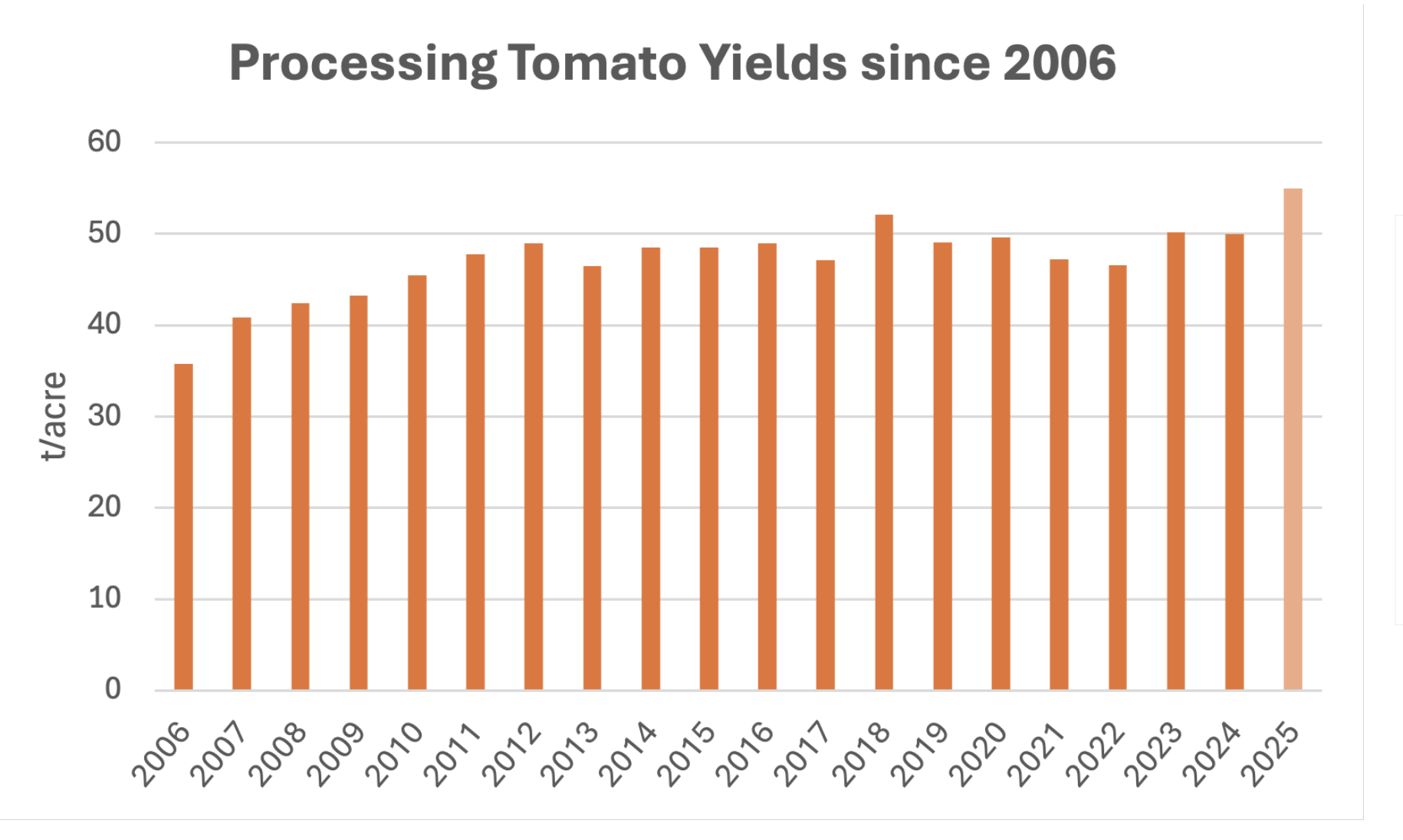
While yields have more than doubled, total California production has shrunk from a high of 14.3 million tons in 2015 down to an expected 9.6 million tons this year.
Among the factors affecting the industry are the high cost of farming inputs including labor and water, and increasing temperatures. But a slow decline in U.S. per capita consumption may be more telling as oversupply has led to farmers disking crop that had no contracted buyer.
Consumption may have peaked with changes in dietary guidelines that urge reduced sodium in processed food. Now pizza sales may have peaked, suggests some news reports.
California continues to produce 95% of the U.S. processing tomato crop and approximately one-third of the global supply.
Covid’s effect
An Ag Alert story quotes Valley tomato grower Mike Montna,CEO of the California Tomato Growers Association in 2025.. After consumption of processing tomatoes and other canned goods spiked during the COVID-19 pandemic, Montna says the industry is still adjusting to the post-pandemic “new normal,” as consumer eating habits have changed.
Responding to the surge in demand during the pandemic, which zapped tomato inventories, canneries contracted more acres in 2023—some 254,000 at a record-high price of $138 a ton for conventional and $190 a ton for organic. Growers delivered more than 12.7 million tons of tomatoes that year, an all-time high.
“While COVID wreaked havoc on many industries, it brought higher margins to California’s processing tomato industry,” said Matt Woolf, a specialty crop analyst for Terrain, a part of Farm Credit Associations, in a 2024 report.
But product movement during the past two years has stayed “relatively flat,” Montna noted, necessitating the reduced acreage this year to get “inventories a little bit back in line.”
Except for the early years of the pandemic, U.S. per-capita consumption of processing tomatoes has been declining since the 1990s, Woolf reported. And the downward trend will likely continue “as the pandemic fades further into history,” he wrote.
Fresno County grower Bret Ferguson, who also serves on the grower association board, said it’s not just changing diets that have eroded sales of processing tomatoes. He pointed to the struggling fast-food industry, a major buyer of ketchup and other processing tomato products.
“They’re mindful of the cost of the product, and they’ve cut back,” he said, noting how fast-food chains in his area no longer generously give out handfuls of ketchup packets with every meal.
With contracted tomato acres down, Ferguson said he has left more ground fallowed because commodity prices for corn and other grains also are down. Processing tomatoes remains a good option for growers who can get a contract, he said, though he expects contracted acres to shrink.
Despite stagnating domestic consumption, Montna said export demand has remained “relatively consistent.” To open and grow new markets, he said the association has been working with the Trump administration to offer comments “on markets that we think might be beneficial” to processing tomato growers.
But grower Ferguson said he doesn’t believe the sector can “export its way” out of an inventory problem, considering other tomato-growing regions around the world also have produced sizeable crops in recent years. He said the high value of the dollar remains an obstacle for expanding export growth.
“It’s so cost prohibitive,” Ferguson said.
Lots of pressure
Lastly, retaliatory tariffs on our exports are concerning, says Don Cameron.Roughly 20% to 30% of California’s processing tomatoes (used for paste, ketchup, and sauce) are exported with Canada being a primary destination. President Trump has threatened a more vigorous trade war with Canada that has already severely hurt wine sales from California and all products from the US.
Cameron notes some piece of good news is the declining value of the US dollar that makes our exports cheaper to the overseas buyer.
Don adds that if you sum it up “there is a lot of pressure on the California tomato industry right now.”
One of the industry’s main players Morning Star Tomatoes has submitted comments about the 2026 crop on their website recently.
California’s processing tomato industry is driven by scale efficiencies and yield performance. The 2025 season delivered exceptional yields, with average yield per acre approximately 10% higher than historical levels. This resulted in roughly one million additional tons of production with minimal acreage expansion, largely due to improved varieties and favorable growing conditions. Higher yields lowered per-ton production costs, which improved California’s competitiveness in export markets. Exports to Canada and Mexico have remained relatively stable, suggesting that future export growth will need to come from markets outside of NAFTA, where elevated global inventories are creating a highly competitive environment. To support longer-term growth, California is likely to reduce production from 2025 levels to help draw down inventories, while continuing to expand exports beyond NAFTA in order to sustain demand and justify increased acreage in future seasons.