
from the Mississippi River Basin Ag & Water Desk
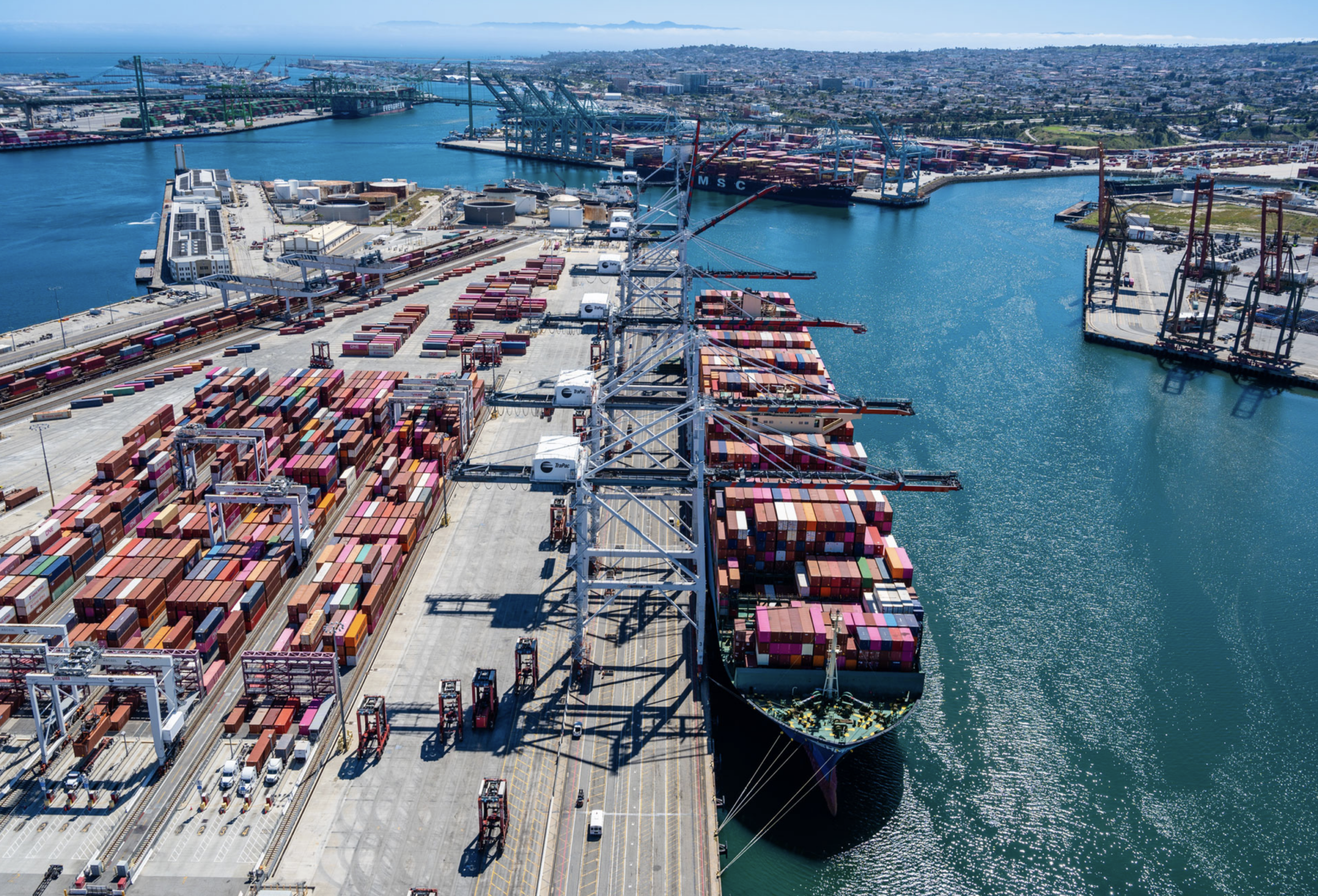
Soybeans are the top ag commodity shipped from LA
Chinese state-backed money is remaking the hemisphere’s ports —from Santos to Chancay — reshaping grain routes to Asia and squeezing U.S. farmers as tariffs deepen the split with Washington
For decades, U.S. soybeans fed China’s growing demand, binding the two economies together.
The share of U.S. soybeans going to China has at times been more than 60% by value, making China America’s most important agricultural customer.
Two main corridors carry U.S. soybeans to China: Pacific Northwest shipments take a direct trans-Pacific track, while Gulf exports move through the Panama Canal to ports in southern China.
Since 2013, China has been investing in infrastructure projects around the world. In Latin America, the Asian giant has invested in more than 23 seaports, building a logistics network to support its growing trade with the region.
These seaport investments range from multi-billion-dollar deep-water terminals to smaller upgrades that improve rail links, storage capacity, and ship turnaround times.
The partnership between the US and China began to crumble in 2018, when tariffs during President Trump’s first term triggered a sharp drop in U.S. soybean sales to China.
Brazil quickly filled the gap and has remained China’s top soybean supplier ever since.
“What are the signs that China’s here to stay [in Latin America]? Really, the infrastructure,” said Henry Ziemer, an associate fellow with the Americas program at the Center for Strategic and International Studies (CSIS), a U.S. nonprofit policy research organization that reports 23 ports across Latin America have some degree of Chinese investment.
“Ports, railways, roads, bridges, metro lines, energy, power plants are probably the best signs that China has a long-term commitment … These are long-term projects.”
Daniel Munch, an economist with the American Farm Bureau Federation, said that when a country gains control over ports that make trade faster, cheaper and more reliable, such as the Port of Chancay, trade flows tend to “lock in.” Reversing that trend, he warned, would require the United States to narrow its efficiency gap, noting that none of its container ports rank among the world’s top 50.
“It could entrench patterns,” Munch said.
This is bad news for American farmers, particularly soybean growers.
Soybeans are a cornerstone of American agriculture, particularly in the Midwest. Nationwide, more than 270,000 farms grow the crop, according to the latest Census of Agriculture. In Illinois, nearly half of all farms depend on soybean production, and in Iowa and Minnesota, about four in 10 do.
Much 0f the crop[ is shipped down the Mississippi but the Port ofLA has counted soybeans as the top ag commodity shipped from there .
“Exports in general have been very soft and we attributed it to the retaliatory tariffs that have been put in place by China,” said Gene Seroka, executive director of the Port of Los Angeles. “Our single biggest export sector is agriculture … of that, soybeans are the number one export commodity.”