
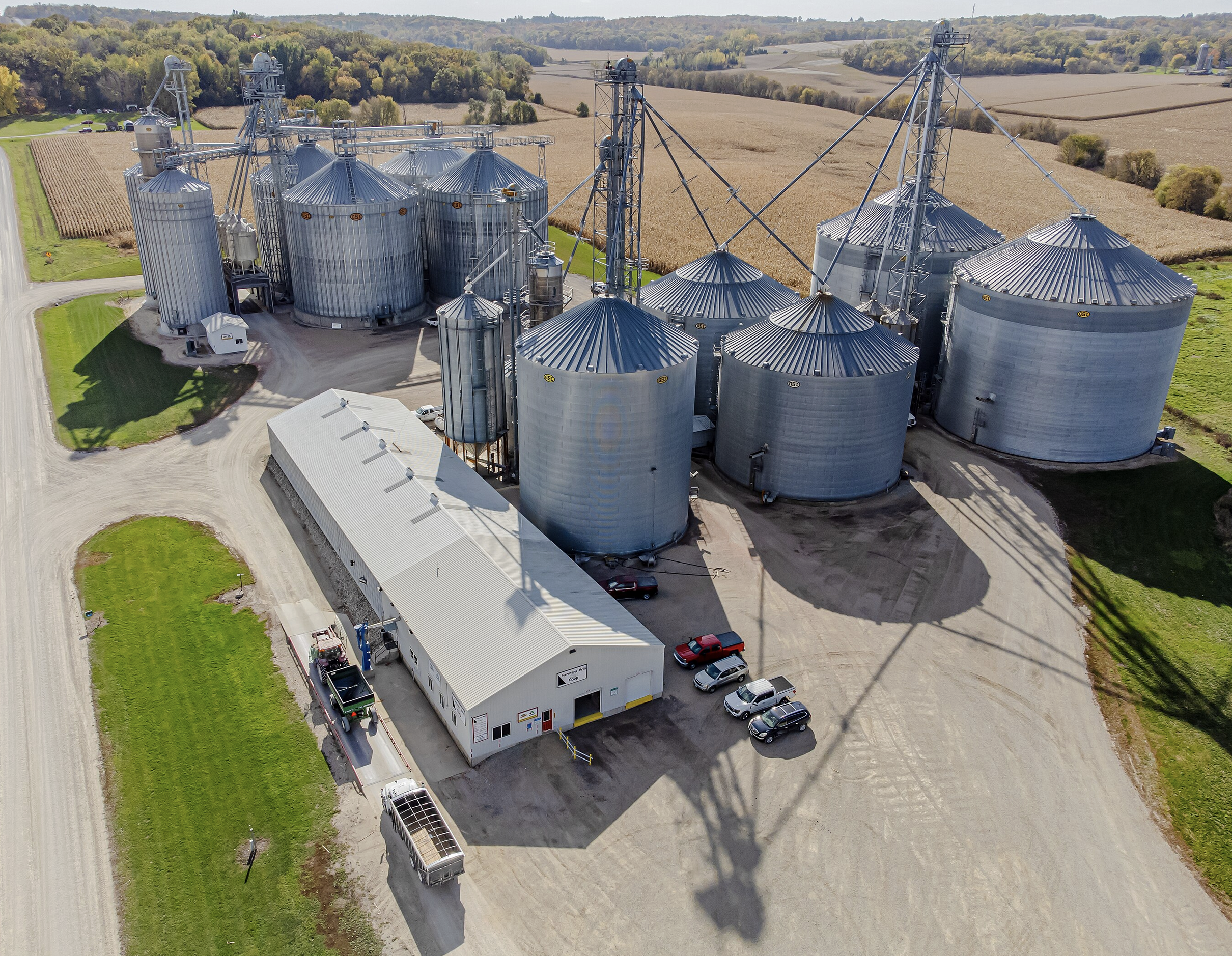
Surplus of beans filling farm silos
After American farmers biggest soybean customer did not buy beans this year they saw a glimmer of hope when President Trump met with the Chinese leaders a few weeks ago to try to work out a trade agreement.The situation is dire among Midwest soybean farmers considering that China purchased 54% of US grown soybeans last year for $13.2 billion but until now has purchased $0 US soybeans in 2025.Last month American Soybean Association President Caleb Ragland told Congress that “US agriculture is facing significant challenges. Commodity prices are down nearly 50%, and farm production costs continue to skyrocket. For soybean farmers, the loss of our largest export market due to trade retaliation by China has made financial problems even worse. High production cost and market losses mean soybean farmers are expected to face a loss of around $109 an acre for this year’s crop.”
So it was good news that after the meeting, the White House said China would purchase at least 12 million metric tons of U.S. soybeans in the last two months of 2025 and at least 25 million tons in each of the next three years. So far this year the US soybean industry has lost the Chinese market to competitors like Brazil and Argentina who despite the talks are cheaper than US-grown beans due to China’s retaliatory tariffs against Trump. Despite the positive signals, US soybeans still face a 13% tariff, compared with just 3% for Brazilian and Argentine supplies, limiting US price competitiveness, say reports.
Hopes fade with lack of sales
Fast forward to now- November 14 and news reports say USDA data “cast serious doubts about whether China will really buy millions of bushels of American soybeans like the Trump administration touted last month after a high-stakes meeting between President Donald Trump and Chinese leader Xi Jinping.The USDA report released after the government reopened showed only two Chinese purchases of American soybeans since the summit in South Korea that totaled 332,000 metric tons. That’s well short of the 12 million metric tons that Agriculture Secretary Brooke Rollins said China agreed to purchase by January and nowhere near the 25 million metric tons she said they would buy in each of the next three years.”
Reuters reported that “China is grappling with a glut of soybeans after months of record imports, curbing prospects for U.S. exports despite a recent trade truce that Washington said includes a pledge by Beijing to resume heavy purchases.”
Another report says “We don’t expect any demand from China to return to the U.S. market with this change,” said one trader at an international trading company. “Brazil is cheaper than the United States and even non-Chinese buyers are taking Brazilian cargoes.”CoBank’s Tanner Ehmke, lead economist for grains and oilseed, said there isn’t much incentive for China to buy from America right now because they have plenty of soybeans on hand that they have bought from Brazil and other South American countries this year, and the remaining tariffs ensure that U.S. soybeans remain more expensive than Brazilian beans.“We are still not even close to what has been advertised from the U.S. in terms of what the agreement would have been,” Ehmke said.Beijing has yet to confirm any detailed soybean purchase agreement but only that the two sides have reached “consensus” on expanding trade in farm products. Ehmke said that even if China did promise to buy American soybeans it may have only agreed to buy them if the price was attractive.”
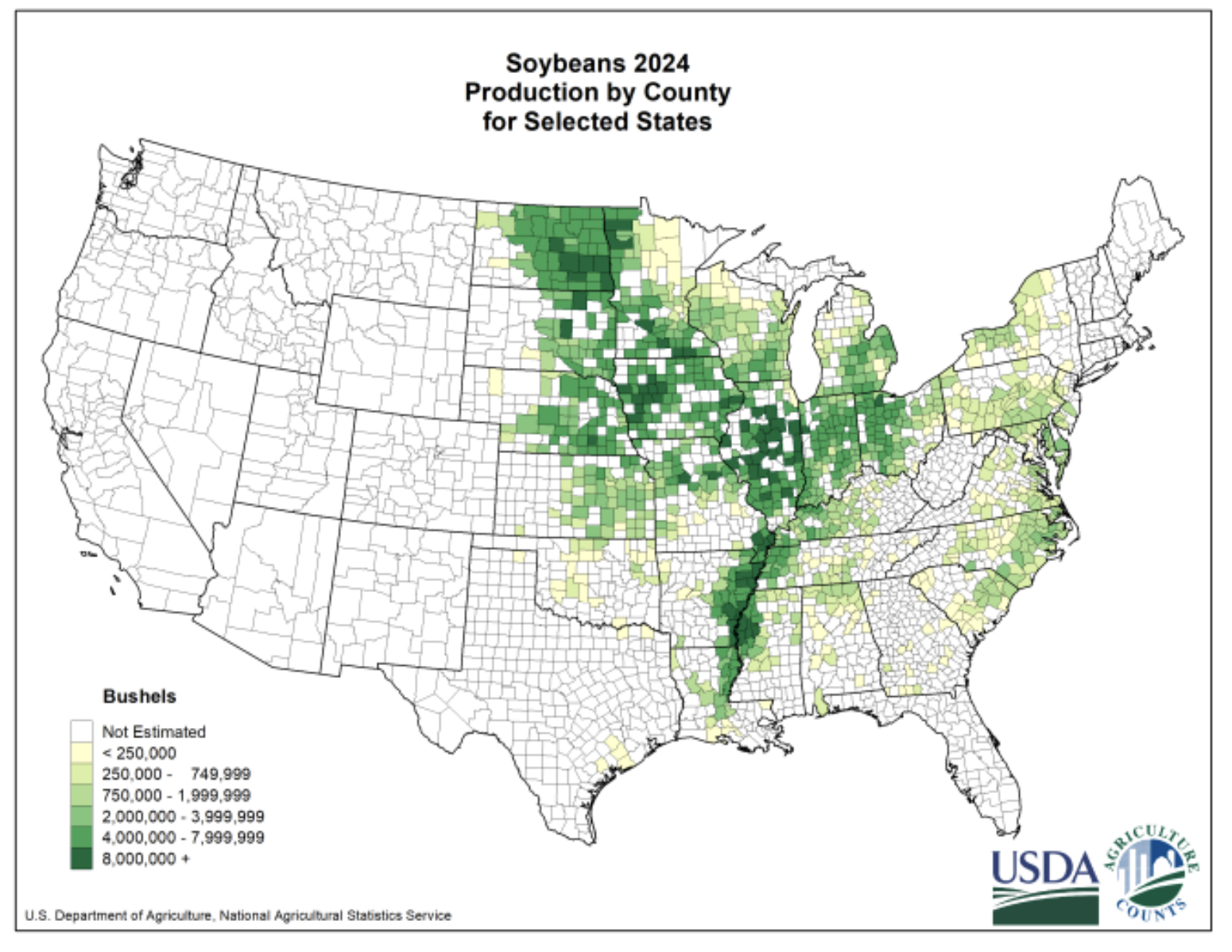
All this uncertainty particularly impacts the Midwest and South where the soybean farms are clustered, arguably Trump country. Some 271 thousand U.S. farms raise soybeans. California produces many crops but no soybeans. Instead we import trainloads of both soybeans and corn for both animal feed and biodiesel blending into our diesel fuel.The big livestock industry and motorists here who use corn ethanol are customers.(California blends of ethanol will now go to 15% from 10%).
U.S. soybean futures recently reached their highest level since June 2024 on hopes for Chinese buying but the futures price has dropped this past week as hopes fade for relief and sales. The impact: One of the most important ag industries is joining other US commodities – a victim of the ongoing Trump trade war.
ProAg reports this week after the trade deal that “China’s state trader, COFCO, recently signed contracts worth over $10 billion to buy nearly 20 million tons of Brazilian soybeans and related products from major global traders, with no mention of U.S. goods. While some U.S. purchases have occurred as goodwill gestures, Beijing’s primary focus remains on Brazil.”
Meanwhile,China looks to be more self-sufficient and has built up its own soybean production, adding 9 million acres and increasing production by 8.6 million metric tons since 2015, according to the University of Arkansas System Division of Agriculture.
US farmers are looking at the calendar to plan their strategy for 2026 but lack of progress on sales to their biggest customer offers nothing but worry as their bins fill with this year’s harvest completed in October.
Soybean farmers had optimistically reasoned that China needs US soybeans for high-protein feed to sustain its massive hog population, which represents almost 60% of the global sow herd, and feed their large population hungry for protein. “Simply put, China needs soy, and the United States soy industry has depended on access to this market for decades.”
The bulk of Midwest soybeans where 80 percent of U.S. soybean acreage is concentrated – are exported to China, Canada and Mexico.
But China imported 71% of its soybeans from Brazil as of 2024, compared to 2% in the late ‘90s, according to the United States Department of Agriculture.Soybeans are a top food export for the U.S. making up 14% of the nation’s agricultural exports according to the U.S. Department of Agriculture. In 2024, China bought $12.5 billion of the $24.5 billion of soybeans the U.S. exported globally — more than 50% of U.S exports of the crop.
USDA report released
This past week USDA appeared to face reality in their long-awaited crop report. The agency trimmed its forecast for soybean exports in the 2025-26 crop year.
USDA estimated there would be a 50-million-bushel reduction in 2025-26 U.S. exports, to 1.635 billion bushels, down 13% from 2024-25 – a 13-year low.
USDA also estimated that the 2024-25 Brazilian soybean crop was up 1.5% to a record 171.5 million metric tons or 6.3 billion bushels. In 2025-26, USDA expects Brazil’s crop to expand another 2% to 175 million tons.
With or without promised China sales, the US soybean industry must face the fact it needs new markets.The Center for Strategic and International Studies , a bipartisan, nonprofit policy research organization says “Even if China fulfills the reported purchase commitments, U.S. soybean exports to China in 2025 would reach only 18.2 million metric tons. This would constitute a 32 percent decline since 2024—when annual exports reached 26.8 million metric tons—and would make 2025 the worst year for U.S. soybean sales to China since 2018.
In the past five years, China’s share of U.S. soybean exports has remained roughly unchanged at about 53 percent. Unless the U.S. soybean industry diversifies into other markets, it will remain exposed to coercive Chinese economic statecraft in the future.”
The trade dispute with China has led to a surplus of soybeans that fill silos, forcing farmers to store their crops rather than sell at a loss, notes Bloomberg