
Send in the worms
and other innovative ideas
-January 20,2024-
Dairymen are survivors. They often employ high technology to solve problems. But at times they are turning to low tech, very lowly solutions to meet the toughest challenges.
Even as dairy operators in the Central Valley are being mandated to pump less groundwater they also must cut air and water pollution and reduce greenhouse gas emissions. That includes experimenting with processes and feeds to reduce methane emissions from cow burps, as well as manage manure nutrients at the dairy to preserve the very groundwater both the dairies, and the communities surrounding them need.
By the way, they need to stay in business too.
The advocate and research group Dairy Cares notes that since regional concentrations of large dairies produce equally large volumes of manure in small geographical areas, concerns are raised about the effects on local air, land, and water resources. Various dairy manure management technologies have been suggested ranging from anaerobic lagoons to membrane filtration but are not considered economically viable due to the high energy and labor requirements for sludge management.
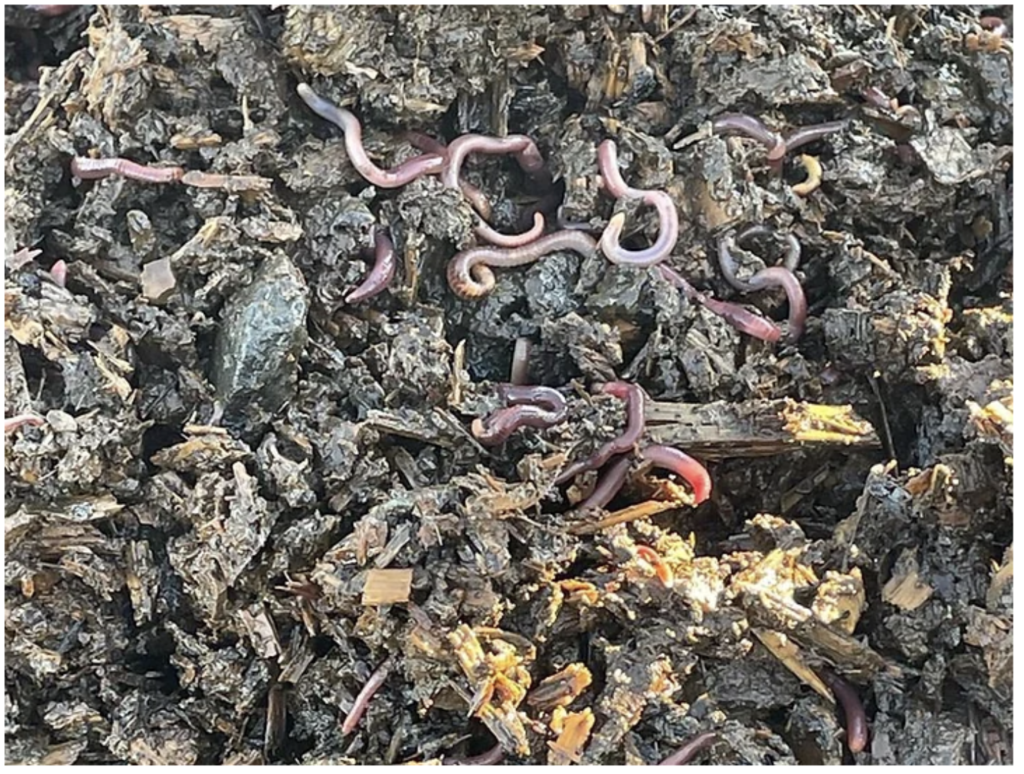 However the technology called Vermifiltration, using earthworms, on the other hand is an emerging low-cost manure management system, an aerobic wastewater treatment system that employs a community of microorganisms and earthworms in a filter bed media. Vermifiltration was first demonstrated on a dairy in Hilmar in 2014 and has since been used on another dairy in Washington state.
Essentially, these farms use worm beds to filter liquid manure effluent. The worms absorb the water, and the bacteria in their guts and convert the nitrogen into nitrogen gas (N2) which is a harmless gas that makes up about 78 percent of our atmosphere. Worm castings and decomposed wood chips from the beds offer potential value as fertilizer and soil amendments.
Testing the potential of worms
To test the idea at Central Valley dairies, CDFA’s Alternative Manure Management Program – using money from the EPA – has now provided funding for dairy vermifiltration projects that are under way, aiming to further demonstrate the potential of worms.Not only could these manure eating worms help reduce dairies carbon footprint, they could do potentially do it cheaper than high tech solutions like dairy digesters, future funding for which has been under fire in Sacramento recently.
The Milk Producers Council newsletter recently highlighted the simple technology.Funding will now test a significant partnership with worms. Three local dairies were awarded $3.7 million in December 2023 to pioneer the idea at their farms in Tulare, Kings and Merced Counties.
Now an additional 12 projects will be funded to carry on with similar work to manage manure. Six of those local dairies are planning to use the earthworm technology. Funding adds up to $14.5 million requiring matching funds.
Another method being explored is the use of an algae raceway system. The system has been piloted on a California dairy, where it works in conjunction with a digester to both reduce methane, remove nitrogen, and purify remaining water. Like with vermifiltration, algae raceways show great promise for improving water quality outcomes, say experts.
A report summaries the effort. “Worms, algae, and evaporative technologies are just a few of the technologies and strategies being explored. The California dairy sector and its public and private partners will continue their important work to identify and verify ways to best serve the manure management needs of individual family dairy farms and bring environmental benefits to communities. Researchers and entrepreneurs are on board in this mission to discover dairy manure’s full potential as part of a more circular and sustainable California agriculture industry. “
Boosting the value of manure
“Dairy manure is a valuable resource. However, the excess of some nutrients in manure is a critical concern that must be addressed for the safety of our communities and our environment.”
“Nitrate contamination of groundwater drinking sources is an acute issue in many agricultural areas: animal manure (including dairies) contributes an estimated 1/3 of all nitrogen loading to groundwater in parts of California’s agricultural regions, with other irrigated agriculture contributing most of the remainder. For dairies, inefficient and/or over application of manure to cropland is the main source of loading.”
Other ideas being tested.In Petaluma nitrogen-rich dairy effluent is being used to grow duckweed, a possible alternative feed source for cattle, denitrifying the wastewater in the process. Also being funded, weeping walls and advanced solids-liquid separation with flocculants or by other methods.
“The Manure Recycling and Innovative Products Task Force has succeeded in developing recommendations for strategies to capture and enhance the value of dairy manure. The value highlighted by these strategies includes building healthy soils and sequestering carbon, offsetting industrial fertilizer use, protecting water and air quality, and reducing agriculture’s carbon footprint in California. These benefits impact not just farmers, but the state, our consumers, and our environment.”