-January 4,2023-
No longer the king, times have changed in the cotton business. California used to produce over 1.6 million acres of cotton – but today that is down to about 100,000 acres.
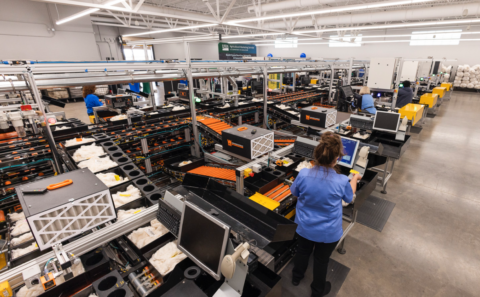
Those changes have affected the Valley Cotton Classing Office operated by USDA located in the Visalia Industrial Park.
Director of the center Greg Townsend says the Visalia office was opened in 1991 after consolidating operations in Fresno and Bakersfield in the heart of the SJ Valley cotton belt. The grower funded center sorts and grades samples from cotton bales coming out of gins up and down the state. As an unbiased government operation the work here provides both sellers and buyers with certainty over color, fiber length and other key characteristics that allow trusted valuation.
Back then “we were seeing some 2.5 million bales of cotton each year sourced from about 100 cotton gins around the Valley”says Townsend.
Cotton acreage in California peaked in the late 1980s when it reached over 1.6 million acres. It’s been mostly down since with 200,000 acres planted in 2010,179,000 in 2020 and in drought- plagued California in 2021, fell to 114,000 acres.
With the harvest coming in the fall, there is a three month period when sorting and measuring at the USDA center is the busiest. In 1993 that required 350 seasonal jobs at the center in Visalia according to a city report back then.
Several other firms in the industrial park hired workers in winter months as well like Jostens who employed 700 to help produce yearbooks during the time when farm work was slow. The operation was the top employer back then and the Visalia USDA center was number two
Fast forward to 2023 and Townsend says the USDA complex does some seasonal hiring but only needs 50 to add to the work of 6 full time employees.The job is much more automated today he notes with better technology requiring fewer hands to sort. Likewise at Jostens that went dark a few years ago as digital technology supplemented yearbook popularity.
Besides technology there is another major reason why times have changed at the local USDA center.
The industry has shrunk .
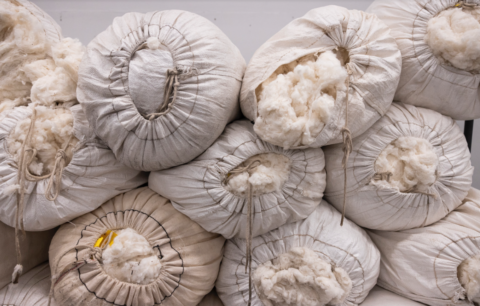 Today instead of being in charge of grading the cotton grown in the Valley, the Visalia center now sorts cotton from four states, California. Arizona, New Mexico and West Texas.
Instead of measuring the quality of 2.5 million bales grown in the Valley 30 years ago, the center is in charge of 800,000 bales, one third the volume, now grown across the 4-state American West.
”And the volume its getting smaller” says Townsend as the drought grips much for the cotton belt including places like Arizona.While Arizona looks to be on permanent decline, California cotton acreage bounces around based on water availability, he adds
A report says Arizona acres in upland cotton in 2022 are down 47 percent from 2021, but the yield on all 83,000 acres is projected to be higher by 5 pounds to the acre, according to the U.S. Department of Agriculture’s August Crop Production Report.
As for the San Joaquin Valley “Pima cotton is keeping the cotton industry alive” observes Townsend. The center grades both pima and upland varieties.Today there are 21 pima gins mostly in California and 30 upland gins in the multi-state service territory.
Reports say that in the 60s there were 299 gins in California but most now are empty or have been converted to other uses.A major cotton storage complex in Hanford is being used to store marijuana.
If the California cotton industry depends on the weather, there is good news at our doorstep this month.Last month Cotton Grower magazine reported “During a recent Cotton Incorporated Weekly Weather Update, Eric Snodgrass, Principal Atmospheric Scientist for Nutrien, says recent weather patterns may bring some good news for California.
“We’re going to see some major precipitation coming into parts of California in the near future,” he predicts. “But from now all the way through next year, it’s all about keeping an eye on soil moisture and what our drought situation looks like. La Niña is still here. It is in control and will stay in control likely through the start of the new year. I think it would be critical to be watching from about Dec. 15 to Jan. 15 to see if we can get rid of this.
“I don’t think the drought issues we’re encountering now are going to last into spring,” he adds. “As you look out until March, we start to see models hinting La Niña really beginning to fade and better moisture events for most of the country, including the Cotton Belt.”
Looking out the window, as of January 4th 2023, heavy rain is projected through the end of the month across the state and snowpack in the southern Sierra is 206% of average.
caption: USDA cotton classing office in Texas requires few empoyees
One attachment
• Scanned by Gmail