
Local pilot program could be model for groundwater sustainability
-November 3,2022-
 All over the Valley and right here, local water agencies are struggling with a state mandate to reduce pumping to reverse plunging groundwater levels and move toward “sustainability.” The Kaweah subbasin has four agencies- Groundwater Sustainability Agencies – in charge of coming up with solutions to over pumping.
“No one doubts we have an overdraft “ says King’s farmer Dino Giacomazzi, who sits on the Delta View Water Association board. The name comes from the Delta View area between Hanford and Highway 99, on both sides of 198. Delta View is part of one GSA – the Greater Kaweah GSA that is the largest of the four by acreage.
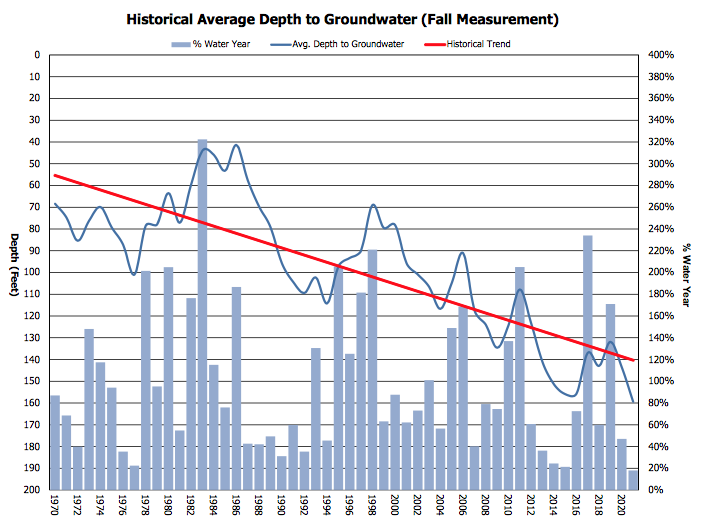
The overdraft Dino is referring to is reflected in a Kaweah Delta Water Conservation District annual chart showing the depth to groundwater at about 140 feet down in 2021 from just 50 feet in the 1970s. In parts of western edge of the Kaweah in Kings County it is deeper than that, particularly where subsidence has been measured.
 Kaweah Delta WCD says the Kaweah Subbasin is currently estimated to have an annual average overdraft in excess of 80,000 acre-feet per year (an acre-foot of water equals about 326,000 gallons of water- enough to cover a football field 1-foot deep).
Within the Kaweah subbasin there are four GSAs.The Greater Kaweah GSA covers land extending well into Kings County, south to edge of Corcoran and east to Kaweah Lake. This GSA does not include Tulare city or Visalia, who must come up with their own sustainability plan.
Within the Greater Kaweah GSA – this sub group Delta View Water Assn makes up 60% of the land in the Greater Kaweah GSA- nearly 100,000 acres. It is within this district where there has been recent controversy over how to reduce pumping. Farmers in the Delta View area have little to no surface water to supplement groundwater- so called white areas.
The Delta View farmers have been lobbying for about a year to look at implementing a voluntary fallowing of farmland -using fees generated from willing farmers to pay farmers not to plant.
Giacomazzi says the Greater Kaweah GSA can “use a carrot or a stick” to guide their policy. As of October 1,2022 they have chosen to use the stick, says Dino, imposing what Delta View says are excessive fees and penalties implemented in a surprise GSA board decision in September according to a critical letter to the groundwater agency from Delta View dated October 15.
Dino says simply imposing higher fees and penalties does not guarantee there will be reduced pumping but fallowing land will.
The Greater Kaweah GSA has a goal of reducing their annual overdraft of 34,600AF.
Now comes the surprise. After ignoring these arguments, Greater Kaweah appears to have changed their minds.
On November 1, the Greater Kaweah Board agreed to look at land fallowing and put the higher fees they had put in place on hold.
They agreed to a pilot fallowing program that will test the model.
“We will be setting this up this year” says Giacomazzi.Using this approach and reduced fee structure ” we believe the district can reach sustainability in 2 to 4 years”, he maintains.
Delta View’s October 15 letter from Delta chairman Tony deGroot explains that the “Groundwater Sustainability Plan of Greater Kaweah does list a lot of projects that are designed to bring in more water and that is certainly part of the long-term answer, but short-term, the quickest way to reduce pumping is to pay farmers to fallow.”
The letter maintains that “The fees that what farmers expected to have to pay would generate about $18 million. Delta View estimates that for a payment of about $1,000 per acre, farmers would be willing to fallow some ground and $15,000,000 would fallow 15,000 acres, saving more than 43,000 acre-feet of groundwater.” That is more than the estimated overdraft.
Dino explains that like his ranch and most of his neighbors, “we are multi-generation family businesses who don’t want to suck up all the water,” leaving less for their heirs. Besides farms, GSAs must concern themselves with not drying up rural drinking water wells or wells in disadvantaged communities nearby.
caption: depth to groundwater keeps falling