
Solar plus batteries help keep the lights on during recent heatwave
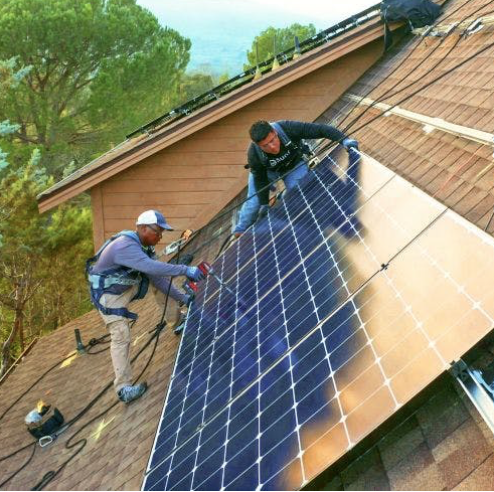 Solar installers are busy this year in San Luis Obispo County. Through October 1, 2022, local homeowners have installed nearly 2500 solar panel projects, mostly on their roofs, compared to just over 1000 during the same period in 2019, before the pandemic.
The pace has been climbing steadily here with 1052 permits issued in the first 10 months of 2019, 1421 in the same period in 2020, 2052 installs during the same time frame in 2021 and 2464 multi-unit arrays installed so far this year.The panels valuation has reached $46 million so far in 2022. Figures are from the web publication Construction Monitor.
Leading the pack among solar installation companies is SF-based Sunrun with more roof-top installations by far in the county. Sunrun advertises that “you can be your own electric company” adding that with net metering you can balance the amount of electricity you draw from the grid, and how much excess solar electricity you push into it. “So when you use less electricity than you make, you get credit from the utility company.”
Sunrun focuses on a power purchase agreement business model where Sunrun installs and maintains a solar system on a customers home, then sells power to the customer at an agreed upon rate for a 20- or 25-year term. This business model allows property owners to install solar at no upfront cost, but without the benefits (such as tax breaks) or some risks that come with being the owner of the system. The company partners with Costco and The Home Depot to market their products inside the stores. In 2021, the company installed solar systems capable of generating 792 megawatts of power.
Sunrun and others pair battery units with their panels.Having both home solar as well as a linked battery unit does make your household a socially-useful electric company, it turns out, helping to keep California’s lights on when there is a power issue in the area we all learned recently.
An analysis by the California Solar and Storage Association (CALSSA) shows that California had more than 80,000 customer-sited batteries connected to the electric grid capable of providing 900 MW of solar power.
While not all the batteries were set to discharge during the peak hours of 4 p.m. – 9 p.m. on September 6, an estimated 76% were, which as a fleet, were capable of providing up to 684 MW of power at any given moment. CALSSA estimates that 50% of these batteries’ aggregate power was put into use during peak hours, providing approximately 340 MW of power. To put this into perspective, 340 MW is more than a mid-sized power plant.
“The biggest battery in the world is located in garages around California and they are helping keep the lights on for everyone”
When California suffered rolling blackouts in August 2020, California had 30,000 distributed batteries with the potential to discharge 500 MW of power. In just two years, 50,000 consumers added 400 MW of clean sun-charged battery power. The current 900 MW of distributed batteries in California is nearly the size of Diablo Canyon’s Unit 1.
“The biggest battery in the world is located in garages around California and they are helping keep the lights on for everyone,” said Bernadette Del Chiaro, CALSSA executive director. “While it goes largely unrecognized by utilities and grid operators, these consumer investments in clean energy played a crucial role during this week’s heat wave helping keep the lights on not just for the homeowners and businesses who made the investment but for everyone.”
In February 2022, Ford announced a partnership that makes Sunrun the official installer of its bidirectional charging station for the F-150 Lightning, allowing customers to charge their truck at home, but also use the vehicle battery for backup power during a grid outage.
caption
Listing of top ten solar installers in San Luis Obispo county – credit Construction Monitor
photo: credit Sunrun
2
Attachments
• Scanned by Gmail