
-July 29,2022-
Can electric ‘tuk tuks’ save the planet?
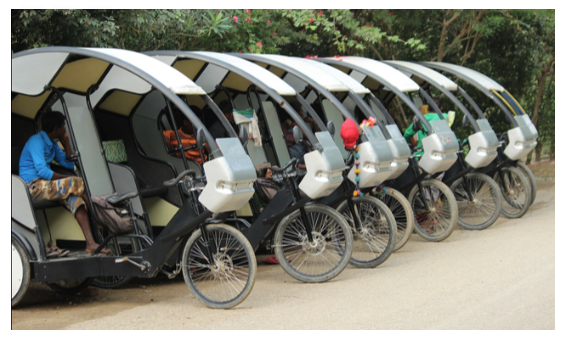
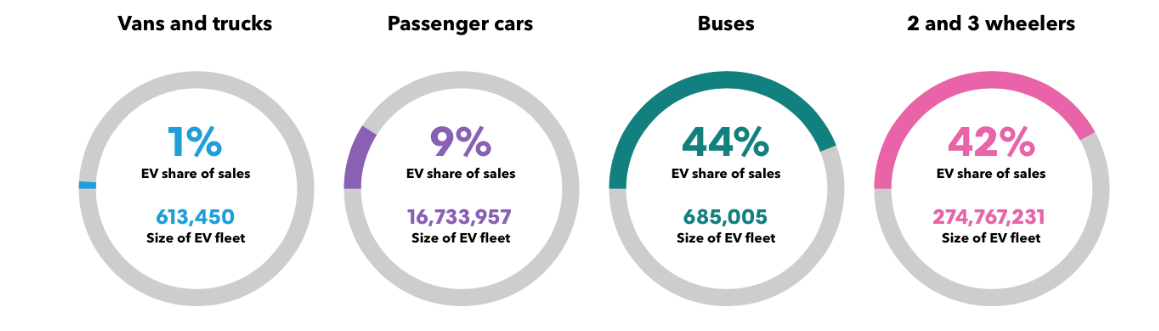 While most of us think Tesla passenger cars when it comes to EV (electric vehicle) sales, worldwide the biggest sales category by far, is coming from small two and three wheel EVs. According to Bloomberg the fleet of electric 2 and 3 wheelers totals 275 million using 2021 numbers while the fleet of electric passenger cars is a fraction of that – 17 million. Asian countries lead to way in unhooking those polluting petroleum based motorcycles and 3 wheel ‘Tuk-Tuks ‘ in favor of new electric versions.
In the US, California leads the way on conversion to hybrid and electric cars with figures for this year showing over 28% of the vehicles sold in the state were in this category.
Across the US, we saw 630,000 plug-in battery and hybrid electric cars sold in 2021 – twice as many as the year before. But that pales to Europe where 2.3 million EVs were sold.
Resistance int the past has come from American drivers’ preference for large pickup trucks and SUVs. But now with sky high gas prices and a new fleet of EV pick ups like the Ford and Rivian brands just now entering this space in greater numbers.
New cargo vans and farm tractors, electric buses are also starting to make a dent.
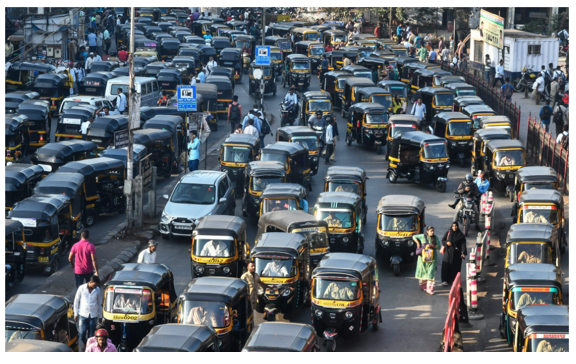 But its those iconic people and cargo carrier around the world -tuk tuks seen in crowed cities of Asia and the Middle East the are in the spotlight .Bloomberg says almost 40% of India’s huge three-wheeler fleet is already electric. China now has 685,000 electric buses on the road and 195 million electric two-wheelers.
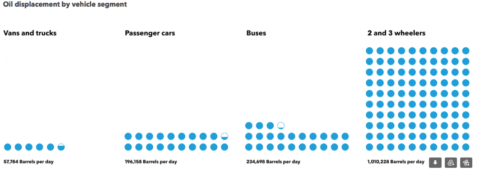 The contribution of these millions of small footprint vehicles are both clearing the air in the most polluted cities of the world and reducing world oil consumption with over 1 million barrels of oil displaced by these electric vehicles.Electric passenger cars are a small slice of that but growing fast.
Reduced demand due to a combination of high gas prices, electric vehicle sales and improved gas milage of petroleum based cars is driving down demand for oil helping to cut carbon emissions. Ironically, today’s high price for oil is now leading to lower gas prices as slow “demand collapse” is underway