
-June 23,2022-
Avenal plans vote on sales and cannabis tax
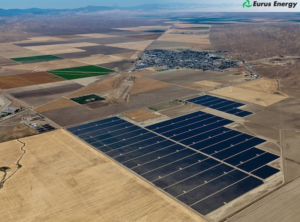 The community of Avenal is planning a November ballot vote on an increase of 1% in sales tax as well as a measure to tax cannabis sold in the city. The cannabis tax would require the city to allow dispensaries in town, not permitted now. A general sales tax increase would generate between $400,000 and $500,000 annually, indefinitely they say.
As to a cannabis tax, a staff report said “The closest comparison staff felt comfortable utilizing is Coalinga, which in FY 2021-2022 projected $1.2 million in revenues, but in years prior from 2018-2020 had averaged between $450,000 – $800,000.”
The deadline to approve a tax ordinance will be by the July 14, 2022 regular City Council meeting.
An earlier staff report said “While the City continues to manage with the funding that it has, general fund revenue growth has not kept pace with the increasing costs of providing services to a growing population and inflated prices
The City’s main sources of revenue are property taxes, sales taxes, DMV fees, and any building and services fees.
The City has the lowest per capita revenue in the County, has a little less than half the national average of police officers per capita for a City our size (18 full time positions to 34 national average), is amongst the lowest paying City employer in the County for most positions (and as such has difficulties retaining employees), and has infrastructure concerns for its buildings, park, roads, sidewalks and public facilities. There are new services that community members expect, that the City does not and cannot provide.”
Western Milling sold – expansion in Hanford underway
Western Milling with feed mills in Goshen, Famoso and Hanford has sold the company to Viserion Milling says former owner Kevin Kruse.Kruse says the sale did not include the Perfection Pet Food division with a big plant in Visalia that will be retained. Otherwise operations will stay the same with employees retaining their jobs.
Kruse adds that current Valley expansions underway will move forward including doubling the track at the Hanford yard enabling dual unit-trains each with 100 cars to be serviced. Also the Famoso mill will expand its manufacturing capacity.
Viserion International is a global agricultural merchant based in Boulder, Colorado.
Gas prices fall /oil takes tumble
AAA says gas prices in Kings County dropped 8 cents in the past week to $6.18. Yokut Gas is selling today for $5.59, 5th cheapest gas in California. At deadline – June 22 noon- oil prices had taken a tumble hitting their lowest levels in a month from $120 a barrel a few days ago to $106.The drop is amid mounting concerns that rising US interest rates aimed at curbing soaring inflation would cause a recession and slowdown in oil demand.In the first full week of June, gasoline sales were down 8.2%, the 14th consecutive week of lower demand.
Kings River farmer pioneers recharge
Don Cameron sparked curiosity in 2010 when he began a multi-phase project intended to capture floodwater from the Kings River during rainy seasons.
The effort, supported by state grants, unfolded as a grand experiment, as the diversified Fresno County grower flooded his permanent plantings—including pistachios and vineyards—to such an extent that they soon rested in several feet of water.
To Cameron’s relief, those plantings survived relatively unscathed. As the water percolated down, the aquifer water table rose significantly, increasing nearly 40 feet in a single year.
In drought-parched California, with surface-water reservoirs badly depleted these days, storing groundwater is becoming a norm in California agriculture. It is viewed as a key tool to help sustain farming in times of diminishing resources.
Local agencies throughout the state must bring their aquifers into balance under the 2014 Sustainable Groundwater Management Act. As urgency builds, farmers are looking at myriad ways to store water beneath their feet.
Cameron, now president of the California State Board of Food and Agriculture, said sinking excess water on empty fields or in orchards gives the state’s farmers additional insurance against reduced snowpack, shrinking runoff and intense droughts interrupted by periods of volatile precipitation.
Sinking available water means it can be pumped out later, like making banking deposits and withdrawals.
“We are on the front lines of climate change,” Cameron said. “We see the changes in the weather before anyone else because it affects our crops. There is no happy medium anymore when it comes to rain events.”
Cameron has become a leading endorser of what is now known as on-farm recharge, or OFR. The program involves filling dedicated recharge basins or ponds, directing water to unlined canals and riverbeds, injecting it through wells, and using surface water supplies—when available—to avoid pumping.
Interest is growing in spreading water on productive and fallowed fields, in natural landscapes or in permanent plantings.
“Even though our groundwater has been over-pumped, it has created space to store water underneath our feet,” Cameron said during a recent tour of his 6,000-acre Terranova Ranch.
Groundwater is a major part of California’s water supply, providing close to 40% during wet years and up to 60% in dry years.
“On-farm recharge is the lowest cost option, and it’s highly expandable and flexible,” said Philip Bachand, an environmental engineer who designed Cameron’s project and is working throughout the state on other recharge systems. He added, “You don’t have to do much to your land; you just have to manage it.” –From CFB
May Milk Production in California down 1.7 percent from May 2021
Demand is good but milk supply is down this year. USDA reported that milk production during May totaled 3.659 billion pounds, down 1.7 percent from May 2021 and up 1.2 percent from April 2022. The number of milk cows on farms in California was 1.722 million head, up 3,000 from May 2021 and unchanged from April 2022. Production per cow in California averaged 2,125 pounds, down 40 pounds from May 2021 and up 25 pounds from April 2022.
Neonicotinoid insecticides have broad reach, says EPA
Three widely used neonicotinoids are likely to adversely affect, in at least some way, most of the threatened and endangered species in the country, said the Environmental Protection Agency on Thursday. It said it was consulting with wildlife agencies about whether the insecticides,used on Valley crops like grapes and pistachios, were likely to jeopardize the species’ survival or damage their habitats.
The Environmental Protection Agency released final biological evaluations today confirming that three widely used neonicotinoid insecticides likely harm roughly three-fourths of all endangered plants and animals, including all 39 species of amphibians protected under the Endangered Species Act.
State action
Earlier this year in an effort to reduce risks to bees, the California Department of Pesticide Regulation filed an official notice of rulemaking as a first step in the regulatory process to limit how and when neonicotinoids can be used in agricultural settings.
Neonicotinoids are a group of insecticides that are widely used as an alternative to chlorpyrifos, which DPR banned in 2020.At certain levels of exposure, neonicotinoids present risks to pollinators. DPR’s proposed regulations are based on extensive scientific studies and would create new requirements and restrictions for the use of neonicotinoid products containing any of four active ingredients: imidacloprid, thiamethoxam, clothianidin and dinotefuran. DPR estimates the regulations will impact 57 products currently registered in California and will reduce the amount of neonicotinoids applied across the state by approximately 45%
The EPA’s assessments of clothianidin, imidacloprid and thiamethoxam marked the first time the agency has completed biological evaluations of any neonicotinoids’ harms to the nation’s most imperiled plants and animals. Species found to be harmed by all three of the neonicotinoids include rusty patched bumblebees, whooping cranes, chinook salmon, northern long-eared bats and orcas.
Roundup loses latest court ruling
“EPA’s determination that glyphosate was not likely to be carcinogenic was not supported by substantial evidence,” said a 9th Circuit appellate court ruling this month. The court ordered the EPA to review the chemical known by Roundup that has been blamed by some to cause cancer. The Trump era EPA had ruled that glyphosate “does not pose ‘any unreasonable risk to man or to the environment.” The chemical’s maker Bayer has said they would end sales of Roundup for lawn and garden use in 2023 in response to lawsuits.